Spinach
Spinacia oleracea · Also known as paalak, palak, Indian spinach, green leafy spinach
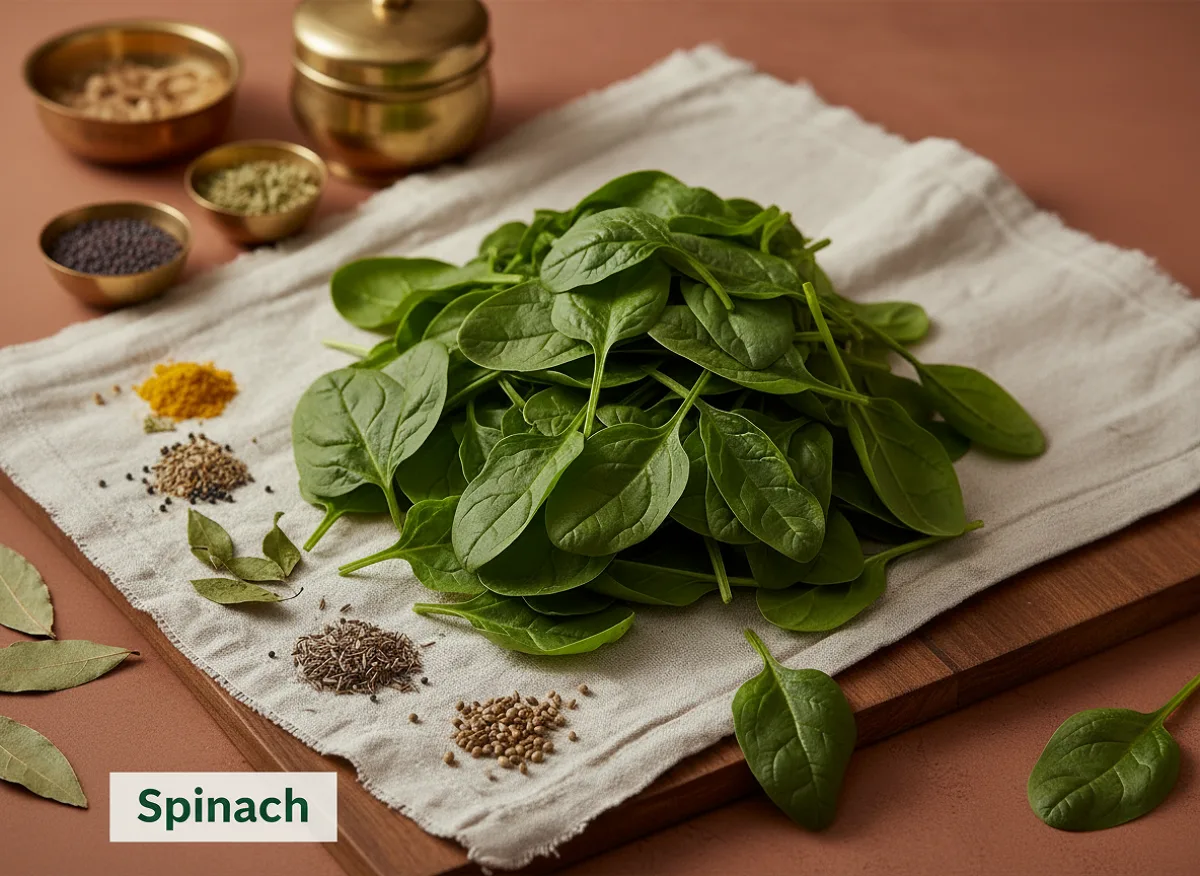
Spinach (पालक, paalak) is a tender, dark-green leafy vegetable with smooth or crinkled leaves and a mild, slightly earthy flavour. Fresh and versatile, it forms the base of beloved North Indian dishes like palak paneer and South Indian preparations such as keerai masiyal. Blanch...
Nutrition per 100 g
Mean values ± IFCT published SD (edible portion).
More macros
Classification
About Spinach
What it is
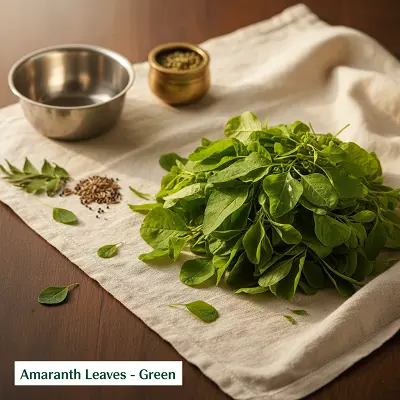
Spinach (पालक, paalak) is a tender, dark-green leafy vegetable with smooth or slightly crinkled leaves and a mild, slightly earthy flavour. It is eaten fresh or cooked and is a staple across Indian home kitchens, particularly in North India where it pairs beautifully with paneer and in South India where it features in coconut-based curries and stir-fries. (IFCT 2017, Ref #C033)
Use in Indian Kitchen
Spinach is most famous in palak paneer - a creamy North Indian curry where blanched leaves are ground into a smooth paste and simmered with paneer cubes and cream. In South India, keerai masiyal showcases tender leaves wilted with coconut, mustard seeds, and urad dal. It also stars in dal preparations (spinach and moong dal), is stuffed into parathas with spiced potato, and folded into vegetable kootu. A practical tip: blanch spinach briefly in salted boiling water, then shock in ice water to lock in the vibrant green colour and prevent it from darkening during cooking.
Key Nutrients
Spinach is rich in iron, calcium, magnesium, potassium, and vitamins A, C, and K. It also contains folate and dietary fibre. Exact nutrient composition varies with freshness and growing conditions; refer to IFCT 2017 for detailed micronutrient profiles.
Health Benefits (Evidence-based)
- May support bone health due to its calcium and vitamin K content, which are linked to bone mineralisation.
- High in antioxidants (lutein, zeaxanthin, beta-carotene) that may help protect eye health.
- Iron content supports oxygen transport in the blood, though plant-based iron is better absorbed when paired with vitamin C sources.
- Folate content may support cellular function and is particularly important during pregnancy.
- Dietary fibre aids digestive regularity and may support healthy cholesterol levels.
- Traditionally used in Ayurvedic and home remedies as a cooling, nourishing green for general wellness.
Culinary Uses (Vegetarian)
- Palak paneer - creamy spinach and cottage cheese curry.
- Keerai masiyal - South Indian spinach stir-fry with coconut and tempering.
- Spinach and moong dal - a light, nourishing one-pot meal.
- Palak paratha - flatbread stuffed with spiced spinach and potato.
- Vegetable kootu - mixed vegetable and lentil curry with spinach.
- Fresh in salads, raita, or as a wilted side dish with simple tempering.
Caution
- Spinach contains oxalates, which may interfere with calcium absorption and could be a concern for those prone to kidney stones; moderation is advised.
- Those on blood-thinning medications (e.g. warfarin) should maintain consistent spinach intake, as its vitamin K content affects clotting.
- Always wash spinach thoroughly under running water to remove soil and any residual pesticides.
References
- Indian Council of Medical Research - National Institute of Nutrition (ICMR-NIN). Indian Food Composition Tables (IFCT 2017). Reference code C033 - Green Leafy Vegetables (Spinach).
- Popenak, P. & Sies, H. (2012). Antioxidants and phytonutrients in spinach and other leafy greens. Molecular Aspects of Medicine, 33(1), 1-6.
Health Benefits
- Supports Bone Health
- Supports Digestion
- Boosts Immunity
- Supports Eye Health
- Provides Iron
Sourcing & Storage
Storage
Store fresh spinach in a breathable plastic bag or container in the refrigerator's vegetable drawer, away from ethylene-producing fruits (apples, bananas). Keep the leaves dry; excess moisture encourages wilting and decay. In warm Indian climates, use the coldest part of your fridge and consume within 2-3 days for best quality. For longer storage, blanch and freeze in airtight containers or freeze-dried packs.
Shelf Life
Fresh spinach keeps for 3-5 days in the refrigerator when stored properly. Once cooked, spinach dishes last 2-3 days when refrigerated in an airtight container. Blanched and frozen spinach can be stored for up to 8-10 months in the freezer.
Check Before You Buy
Choose spinach with vibrant, deep-green leaves that are crisp and free from yellowing, bruising, or slime. Avoid bunches with wilted or discoloured leaves, or any sign of decay at the base. If buying packaged spinach, check the date and ensure the bag is not damp inside. At the mandi or kirana, select bunches that feel firm and fresh; gently squeeze the base - it should not feel mushy or overly soft.
In Ayurveda
In Ayurvedic tradition, spinach (paalak) is classified as a cooling (sheeta) and nourishing leafy green. It is believed to pacify Pitta dosha and support healthy digestion. Classical texts and home remedy practices have long used fresh spinach juice or spinach-based preparations to support blood health and general vitality. However, individuals with kidney concerns or elevated uric acid should consume spinach in moderation and seek guidance from an Ayurvedic practitioner.