Soyabean oil
Also known as Soya oil, soybean oil, सोयाबीन का तेल (soyabean ka tel)
Soyabean oil is a light, neutral-flavoured vegetable oil extracted from soyabeans, widely used in Indian home kitchens for everyday cooking. Golden-yellow and mild in taste, it works well for tempering, shallow frying, and dressing salads without overpowering delicate spices. A p...
Nutrition per 100 g
Edible portion values from the master catalog.
More macros
Classification
About Soyabean oil
What it is
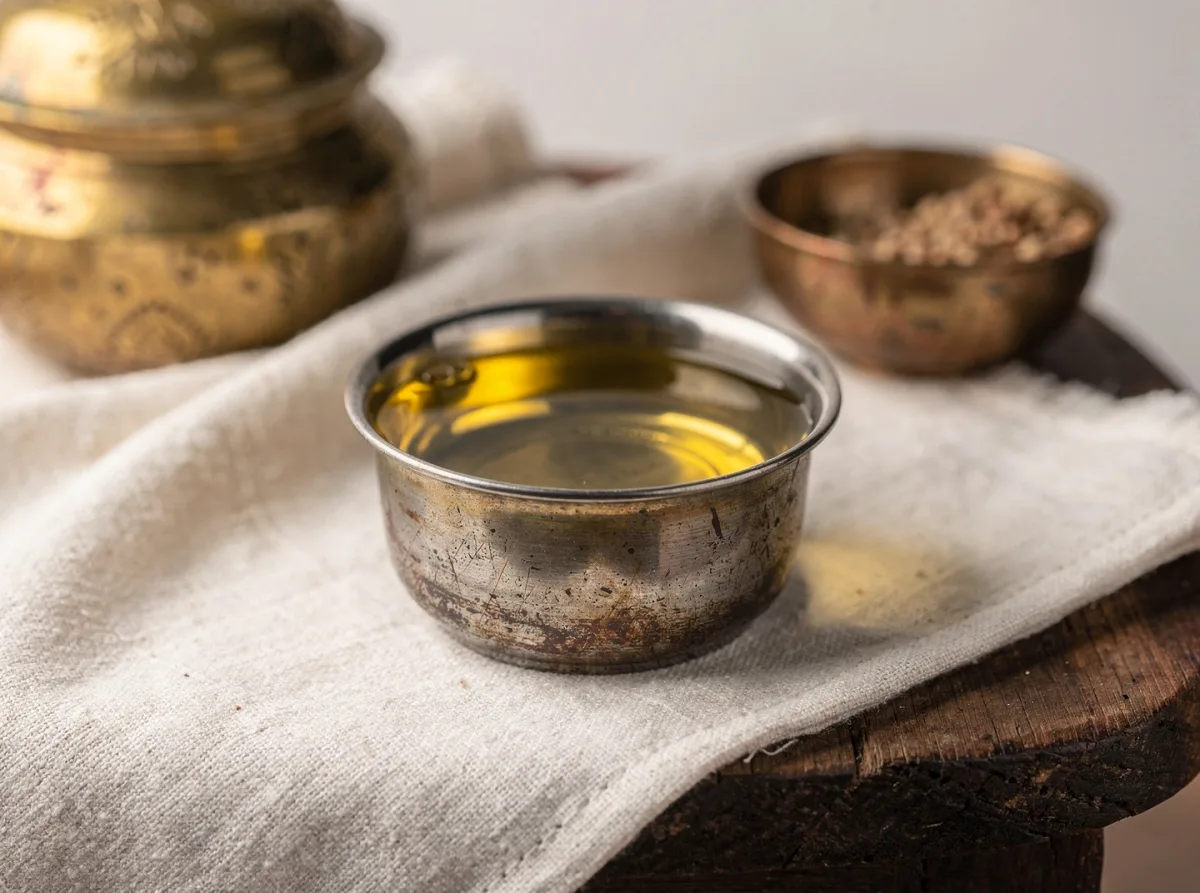
Soyabean oil (सोयाबीन का तेल, soyabean ka tel) is a refined vegetable oil pressed from soyabeans, a legume crop. It is pale golden, nearly odourless, and has a clean, neutral taste that does not mask the flavours of spices or other ingredients. Widely available in Indian markets in bottles and tins, it has become a staple in modern Indian kitchens for its affordability and versatility. (IFCT 2017, Ref #T011)
Use in Indian Kitchen
Soyabean oil is used for tempering whole spices in dal, seasoning vegetable curries, and shallow-frying vegetables like okra, aubergine, and potatoes. Its neutral flavour makes it ideal for dressing salads, making mayonnaise-based chutneys, and baking cakes and biscuits. In North Indian kitchens, it is often used for tadka in dal and sambar; in South Indian homes, it works well for stir-fried greens and vegetable kootu. A practical tip: store in a cool, dark place and use within the recommended shelf life to maintain freshness and prevent rancidity, which can develop if exposed to heat or light.
Key Nutrients
Soyabean oil is primarily composed of fat, including polyunsaturated fatty acids (linoleic acid and alpha-linolenic acid), monounsaturated fats, and saturated fats. It also contains vitamin E (tocopherols), which acts as a natural antioxidant. Exact nutrient composition per serving is available in IFCT 2017 food tables.
Health Benefits (Evidence-based)
- May support heart health due to its polyunsaturated fat content, which is linked to healthy cholesterol levels when used in moderation.
- Contains vitamin E, an antioxidant that may help protect cells from oxidative stress.
- Provides essential fatty acids (omega-3 and omega-6) needed for brain and nervous system function.
- Neutral flavour makes it suitable for everyday cooking without adding unnecessary calories from flavoured oils.
- Affordable and accessible, supporting consistent use in balanced home cooking.
Culinary Uses (Vegetarian)
- Tempering spices for dal, sambar, and rasam.
- Shallow-frying vegetables (okra, aubergine, potatoes, green beans).
- Dressing salads and cold vegetable dishes.
- Baking cakes, biscuits, and breads.
- Making vegetable curries and stir-fries.
- Preparing mayonnaise-based chutneys and dressings.
Caution
- Soyabean oil has a relatively low smoke point (around 160-170°C / 320-340°F); avoid using for high-heat deep frying or tempering at very high temperatures, as this can degrade the oil and produce harmful compounds.
- Store away from direct sunlight and heat to prevent oxidation and rancidity.
- Those with soy allergies must avoid soyabean oil entirely.
- Use within the recommended shelf life; old or rancid oil should be discarded.
References
- Indian Council of Medical Research - National Institute of Nutrition (ICMR-NIN). Indian Food Composition Tables 2017. Hyderabad: NIN; 2017. Reference code T011.
- Food Safety and Standards Authority of India (FSSAI). Food Safety and Standards (Food Products Standards and Food Additives) Regulations, 2011. Vegetable oils labelling and composition guidelines.
Sourcing & Storage
Storage
Store soyabean oil in a cool, dark place away from direct sunlight and heat sources. Use an airtight, opaque bottle or tin to prevent oxidation. Keep away from the stove and hot surfaces. In warm Indian climates, store in a cool cupboard or, if available, in a refrigerator (though it may become cloudy; this is normal and does not affect quality). Ensure the cap is tightly sealed after each use to prevent air exposure.
Shelf Life
Unopened soyabean oil typically lasts 12-18 months when stored in cool, dark conditions. Once opened, use within 6-8 months for best quality. If stored in a refrigerator after opening, it may last slightly longer. Discard if the oil develops a rancid smell, off-taste, or visible cloudiness that does not clear at room temperature.
Check Before You Buy
When buying soyabean oil, check the expiry date and manufacturing date on the bottle or tin. The oil should be clear and pale golden; avoid bottles with sediment, cloudiness, or dark discolouration. Smell the oil if possible - it should have a mild, neutral aroma with no rancid or musty odour. Buy from reputable kirana shops or supermarkets with good stock turnover to ensure freshness. Prefer bottles in dark glass or opaque tins over clear plastic, as these protect the oil from light damage. Check the label for "refined" or "cold-pressed" designation and ensure it meets FSSAI standards.
In Ayurveda
In classical Ayurvedic texts, soybean oil is not extensively documented as a traditional ingredient, as soybeans are a relatively modern agricultural introduction to India. However, modern Ayurvedic practitioners sometimes classify refined soybean oil as having a neutral (balancing) quality, suitable for general cooking without aggravating any particular dosha when used in moderation. It is considered lighter than ghee or coconut oil, making it acceptable for those seeking a lighter cooking medium.