Groundnut oil
Also known as Peanut oil, मूंगफली का तेल (moongphali ka tel), arachis oil
Groundnut oil (मूंगफली का तेल) is a light, neutral cooking oil pressed from roasted peanuts, with a mild nutty aroma and high smoke point. A kitchen staple across India for tempering, shallow frying, and deep frying - used in everything from tadka for dal and sambar to crispy pak...
Nutrition per 100 g
Edible portion values from the master catalog.
More macros
Classification
About Groundnut oil
What it is
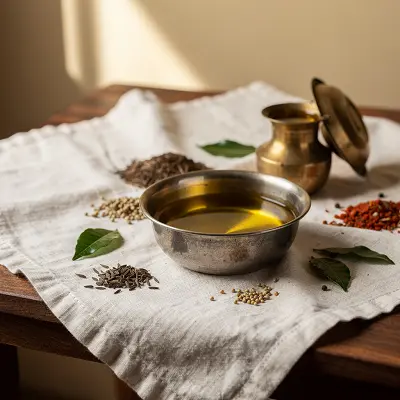
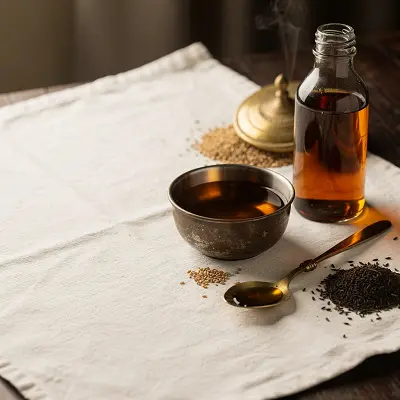
Groundnut oil (मूंगफली का तेल, moongphali ka tel) is a refined vegetable oil extracted from roasted peanuts. It has a pale golden colour, light body, and a subtle warm nutty aroma that becomes more pronounced when heated. The oil is prized in Indian kitchens for its neutral taste that lets spices shine, and its high smoke point (around 450°F / 232°C) makes it reliable for both gentle tempering and vigorous deep frying. (IFCT 2017, Ref #T005)
Use in Indian Kitchen
Groundnut oil is the workhorse oil across Indian regions - North to South, it appears in tadka for dal and sambar, shallow frying of vegetables, and deep frying of pakora, pooris, and jalebi. In South Indian kitchens, it is the traditional choice for coconut oil's role in many regions; in North India, it competes with mustard and ghee for everyday cooking. A practical tip: when making tempering (tadka), use just enough oil to coat the pan and let the spices crackle without burning - groundnut oil's neutral flavour won't mask the cumin, mustard seed, or curry leaves. It also works beautifully for shallow-frying sliced vegetables like potato, aubergine, and okra until golden and crisp.
Key Nutrients
Groundnut oil is primarily composed of monounsaturated and polyunsaturated fats, with smaller amounts of saturated fat. It contains vitamin E (a fat-soluble antioxidant) and phytosterols. Like all oils, it is calorie-dense at approximately 120 kcal per tablespoon. Exact nutrient composition per serving is available in IFCT 2017.
Health Benefits (Evidence-based)
- May support heart health due to its high content of monounsaturated fats, which are linked to improved cholesterol profiles.
- Rich in vitamin E, which acts as an antioxidant and may help protect cells from oxidative stress.
- Contains phytosterols, plant compounds traditionally associated with cholesterol management.
- High smoke point makes it suitable for cooking methods that require sustained heat without oil degradation.
- Neutral flavour profile allows the natural taste and aroma of spices and other ingredients to remain prominent in dishes.
Culinary Uses (Vegetarian)
- Tempering (tadka) for dal, sambar, rasam, and vegetable curries.
- Deep frying pakora, pooris, jalebi, and other festive sweets.
- Shallow frying vegetables - potato, aubergine, okra, cauliflower, and leafy greens.
- Pan-frying paneer, tofu, and vegetable cutlets.
- Dressing salads and drizzling over finished dishes for a light nutty finish.
- Making pickles and preserves where a neutral oil is preferred.
Caution
- People with peanut allergies must avoid groundnut oil entirely, as it may contain trace peanut proteins depending on processing.
- Refined groundnut oil is heat-stable, but repeated heating (as in reused frying oil) can degrade its quality; discard oil after 2-3 uses for deep frying.
- Store away from direct sunlight and heat to prevent rancidity and loss of vitamin E.
- Those following a strict low-fat diet should monitor portion sizes, as oil is calorie-dense.
References
- Indian Council of Medical Research - National Institute of Nutrition (ICMR-NIN). Indian Food Composition Tables (IFCT 2017). Reference code T005 - Groundnut oil, refined.
- Dietary Guidelines for Indians - A Manual. National Institute of Nutrition, ICMR, Hyderabad. Recommendations on cooking oils and fats for Indian households.
Sourcing & Storage
Storage
Store groundnut oil in a cool, dark place away from direct sunlight and heat sources. Use a clean, airtight glass or metal container (avoid plastic, which can leach into oil over time). Keep the lid tightly sealed to prevent oxidation and rancidity. In warm Indian climates, store in a cupboard or pantry rather than on an open shelf. Refrigeration is not necessary for refined groundnut oil unless your kitchen temperature regularly exceeds 30°C; if refrigerated, the oil may become cloudy, but will clear again at room temperature.
Shelf Life
Well-stored refined groundnut oil keeps for 12-18 months in a sealed container at room temperature. Once opened, use within 6-8 months for best quality and flavour. After opening, check for any rancid or off smell before each use - if the oil smells stale or musty, discard it. Opened bottles stored in a cool pantry will last longer than those kept near the stove or in warm conditions.
Check Before You Buy
When buying groundnut oil, check the label for "refined" or "cold-pressed" to understand the processing method. Refined oil is neutral and suitable for high-heat cooking; cold-pressed retains more nutty flavour but has a lower smoke point. Inspect the bottle for clarity - the oil should be pale golden and transparent, with no cloudiness, sediment, or discolouration. Avoid bottles with loose caps or signs of leakage. Check the manufacturing and expiry dates, especially in warm climates where oil can degrade faster. If buying from a mandi or loose oil vendor, ask about the source and processing; reputable sellers will provide this information. Packaged oils from established brands are generally safer for purity and consistency.
In Ayurveda
In classical Ayurveda, groundnut oil (मूंगफली का तेल) is not extensively documented in the traditional Samhitas (Charaka, Sushruta, or Vagbhata), as peanuts are a relatively modern crop to the Indian subcontinent. However, in contemporary Ayurvedic practice, groundnut oil is often used as a cooking medium and is considered warming (ushna virya) and grounding in nature. It is believed to support digestion and nourish the tissues (dhatus) when used in moderation. Some practitioners recommend it for balancing Vata dosha due to its oily and warming properties, though individual constitution and seasonal use should always be considered.