Coconut Oil
Also known as Nariyal ka Tel, Coconut, Copra Oil, Virgin Coconut Oil, RBD Coconut Oil
Coconut oil is a pale golden or white fat extracted from coconut meat, widely used across Indian kitchens for cooking, tempering, and traditional remedies. Its mild, slightly sweet flavour and high smoke point make it ideal for shallow frying vegetables, tadka in dal and sambar,...
Nutrition per 100 g
Edible portion values from the master catalog.
More macros
Classification
About Coconut Oil
What it is
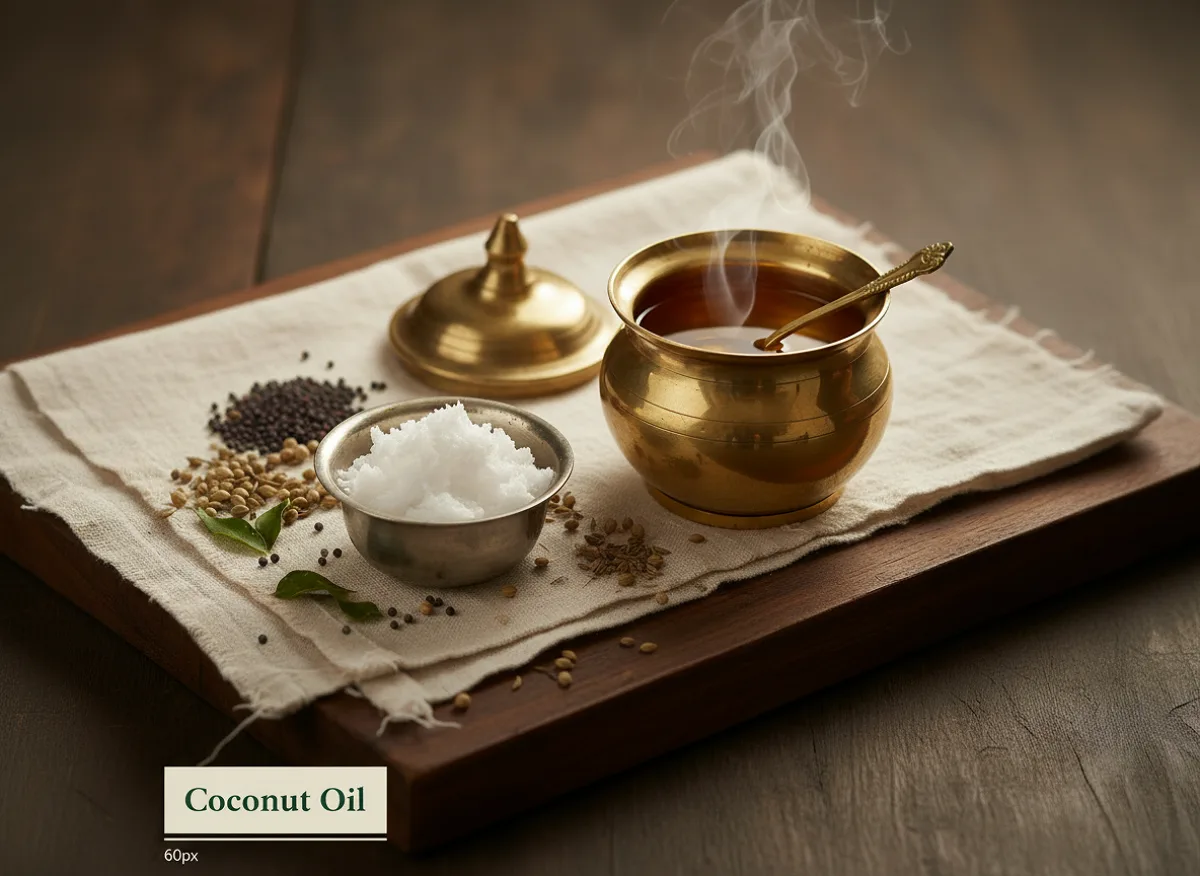
Coconut oil is a pale to white fat extracted from the meat (copra) of mature coconuts. It solidifies below 24°C and melts into a clear liquid when warm, with a mild, slightly sweet aroma and clean taste. Available in two main forms - virgin (cold-pressed, retaining coconut flavour) and refined (RBD, neutral and heat-stable) - it is a staple across South Indian, coastal, and traditional Indian kitchens. (IFCT 2017, Ref #T001)
Use in Indian Kitchen
Coconut oil is essential for South Indian cooking: tempering mustard seeds and curry leaves in sambar, rasam, and dal; shallow-frying vegetables like okra, aubergine, and potato; and enriching coconut-based curries and chutneys. In coastal regions, it features in fish curries and coconut milk preparations. North Indian kitchens use it for baking and sweet preparations. A practical tip: warm the oil gently before tempering spices to prevent sputtering, and store virgin oil in a cool place to preserve its delicate flavour.
Key Nutrients
Coconut oil is primarily fat (99.1 g per 100 g), with saturated fatty acids (lauric, myristic, and palmitic acids) as the dominant form. It contains negligible protein, carbohydrate, or micronutrients in significant amounts. The fatty acid profile and medium-chain triglyceride (MCT) content are notable features of its composition.
Health Benefits (Evidence-based)
- May support energy metabolism due to its medium-chain fatty acid content, which is absorbed and used more readily than longer-chain fats.
- Traditionally used in Ayurvedic massage (abhyanga) and scalp treatments for skin and hair nourishment.
- Contains lauric acid, which has antimicrobial properties and is linked to immune support in preliminary studies.
- May help maintain skin barrier function when applied topically, supporting natural moisture retention.
- Often used in traditional remedies for oral health and as a base for herbal oil preparations.
Culinary Uses (Vegetarian)
- Tempering spices (mustard seeds, curry leaves, dried chillies) in dal, sambar, and rasam.
- Shallow-frying vegetables: okra fry, brinjal fry, potato stir-fry, and root vegetable preparations.
- Enriching coconut milk curries, vegetable stews, and traditional South Indian gravies.
- Baking cakes, biscuits, and traditional sweets (laddoos, barfi).
- Making coconut chutneys, pickles, and coconut-based pastes.
- Drizzling over finished dishes for aroma and richness.
Caution
- High in saturated fat; use in moderation as part of a balanced diet, especially for those managing cholesterol or heart health.
- Refined coconut oil has a higher smoke point (around 177°C) than virgin oil (160°C); choose accordingly for high-heat cooking.
- Some people may experience digestive sensitivity to coconut oil; introduce gradually if new to consuming it.
- Topical use may cause allergic reactions in sensitive individuals; patch test before widespread application.
References
- Indian Council of Medical Research - National Institute of Nutrition (ICMR-NIN). Indian Food Composition Tables 2017 (IFCT 2017). Hyderabad: ICMR-NIN.
- Fife, B. (2004). The Coconut Oil Miracle. New York: Avery Publishing. [General reference on coconut oil composition and traditional uses in Asian kitchens.]
Health Benefits
- Provides Energy
- Supports Brain Health
- Improves Metabolism
Sourcing & Storage
Storage
Store coconut oil in an airtight glass or food-grade plastic container away from direct sunlight and heat. Virgin coconut oil is best kept in a cool, dark cupboard or refrigerator to preserve its delicate flavour and prevent rancidity. Refined coconut oil is more stable and can be stored at room temperature in a cool kitchen. In warm or humid climates, refrigeration extends shelf life. Ensure the container is tightly sealed to prevent moisture absorption and oxidation.
Shelf Life
Virgin coconut oil typically lasts 1-2 years when stored in a cool, dark place; refrigeration can extend this to 2-3 years. Refined coconut oil has a longer shelf life of 2-3 years at room temperature due to its stability. Once opened, both types should be used within 6-12 months for best quality. If the oil develops a rancid smell or off-taste, discard it.
Check Before You Buy
Look for virgin coconut oil with a clear, pale colour and a fresh, mild coconut aroma - avoid oils with a musty or off smell, which indicates poor storage or rancidity. Check the label for "cold-pressed" or "virgin" designation if you prefer the coconut flavour; "RBD" (refined, bleached, deodorised) oils are neutral and more heat-stable. Inspect the packaging for damage or leaks, and verify the manufacturing and expiry dates. Buy from reputable kirana shops or branded packs to avoid adulteration with cheaper oils.
In Ayurveda
In classical Ayurveda, coconut oil (नारियल तेल) is valued for its cooling (शीत) and nourishing properties. It is traditionally used in abhyanga (oil massage) and as a base for medicated oils. The oil is considered beneficial for balancing Pitta dosha due to its cooling nature.
Coconut oil has been used in Ayurvedic preparations for skin care, scalp health, and as a digestive aid. It is often recommended in warm climates and during summer months to support overall wellness and skin hydration.