Gingelly oil
Also known as Sesame oil, til oil, तिल का तेल (til ka tel), gingelly, nuvvula nune (Telugu), ellu ennai (Tamil)
Gingelly oil - also called til oil or sesame oil - is a golden to amber-coloured oil pressed from sesame seeds, prized across Indian kitchens for its warm, nutty flavour and high smoke point. Used for tempering dals and curries, shallow-frying vegetables, and dressing salads, it...
Nutrition per 100 g
Edible portion values from the master catalog.
More macros
Classification
About Gingelly oil
What it is
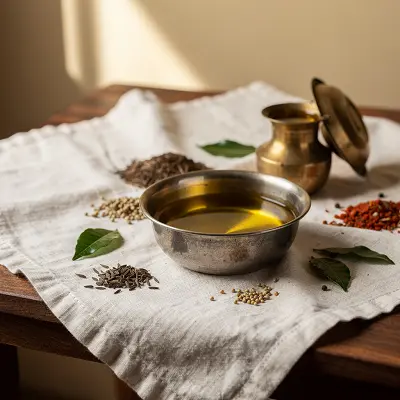
Gingelly oil, known as til oil in Hindi and nuvvula nune in Telugu, is a pale golden to amber oil extracted from sesame seeds. It has a warm, slightly nutty aroma and a clean, mild taste that deepens when the oil is made from roasted seeds. The oil is stable at room temperature and has a relatively high smoke point, making it ideal for both tempering and shallow-frying in Indian home cooking. (IFCT 2017, Ref #T004)
Use in Indian Kitchen
Gingelly oil is a cornerstone of South Indian cooking, especially in Tamil, Telugu, and Kannada kitchens. It is used to temper hot dals and curries - a few drops of hot oil infused with mustard seeds, curry leaves, and dried red chillies create the signature tadka. It is also used for shallow-frying vegetables like okra and aubergine, dressing rice dishes, and enriching coconut-based gravies in sambar and rasam. In North India, it appears in pickles and as a finishing oil for certain breads. A practical tip: heat the oil gently before tempering to release its nutty warmth without burning the spices.
Key Nutrients
Gingelly oil is rich in polyunsaturated and monounsaturated fats, including linoleic acid and oleic acid. It also contains vitamin E, a fat-soluble antioxidant, and small amounts of minerals such as copper and zinc. The exact nutrient profile per 100 ml is documented in IFCT 2017.
Health Benefits (Evidence-based)
- May support heart health due to its high content of unsaturated fats and absence of trans fats.
- Linked to anti-inflammatory properties, traditionally used in Ayurvedic massage and wellness practices.
- Rich in vitamin E and lignans, which may help protect cells from oxidative stress.
- May support skin and hair health when used in traditional oil massage (abhyanga).
- Traditionally used in Indian home remedies for digestive comfort and joint care.
Culinary Uses (Vegetarian)
- Tempering for dals, curries, and rice dishes with mustard seeds, curry leaves, and dried chillies.
- Shallow-frying vegetables such as okra, aubergine, and potato.
- Dressing for rice, salads, and cooked greens.
- Base oil for South Indian pickles and chutneys.
- Finishing oil for breads and savoury snacks.
- Enriching coconut-based gravies in sambar, rasam, and vegetable curries.
Caution
- Gingelly oil is calorie-dense; use in moderation as part of a balanced diet.
- Those with sesame allergies must avoid this oil entirely.
- Store away from heat and light to prevent rancidity and loss of flavour.
- Do not heat beyond its smoke point (approximately 410°C / 770°F for refined oil) to avoid degradation of nutrients and formation of harmful compounds.
References
- Indian Council of Medical Research - National Institute of Nutrition (ICMR-NIN). Indian Food Composition Tables (IFCT 2017). Reference #T004.
- Namiki, M. (2007). Nutraceutical functions of sesame, olive, and palm oils. Journal of the Science of Food and Agriculture, 87(8), 1431-1438.
Sourcing & Storage
Storage
Store gingelly oil in a cool, dark place away from direct sunlight and heat sources. Use a dark glass bottle or opaque container to protect the oil from light-induced oxidation. Keep the lid tightly sealed to prevent air exposure. In warm Indian climates, store in a cool cupboard or, if available, in a refrigerator to extend shelf life and maintain flavour. Avoid storing near the stove or in direct sunlight, as heat and light accelerate rancidity.
Shelf Life
When stored properly in a cool, dark place, gingelly oil typically lasts 12-18 months. Once opened, use within 6-8 months for best flavour and nutritional quality. In warm or humid climates, refrigeration after opening can extend shelf life to 10-12 months. Discard if the oil develops a musty or off smell, or if it becomes cloudy or thick, as these signs indicate rancidity.
Check Before You Buy
Look for oil that is clear and golden to pale amber in colour, with no cloudiness or sediment. Check the label for the pressing method - cold-pressed or expeller-pressed oils retain more flavour and nutrients than refined oils. Smell the bottle if possible; genuine gingelly oil has a warm, nutty aroma. Avoid oils with a musty or stale smell. Check the manufacturing and expiry dates on the packaging, and buy from reputable brands or trusted kirana shops to ensure purity and avoid adulteration with cheaper oils.
In Ayurveda
In classical Ayurvedic texts, sesame oil (तिल का तेल) is considered one of the most valued oils for both internal and external use. It is traditionally described as warming (ushna virya) and grounding, making it suitable for balancing Vata dosha. The oil is believed to nourish the nervous system and support joint health when used in abhyanga (oil massage).
Sesame oil is also mentioned in traditional Ayurvedic preparations for oral health (oil pulling) and as a base for medicated oils. Its natural antioxidants and lignans align with Ayurvedic concepts of supporting overall wellness and longevity (rasayana).