Soya
Glycine max · Also known as Soya bean, Soybean, Bhatmas, Muth, Garikalai, Toh rymbai, Nunghawai, Soya bean dal
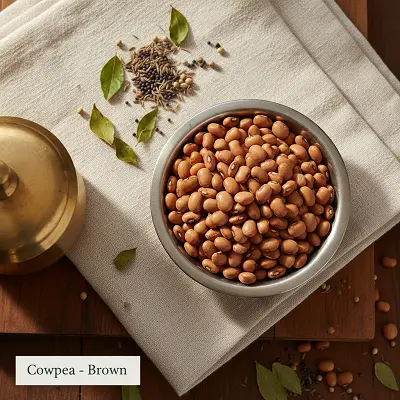
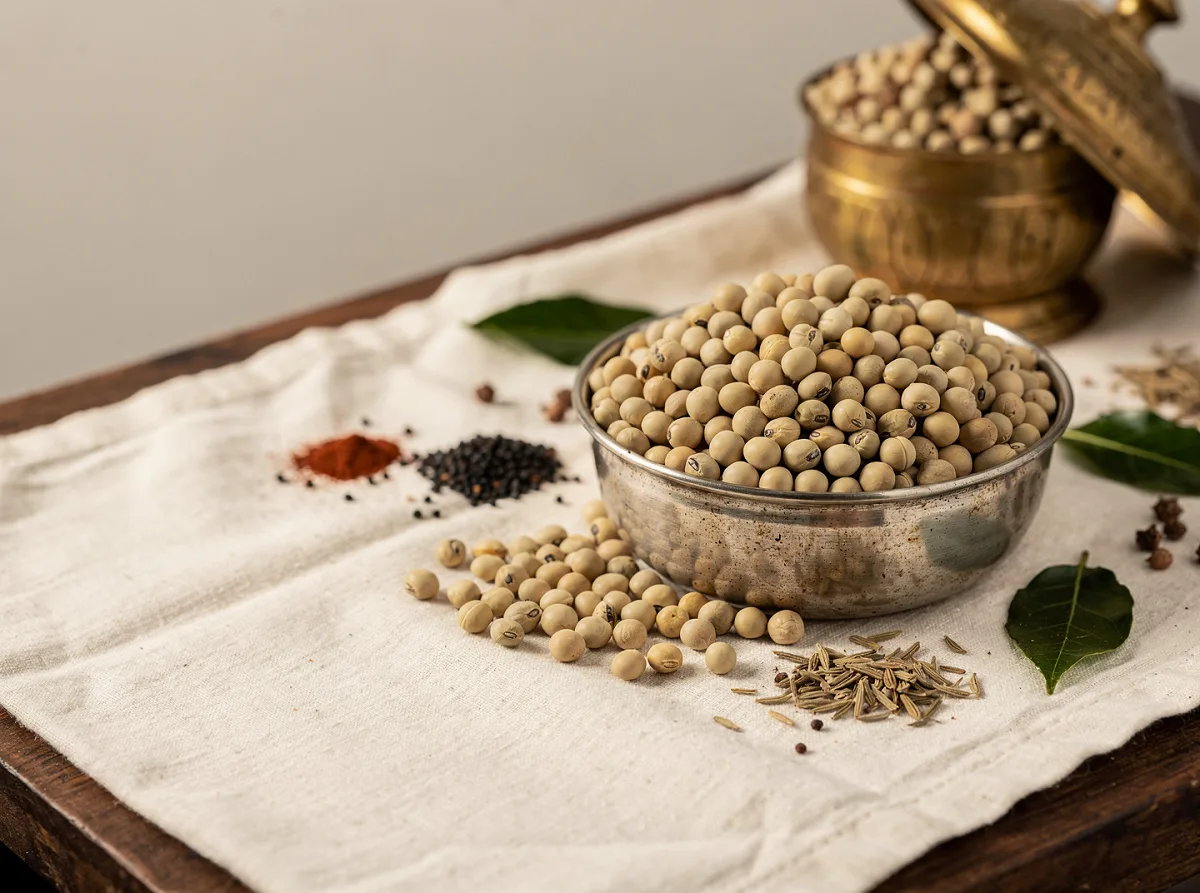
Soya (सोया, bhatmas) is a protein-rich legume with small, round beans in cream, brown, or black varieties. Whole dried beans are soaked and cooked into curries, or ground into flour for rotis and snacks; split soya dal cooks faster and is popular in sambar and dal preparations ac...
Nutrition per 100 g
Edible portion values from the master catalog.
More macros
Classification
About Soya
What it is
Soya (सोया, bhatmas, garikalai in South India) is a legume with small, smooth, round beans that range from cream to dark brown or black. Whole dried beans require soaking and longer cooking; split soya dal (soya ki dal) cooks faster and is lighter in texture. Soya is one of the most protein-dense plant legumes available in Indian markets, making it a cornerstone of vegetarian and vegan protein intake across North, South, and East India. (IFCT 2017, Ref #B025)
Use in Indian Kitchen
Whole soya beans are slow-cooked into curries (soya sabzi, soya masala), often paired with onion, tomato, and warm spices like cumin and turmeric. Split soya dal appears in sambar, rasam, and mixed dal preparations, lending body and earthiness. Soya flour (besan-like texture) is kneaded into rotis, parathas, and used in snack batters. In North India, soya chunks (textured soya protein) are a common meat substitute in dry curries and stir-fries. A practical tip: soak whole beans overnight to reduce cooking time and improve digestibility; roast split dal lightly before grinding to deepen flavour in flour blends.
Key Nutrients
Soya is exceptionally high in plant-based protein (around 36 g per 100 g raw beans, IFCT 2017), fibre, iron, calcium, phosphorus, and B vitamins. It also contains isoflavones and other bioactive compounds. Exact micronutrient profiles vary by variety and processing method; refer to IFCT 2017 for detailed composition.
Health Benefits (Evidence-based)
- High plant protein content supports muscle maintenance and repair, especially valuable in vegetarian and vegan diets.
- Rich in fibre, which may support digestive health and stable blood sugar levels.
- Contains iron and other minerals linked to energy and oxygen transport in the body.
- Isoflavones in soya have been studied for potential bone health and hormonal balance support in some populations.
- May help reduce cholesterol levels as part of a balanced diet, according to some nutritional research.
- Traditionally used in Ayurvedic and folk medicine as a nourishing, grounding food for overall wellness.
Culinary Uses (Vegetarian)
- Whole beans: slow-cooked curries, soya masala, mixed vegetable stews.
- Split dal: sambar, rasam, khichdi, mixed dal preparations.
- Flour: soya rotis, parathas, chikhalwali (Maharashtrian soya flour bread), snack batters.
- Textured soya protein (chunks): dry curries, stir-fries, biryani, pulao.
- Soya milk and tofu: curries, gravies, and desserts in modern Indian kitchens.
Caution
- Raw or undercooked soya contains trypsin inhibitors and other compounds that may impair digestion; always cook thoroughly.
- People with soya allergies or sensitivities should avoid all soya products.
- Those on thyroid medication should consume soya in moderation and maintain consistent intake, as it may affect iodine absorption; consult a healthcare provider if concerned.
- Soya is a common allergen; check labels on packaged soya products for cross-contamination warnings.
References
- Indian Council of Medical Research - National Institute of Nutrition (ICMR-NIN). Indian Food Composition Tables (IFCT 2017). Reference #B025 (Grain Legumes - Soya).
- Messina, M. (2016). Soy and Health Update: Evaluation of the Clinical and Epidemiologic Literature. Nutrients, 8(12), 754. A comprehensive review of soya's nutritional and health effects in peer-reviewed literature.
Health Benefits
- Antioxidant
- Supports Bone Health
- Supports Heart Health
- Helps Blood Sugar Control
- Supports Muscle Growth
Sourcing & Storage
Storage
Store dried whole soya beans and split soya dal in airtight glass jars or food-grade plastic containers, away from direct sunlight and moisture. Keep in a cool, dry cupboard or pantry (ideally below 25°C in Indian climates). In humid regions or during monsoon, store in the refrigerator or freezer to prevent moisture absorption and insect infestation. Soya flour should be kept in an airtight container in a cool place; refrigerate or freeze if you live in a very warm or humid area to extend shelf life and prevent rancidity.
Shelf Life
Whole dried soya beans and split soya dal keep for 8-12 months when stored in airtight containers in a cool, dry place. Soya flour has a shorter shelf life of 3-6 months at room temperature; refrigerated or frozen, it may last up to 12 months. Once cooked, soya curry or dal should be refrigerated and consumed within 2-3 days, or frozen for up to 3 months.
Check Before You Buy
Choose whole soya beans that are uniform in size, free of cracks, discoloration, or visible insect damage. Smell the beans - they should have a mild, clean legume aroma with no musty or off odours. Avoid beans that feel damp or clumpy, which indicate moisture or age. Split soya dal should be bright and uniform in colour, not dull or greyish. When buying from a mandi or kirana store, ask for recently harvested stock; packaged soya should have a clear date and be sealed properly. Check for any signs of weevil holes or debris.
In Ayurveda
In Ayurveda, soya is considered a cool (sheetal) and heavy (guru) legume. It is traditionally believed to help balance Vata and Pitta doshas, though those with a Kapha constitution should consume it in moderation. Classical texts suggest that soya is best digested when prepared with warming spices such as ginger, cumin, and asafoetida (hing), which aid its assimilation and reduce its heavy nature.