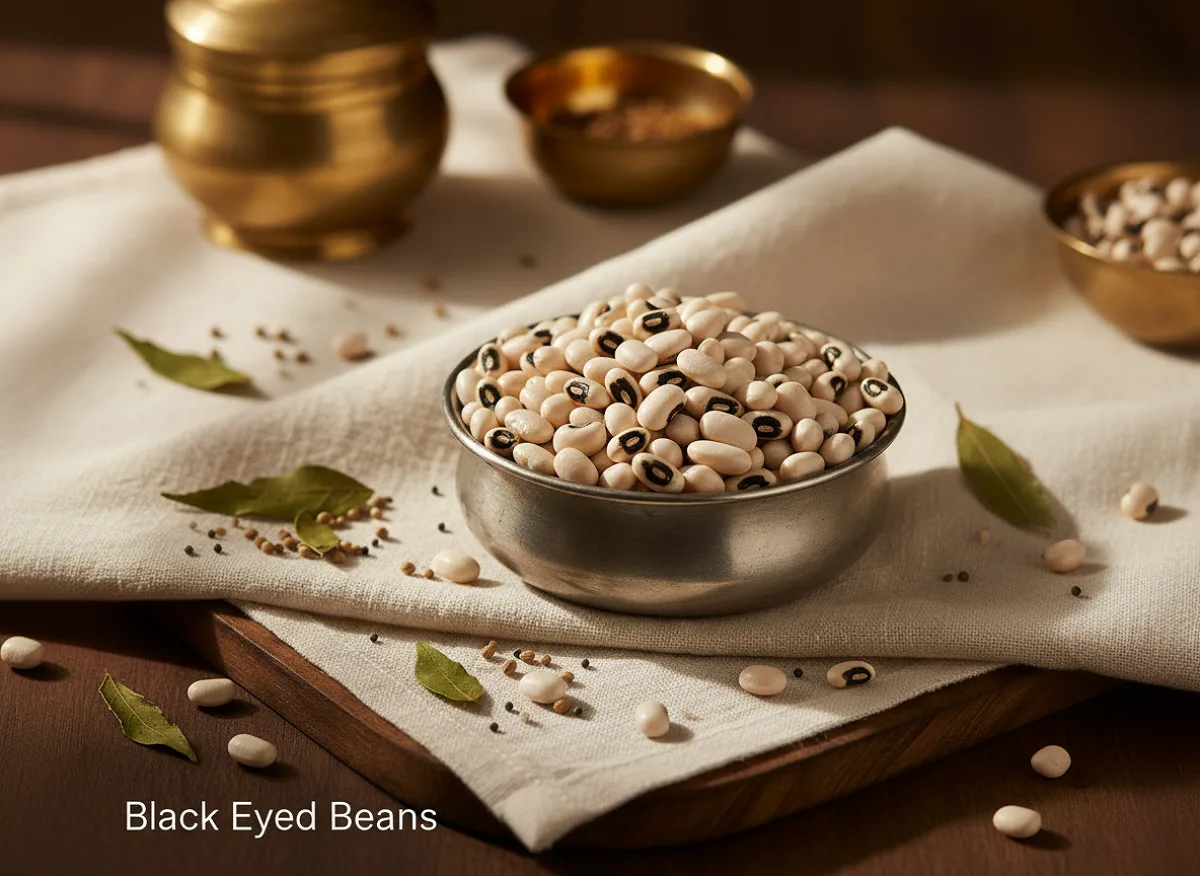
Black Eyed Beans
Phaseolus vulgaris · Also known as Lobia, Lobhia, Black Eyed Peas, Kala Chana (regional), लोबिया
Black eyed beans (लोबिया, lobia) are small, creamy white legumes with a distinctive black spot on one side, prized across Indian kitchens for their mild, slightly nutty flavour and tender texture when cooked. Whole dried beans are the most common form, soaked and simmered into da...
Nutrition per 100 g
Edible portion values from the master catalog.
More macros
Classification
About Black Eyed Beans
What it is
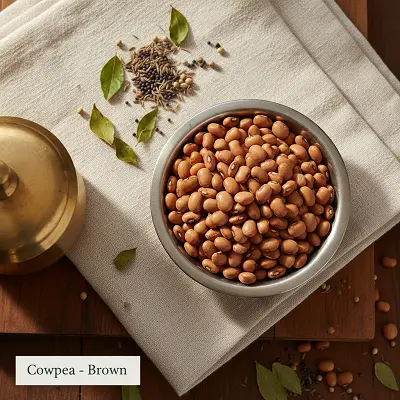
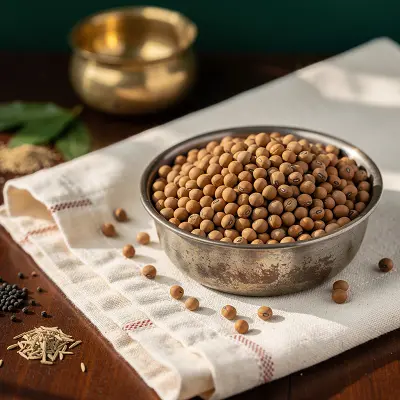
Black eyed beans (लोबिया, lobia) are small, oval legumes with creamy white skin and a characteristic black or dark brown spot near the hilum (the seed's attachment point). Native to Africa but now grown widely across India, they are sold whole and dried in most Indian markets and kirana shops. When cooked, they become soft and slightly fluffy, with a gentle, earthy-nutty taste that absorbs spices well without overpowering a dish. (IFCT 2017, Ref #B018)
Use in Indian Kitchen
Black eyed beans shine in North Indian lobia dal, a simple one-pot comfort dish cooked with onion, tomato, and cumin tempering. In South Indian kitchens, they appear in sambhar and kootu alongside vegetables and coconut. They are also popular in rice pilafs (pulao), mixed vegetable curries, and even sprouted as a crunchy salad topping. A practical tip: soak overnight to reduce cooking time and improve digestibility; if you forget, a quick boil for 2 minutes followed by a 1-hour soak works in a pinch. The beans cook in 30-40 minutes, making them faster than rajma or chana, and they hold their shape well even when fully tender.
Key Nutrients
Black eyed beans are a good source of plant-based protein, dietary fibre, and complex carbohydrates. They also contain iron, folate, magnesium, and polyphenols (antioxidants). For exact nutrient composition per 100 g cooked or raw, refer to IFCT 2017 tables (Ref #B018).
Health Benefits (Evidence-based)
- May support steady blood sugar levels due to their low glycaemic index and high fibre content.
- Linked to improved digestive health through soluble and insoluble fibre, supporting regular bowel function.
- Plant-based protein makes them a valuable addition to vegetarian and vegan diets for muscle maintenance.
- Iron and folate content supports oxygen transport and red blood cell formation, particularly helpful for those at risk of anaemia.
- Polyphenols and other antioxidants may help reduce inflammation and support overall cellular health.
- Traditionally used in Indian home cooking as a light, easily digestible legume for convalescence and everyday wellness.
Culinary Uses (Vegetarian)
- Whole dried beans: soaked and simmered into dal with tomato, onion, and spice tempering (North Indian lobia).
- Sambhar and kootu: combined with vegetables, coconut, and sambar powder (South Indian).
- Rice pilafs and pulao: cooked together with rice, ghee, and whole spices for a one-pot meal.
- Sprouted: raw sprouts in salads, or lightly cooked in stir-fries with ginger and green chilli.
- Curries and gravies: mashed or whole in tomato-based or coconut-based vegetable curries.
- Flour: ground into besan-like flour for batters and dough (less common but used regionally).
Caution
- Always soak and cook thoroughly; raw or undercooked beans contain compounds that may cause digestive discomfort.
- Those with IBS or sensitive digestion may find beans difficult; starting with small portions and well-cooked beans helps.
- High fibre content can cause bloating if eaten in large quantities suddenly; introduce gradually into your diet.
- Soaking water should be discarded and beans rinsed before cooking to reduce oligosaccharides (gas-producing compounds).
References
- Indian Council of Medical Research - National Institute of Nutrition (ICMR-NIN). Indian Food Composition Tables 2017 (IFCT 2017). Reference #B018 (Grain Legumes - Black Eyed Beans).
- Nutritional composition and health benefits of legumes: ICMR-NIN publications on pulses and plant-based protein sources in Indian diets.
Health Benefits
- Supports Digestion
- Supports Heart Health
- Helps Blood Sugar Control
- Provides Iron
- Provides Satiety
Sourcing & Storage
Storage
Store dried black eyed beans in an airtight container (glass jar, metal tin, or sealed plastic container) in a cool, dry place away from direct sunlight and moisture. Keep away from strong-smelling foods, as beans absorb odours easily. In humid climates (monsoon or coastal areas), store in the refrigerator or freezer to prevent moisture absorption and pest infestation. Once cooked, store in an airtight container in the refrigerator for up to 3-4 days, or freeze for up to 3 months.
Shelf Life
Whole dried black eyed beans, when stored in an airtight container in a cool, dry place, remain fresh and cook well for 6-12 months. After 12 months, they may take longer to soften and lose some nutritional potency, though they remain safe to eat. Cooked beans keep refrigerated for 3-4 days and frozen for up to 3 months. Once opened, use within 2-3 weeks if stored in a sealed container.
Check Before You Buy
When buying dried black eyed beans from a mandi or kirana shop, look for beans that are uniform in size, with a bright white colour and a clear black spot. Avoid beans that are cracked, discoloured, shrivelled, or have visible insect damage. Check the packaging date if buying pre-packed; fresher stock (within 6 months of packing) cooks faster. Smell the beans if possible - they should have a mild, clean legume aroma with no musty or off odours, which may indicate moisture or pest damage. Reputable sellers often allow you to feel the beans through the bag to check for moisture clumping.
In Ayurveda
In classical Ayurveda, black-eyed beans (lobia) are considered a light, easily digestible legume that supports balanced digestion. They are traditionally believed to pacify Vata and Kapha doshas, especially when prepared with warming spices such as ginger, turmeric, and cumin. The beans are thought to nourish the body gently without creating heaviness, making them suitable for regular consumption in Ayurvedic meal planning.