Bengal Gram Split
Cicer arietinum · Also known as Chana daal, yellow lentil, split chickpea, छना दाल (chana daal)
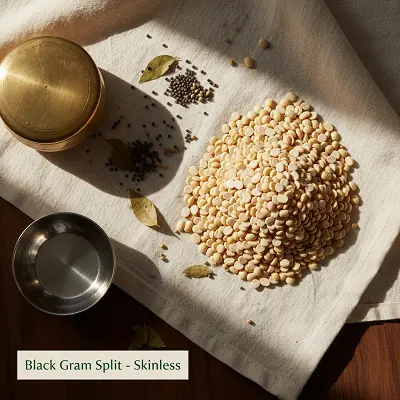
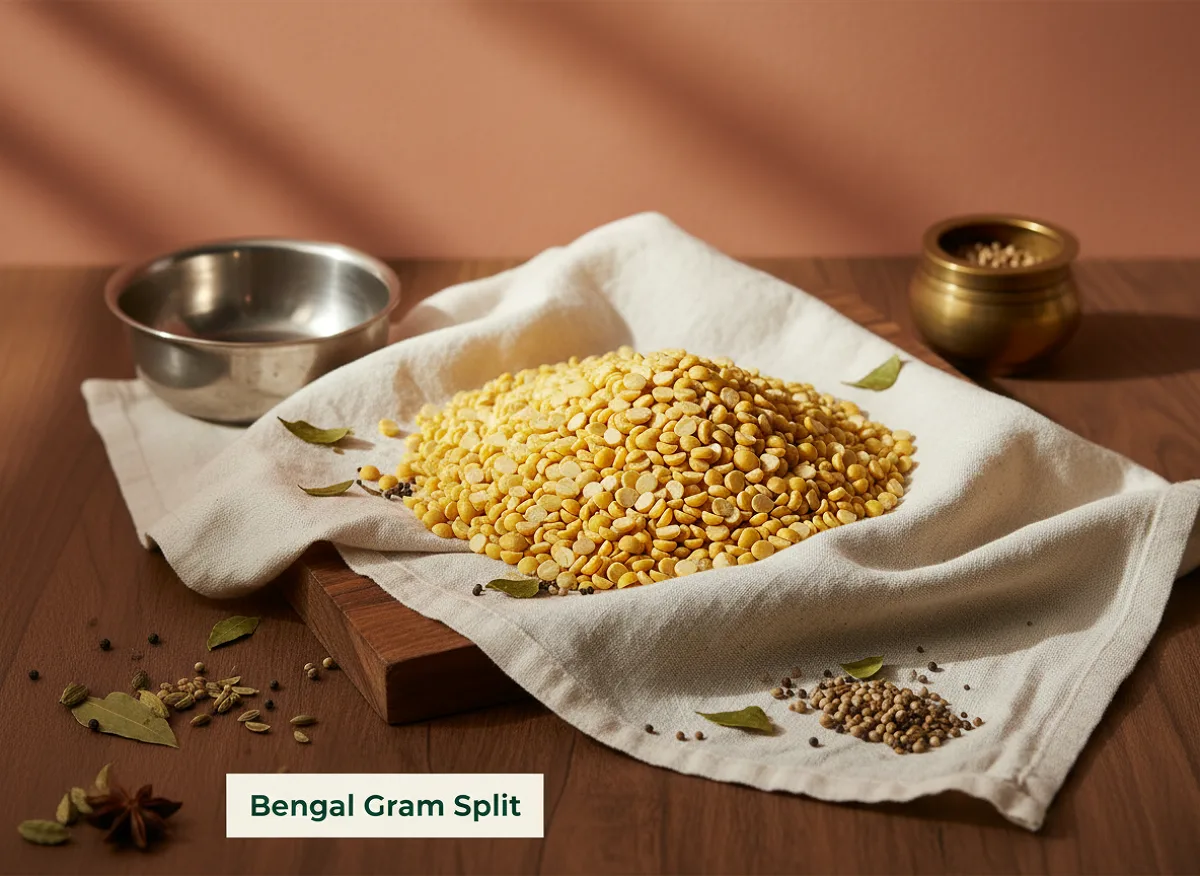
Bengal gram split (chana daal) is a golden-yellow, mild-flavoured lentil made by splitting and hulling whole chickpeas. Softer and quicker-cooking than whole chana, it's a kitchen staple across India - nutty and comforting in dal, sambar, and khichdi. A light tempering of cumin a...
Nutrition per 100 g
Mean values ± IFCT published SD (edible portion).
More macros
Classification
About Bengal Gram Split
What it is
Bengal gram split (chana daal or छना दाल) is a pale golden lentil created by splitting and removing the husk from whole chickpeas. Unlike the larger whole chana, these small, flat pieces cook in 20-30 minutes and have a naturally buttery, mild flavour. It is a workhorse legume across North and South Indian home kitchens, prized for its digestibility and gentle taste. (IFCT 2017, Ref #B001)
Use in Indian Kitchen
Chana daal shines in everyday dal - tempered with cumin seeds, dried red chilli, and a pinch of asafoetida, it becomes a simple, nourishing bowl. In the South, it is a key ingredient in sambar powder and sambar itself, adding body and subtle sweetness. North Indian khichdi pairs beautifully with split chana for a light, easily digestible one-pot meal. It also features in dosa and idli batters (mixed with urad daal), and as a roasted snack or chikhalwali (puffed chana daal). A practical tip: dry-roast the daal lightly before cooking to deepen its flavour and reduce any raw taste.
Key Nutrients
Bengal gram split is rich in plant-based protein (around 20g per 100g), dietary fibre, and complex carbohydrates. It contains iron, phosphorus, magnesium, and B vitamins (especially folate and thiamine). The presence of polyphenols and other phytonutrients contributes to its antioxidant profile. Exact nutrient composition is documented in IFCT 2017.
Health Benefits (Evidence-based)
- High protein content supports muscle maintenance and repair, making it valuable for vegetarian and vegan diets.
- Dietary fibre aids digestive health and may help maintain steady blood sugar levels.
- Iron and folate content supports red blood cell formation and may help prevent anaemia, particularly important for women and children.
- Polyphenols and antioxidants may help reduce oxidative stress and support overall cellular health.
- Low glycaemic index makes it suitable for balanced blood sugar management in everyday meals.
- Traditionally used in Ayurvedic cooking as a light, easily digestible protein for all constitutions.
Culinary Uses (Vegetarian)
- Simple tadka daal - tempered with ghee, cumin, dried chilli, and asafoetida.
- Sambar base and sambar powder blends (South Indian).
- Khichdi with rice and vegetables for comfort food and convalescent meals.
- Dosa and idli batter (mixed with urad daal for fermentation).
- Roasted and salted as a crunchy snack or chikhalwali.
- Chana daal curry with coconut and tamarind (South Indian style).
- Mixed vegetable daal with seasonal sabzi.
Caution
- Like all legumes, chana daal contains oligosaccharides that may cause bloating or gas in some people; soaking and rinsing before cooking can reduce this.
- Those with kidney disease or gout should consume in moderation and consult a healthcare provider, as legumes are purine-rich.
- Raw or undercooked legumes contain enzyme inhibitors; always cook thoroughly.
References
- Indian Council of Medical Research - National Institute of Nutrition (ICMR-NIN). Indian Food Composition Tables (IFCT) 2017. Hyderabad: NIN; 2017. [Grain Legumes category, Ref #B001]
- Vaya, J. & Mahmood, U. (2006). Flavonoid content in leaf extracts of the fig (Ficus carrica L.), carob (Ceratonia siliqua L.) and locust bean (Ceratonia siliqua L.) trees. Journal of Agricultural and Food Chemistry, 54(20), 7651-7654. [General legume polyphenol reference]
Health Benefits
- Supports Digestion
- Supports Heart Health
- Helps Blood Sugar Control
- Provides Iron
- Provides Satiety
Sourcing & Storage
Storage
Store chana daal in an airtight glass jar or container in a cool, dry place away from direct sunlight and moisture. Keep away from strong-smelling spices and foods, as lentils absorb odours easily. In humid climates (monsoon or coastal areas), store in the refrigerator or freezer to prevent moisture absorption and insect infestation. Ensure the container is sealed tightly after each use.
Shelf Life
When stored in an airtight container in a cool, dry place, Bengal gram split keeps for 6-8 months. In the refrigerator, it can last up to 1 year; in the freezer, up to 18 months. Once cooked, chana daal dal keeps refrigerated for 3-4 days in a sealed container, or can be frozen for up to 3 months.
Check Before You Buy
Look for bright, uniform golden-yellow colour with no discolouration, dark spots, or greyish tinge, which may indicate age or moisture damage. The daal should feel dry and free-flowing; avoid bags that feel damp or clumpy. Check the packaging date and buy from reputable kirana shops or mandi vendors with good turnover. Smell the daal if buying loose - it should have a mild, clean legume aroma with no musty or off odours. Avoid daal with visible stones, debris, or insect damage. Packed daal should be sealed and stored away from heat and light.
In Ayurveda
In classical Ayurveda, Bengal gram split (chana daal) is considered a balancing legume that pacifies Vata and Kapha doshas. Its rasa (taste) is predominantly Madhura (sweet), and its vipaka (post-digestive effect) is also Madhura, making it relatively easy to digest compared to heavier pulses. Traditionally, it has been valued as a strength-building (balya) and energy-promoting food, particularly in convalescent diets and for those recovering from illness. The daal is classified as having a warm (Ushna) potency, which is why it is often consumed in moderation during summer months in Ayurvedic practice.