Black Gram Split - Skinless
Phaseolus mungo · Also known as Urad Dal Dhuli, Urid Dal, Skinless Black Gram, White Urad Dal
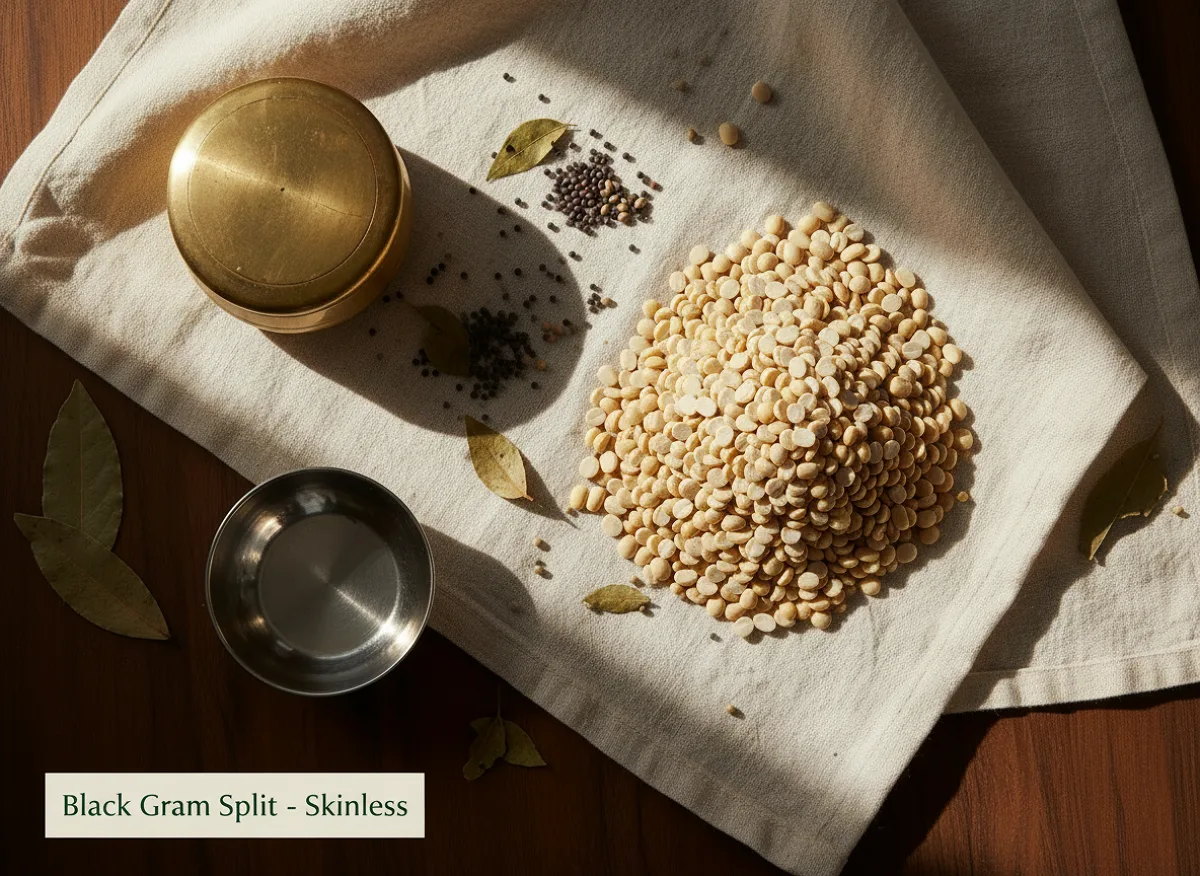
Black gram split and skinless (उड़द दाल धुली, urad dal dhuli) is the creamy white interior of black gram beans, husked and split into two halves. Mild, slightly sweet, and quick to cook, it forms the backbone of South Indian batters for dosa and idli, and appears in North Indian...
Nutrition per 100 g
Mean values ± IFCT published SD (edible portion).
More macros
Classification
About Black Gram Split - Skinless
What it is
Black gram split and skinless (urad dal dhuli) is the white, creamy interior of black gram beans after the dark outer husk has been removed and the grain split lengthwise. Each half is small, flat, and pale ivory in colour. It cooks quickly - usually within 20-30 minutes - and develops a soft, slightly sticky texture that binds beautifully into batters and curries. This form is the workhorse of Indian kitchens, especially across the South. (IFCT 2017, Ref #B003)
Use in Indian Kitchen
Urad dal dhuli is essential for South Indian fermented batters: soaked and ground with rice, it becomes the foundation of dosa, idli, and uttapam. In North India, it features in creamy dal makhani, tadka dal, and as a tempering spice when fried in ghee with cumin and dried chillies. It also stuffs parathas, thickens sambar, and appears in sweet preparations like halwa. A practical tip: soak it for 4-6 hours before grinding for batter to ensure a light, airy ferment; for curries, a quick rinse and direct cooking works fine. The slightly sticky nature means it needs less water than other dals, so adjust liquid carefully.
Key Nutrients
Black gram split is rich in plant-based protein (around 24-25g per 100g cooked), dietary fibre, and B vitamins including folate and thiamine. It also contains iron, magnesium, and phosphorus. Exact nutrient composition varies slightly by source and processing; refer to IFCT 2017 for standardised Indian food values.
Health Benefits (Evidence-based)
- High protein content supports muscle maintenance and repair, particularly valuable in vegetarian diets.
- Dietary fibre aids digestive health and may help maintain steady blood sugar levels.
- Rich in folate, which is important for cell division and DNA synthesis.
- Iron and other minerals support energy production and overall metabolic function.
- Traditionally used in Ayurvedic cooking as a nourishing, easily digestible legume.
Culinary Uses (Vegetarian)
- Fermented batters for dosa, idli, uttapam, and appam.
- Creamy dals and curries (dal makhani, tadka dal, sambar base).
- Tempering in ghee with cumin, mustard seeds, and dried chillies.
- Paratha and puri fillings, mixed with spices and onion.
- Sweet halwa and kheer when cooked with jaggery and ghee.
- Thickening agent in vegetable curries and sambhar.
Caution
- Raw or undercooked urad dal contains enzyme inhibitors; always cook thoroughly.
- People with kidney disease or gout should consume in moderation due to purine content.
- May cause bloating or gas in sensitive individuals; soaking and cooking with ginger or asafoetida can help.
- Store away from moisture and pests; discard if it develops an off smell or visible mould.
References
- Indian Council of Medical Research - National Institute of Nutrition (ICMR-NIN). Indian Food Composition Tables 2017 (IFCT 2017). Reference code B003 - Black Gram (Skinless, Split).
- Longvah, T., Ananthan, R., Bhaskarachary, K., & Venkaiah, K. (2017). Indian Food Composition Tables. Hyderabad: National Institute of Nutrition, ICMR.
Health Benefits
- Supports Digestion
- Supports Heart Health
- Helps Blood Sugar Control
- Provides Iron
- Supports Muscle Growth
Sourcing & Storage
Storage
Store urad dal dhuli in an airtight glass jar or food-grade plastic container, away from direct sunlight and heat. Keep in a cool, dry place (ideally below 25°C in Indian homes). In humid climates, store in the refrigerator or add a food-safe desiccant packet to the jar. Keep away from strong-smelling spices and foods, as it absorbs odours easily. Ensure the container is sealed tightly after each use to prevent moisture and pest entry.
Shelf Life
When stored properly in an airtight container at room temperature, urad dal dhuli remains fresh for 6-8 months. In the refrigerator, it can last up to 10-12 months. Once opened, use within 2-3 months for best flavour and texture. Discard if it develops an off smell, visible discolouration, or signs of insect damage.
Check Before You Buy
Look for bright, uniform ivory-white colour with no dark spots, discolouration, or grey patches, which indicate age or mould. The dal should feel dry and light; avoid bags that feel damp or clumpy. Check the packaging date if buying from a kirana or supermarket; fresher stock (within 3-4 months of packing) cooks better and has a cleaner taste. Smell the dal if possible - it should have a mild, neutral legume aroma, never musty or rancid. Avoid bags with visible debris, broken pieces, or insect damage. Bulk purchases from a trusted mandi or store with good turnover are often fresher than old stock on shelves.
In Ayurveda
In Ayurvedic tradition, urad dal (Vigna mungo) is classified as vata-pacifying and deeply nourishing. Its rasa (taste) is sweet, its guna (qualities) are heavy and unctuous, and its virya (potency) is warming. It is considered a rasayana (rejuvenative) food, particularly valued for post-illness recovery and building strength. Classical texts recommend it for those with weak digestion or depleted tissues.
However, due to its heavy and kapha-increasing nature, individuals with strong kapha constitution or tendency toward congestion should consume it in moderation and ideally with warming spices like ginger, asafoetida, or black pepper to aid digestion and balance its heaviness.