Brown rajmah
Phaseolus vulgaris · Also known as Rajma, Barbati beej, Razma, Phansi, Thugare bele, Karamani, Barigalu, kidney bean, brown bean
Brown rajmah (राजमा) is a dried kidney bean with a deep mahogany skin and creamy white interior, staple across Indian home kitchens. Whole dried beans that soften into tender, earthy mouthfuls when cooked, rajmah brings nutty warmth to comfort-food curries and one-pot rice dishes...
Nutrition per 100 g
Mean values ± IFCT published SD (edible portion).
More macros
Classification
About Brown rajmah
What it is
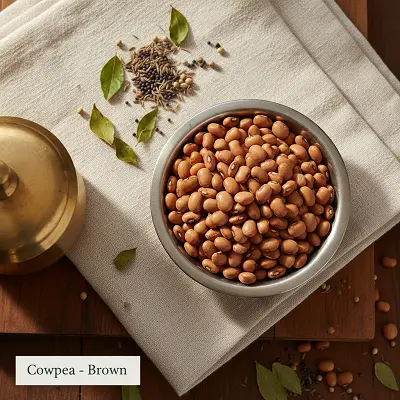
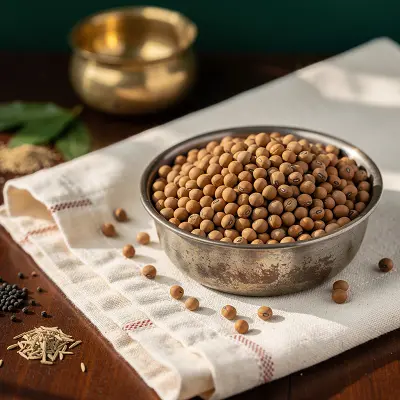
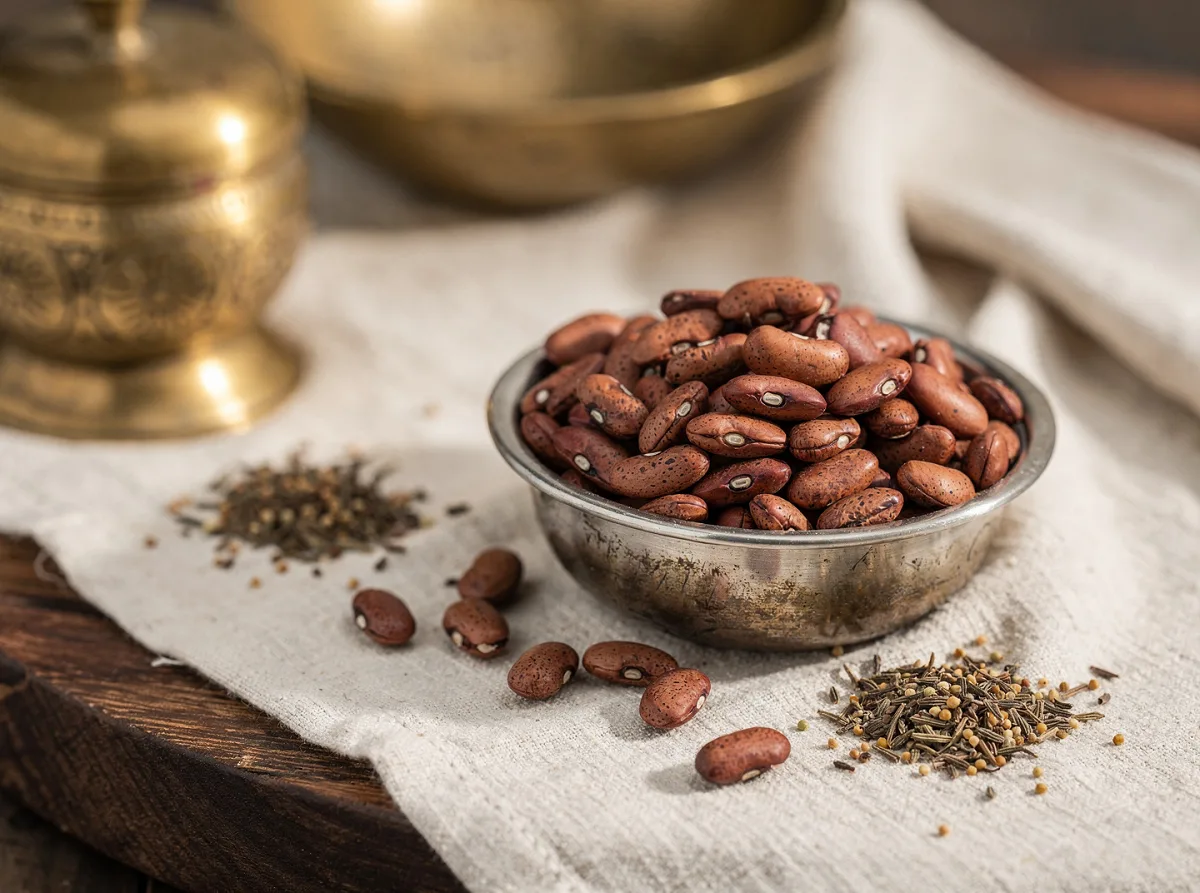
Brown rajmah is a dried kidney bean (Phaseolus vulgaris) with a glossy mahogany-brown exterior and pale cream flesh inside. When raw, the beans are hard and compact; after soaking and cooking, they become soft, slightly sweet, and deeply savoury. Rajmah is a grain legume central to Indian vegetarian protein, used whole in curries, rice dishes, and dal preparations across North, South, and regional Indian kitchens. (IFCT 2017, Ref #B019)
Use in Indian Kitchen
Rajmah is most famous in North India as rajmah chawal - a one-pot comfort dish of slow-cooked beans with onion, tomato, ginger, garlic, and warm spices like cumin and coriander, served with steamed rice. In South Indian kitchens, whole or split rajmah appears in sambhar (the tamarind-spiced vegetable stew), kootu (a coconut-lentil curry), and mixed vegetable curries. Rajmah is also ground into flour for besan-like batters or left whole in pressure-cooked dal-style preparations. A practical tip: always soak dried rajmah overnight in plenty of water to reduce cooking time and improve digestibility; discard the soaking water before cooking. Some cooks add a pinch of baking soda to the cooking water to soften the beans faster.
Key Nutrients
Brown rajmah is rich in plant-based protein, dietary fibre, and complex carbohydrates. It contains iron, folate, magnesium, and manganese. Exact nutrient composition per 100 g cooked beans is available in IFCT 2017 (Ref #B019); raw dried beans are more concentrated in protein and fibre per unit weight.
Health Benefits (Evidence-based)
- High in plant protein and fibre, supporting satiety and steady energy release in vegetarian diets.
- May help maintain healthy blood sugar levels due to low glycaemic index and resistant starch content.
- Linked to heart health through fibre, folate, and polyphenol content, traditionally valued in Ayurvedic wellness.
- Iron and folate support oxygen transport and red blood cell formation, especially useful in plant-based eating.
- Polyphenols and antioxidants in the bean coat may offer anti-inflammatory benefits.
Culinary Uses (Vegetarian)
- Whole beans in rajmah chawal, sambhar, kootu, and mixed vegetable curries.
- Pressure-cooked or slow-cooked dal-style with ghee tempering and cumin.
- Ground into flour for batters, fritters, or thickening curries.
- Cold rajmah salad with cucumber, tomato, and lemon dressing (modern Indian kitchen).
- Sprouted rajmah in salads or lightly stir-fried with spices.
Caution
- Raw or undercooked rajmah contains lectins and should never be eaten uncooked; always soak and boil thoroughly.
- Those with IBS or sensitive digestion may find whole beans harder to tolerate; soaking, discarding soak water, and slow cooking help reduce gas-forming compounds.
- High fibre content means gradual introduction is wise if not accustomed to legumes.
References
- Indian Council of Medical Research - National Institute of Nutrition (ICMR-NIN). Indian Food Composition Tables (IFCT 2017). Reference #B019 (Grain Legumes - Rajmah, brown).
- Vaya, S. & Mahmood, S. S. (2006). Nutritional and health benefits of chickpea (Cicer arietinum L.): a review. Journal of the Science of Food and Agriculture, 86(7), 1160-1172. [General legume nutritional framework applicable to rajmah.]
Sourcing & Storage
Storage
Store dried brown rajmah in an airtight container (glass jar, metal tin, or food-grade plastic) in a cool, dry place away from direct sunlight and moisture. Keep away from strong-smelling foods and spices, as dried beans absorb odours easily. In humid Indian climates, store in the refrigerator or freezer to prevent moisture absorption and insect infestation. Ensure the container is sealed tightly after each use.
Shelf Life
Dried brown rajmah keeps for 6-12 months when stored in an airtight container in a cool, dry place. Older beans (beyond 12 months) may take longer to soften during cooking but remain safe if stored properly. Once cooked, rajmah curry keeps refrigerated for 3-4 days in an airtight container, or frozen for up to 3 months.
Check Before You Buy
When buying dried brown rajmah from a mandi or kirana store, look for beans that are uniform in colour (deep mahogany-brown), free of cracks, discolouration, or mould spots. Avoid beans that feel hollow or lightweight, which indicate age or pest damage. Check the packaging date if buying pre-packed; fresher stock (within 6 months of packing) cooks faster and more evenly. Smell the beans if possible - they should have a mild, clean legume aroma with no musty or off odours. Avoid beans mixed with stones, debris, or shrivelled specimens.
In Ayurveda
In classical Ayurvedic texts, rajmah (kidney beans) is recognized as a warming legume with a sweet (madhura) rasa and heavy (guru) quality. It is traditionally considered to pacify Vata and Pitta doshas when prepared with warming spices such as ginger, cumin, and asafoetida (hing). Ayurvedic practitioners often recommend rajmah as a nourishing food for those recovering from illness or requiring sustained energy. The addition of ghee and digestive spices during cooking is believed to enhance its digestibility and reduce the tendency toward bloating.