Brown Cowpea
Vigna catjang · Also known as Chawli, lobia, kala chawli, black-eyed pea variant, Vigna catjang
Brown cowpea (चावली, chawli) is a small, earthy legume with a nutty flavour and creamy texture when cooked. Whole dried beans are the most common form in Indian kitchens, where they feature in dal curries, sambar, and slow-cooked stews across South and West India. Quick to cook c...
Nutrition per 100 g
Mean values ± IFCT published SD (edible portion).
More macros
Classification
About Brown Cowpea
What it is
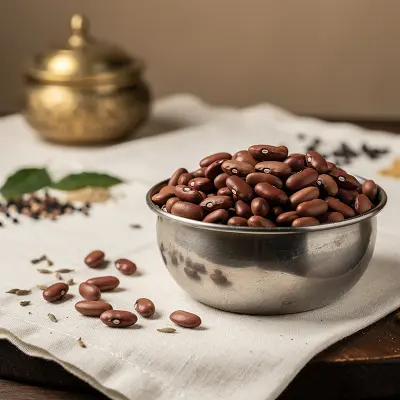
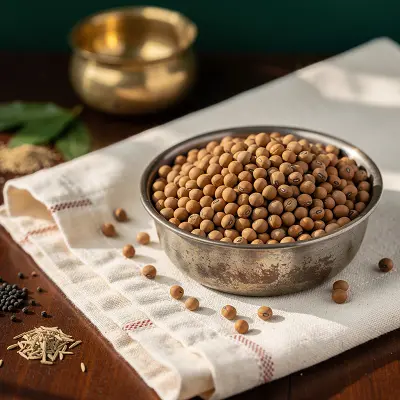
Brown cowpea, known as चावली (chawli) or लोबिया (lobia) in Hindi and regional Indian languages, is a small dried legume with a smooth, warm brown skin and pale interior. The beans are compact and cook relatively quickly, absorbing the flavours of tempering and spice pastes readily. Whole dried form is standard in Indian home kitchens, particularly across South India, Maharashtra, and Gujarat. (IFCT 2017, Ref #B005)
Use in Indian Kitchen
Brown cowpea shines in slow-cooked dal curries, sambar, and kootu preparations where its creamy texture balances sharp tamarind and coconut. In Maharashtra and Gujarat, it appears in mixed-bean curries and one-pot rice dishes. A practical tip: soak overnight to reduce cooking time and improve digestibility, then cook until just tender - overcooking turns the beans mushy. The dal pairs beautifully with a tadka of mustard seeds, curry leaves, dried red chilli, and ghee, and is equally at home in a simple, everyday family meal or festival spread.
Key Nutrients
Brown cowpea is a good source of plant-based protein, dietary fibre, and complex carbohydrates. It also contains iron, folate, magnesium, and polyphenols. Exact nutrient composition per 100 g (cooked or raw) is available in IFCT 2017, Ref #B005.
Health Benefits (Evidence-based)
- High in plant protein and fibre, supporting sustained energy and digestive health.
- May help maintain steady blood sugar levels due to its low glycaemic index and fibre content.
- Rich in folate and iron, nutrients important for blood health and energy metabolism.
- Contains polyphenols and antioxidants linked to general anti-inflammatory support.
- Traditionally used in Ayurvedic and home cooking as a nourishing, easily digestible legume for regular family meals.
Culinary Uses (Vegetarian)
- Dal curry with coconut, tamarind, and tempering.
- Sambar base, paired with vegetables and rice.
- Kootu - a South Indian mixed vegetable and legume stew.
- Mixed-bean curries and one-pot rice dishes.
- Slow-cooked stews with onion, tomato, and warming spices.
- Sprouted and added to salads or light breakfast dishes.
Caution
- Raw or undercooked beans contain lectins; always cook thoroughly until soft.
- Soaking and discarding the soak water reduces oligosaccharides, which may cause bloating in sensitive individuals.
- Those with kidney disease or on certain medications should consult a healthcare provider before significantly increasing legume intake.
References
- Indian Council of Medical Research - National Institute of Nutrition (ICMR-NIN). Indian Food Composition Tables (IFCT 2017). Hyderabad: NIN; 2017. Ref #B005 (Grain Legumes category).
- Vaya, J. & Mahmood, U. (2006). Flavonoid content in leaf extracts of the fig (Ficus carrica L.), carob (Ceratonia siliqua L.) and locust bean (Ceratonia siliqua L.) trees. Journal of Agricultural and Food Chemistry, 54(20), 7651-7654. [General legume polyphenol reference]
Health Benefits
- Supports Digestion
- Supports Heart Health
- Helps Blood Sugar Control
- Provides Iron
- Provides Satiety
Sourcing & Storage
Storage
Store dried brown cowpea in an airtight container (glass jar or sealed plastic tub) in a cool, dry place away from direct sunlight and moisture. Keep away from strong-smelling spices and foods to prevent flavour absorption. In humid climates, store in the refrigerator or freezer to prevent insect infestation and moisture uptake. Ensure the container is sealed tightly after each use.
Shelf Life
Dried brown cowpea keeps for 8-12 months when stored in an airtight container in a cool, dry place. In humid or warm conditions, shelf life may reduce to 4-6 months. Once cooked, store the dal in the refrigerator for up to 3-4 days in an airtight container, or freeze for up to 2-3 months.
Check Before You Buy
Look for beans that are uniform in colour (warm brown), free of cracks, discolouration, or visible insect damage. Avoid beans that feel damp, smell musty, or show signs of mould. When buying from a mandi or kirana store, ask for recently harvested stock if possible. Check packaged beans for a manufacturing date and ensure the seal is intact. A handful should feel dry and rattle slightly when shaken - this indicates proper moisture content.
In Ayurveda
In classical Ayurvedic texts, cowpeas (लोबिया) are recognized as a light, easily digestible legume with a slightly astringent (कषाय) taste. They are considered warming (उष्ण) in nature and are traditionally used to support digestive fire (अग्नि) without creating heaviness. Cowpeas are often recommended in Ayurvedic cooking for those seeking plant-based protein that does not aggravate Vata or Pitta when prepared with warming spices and ghee.