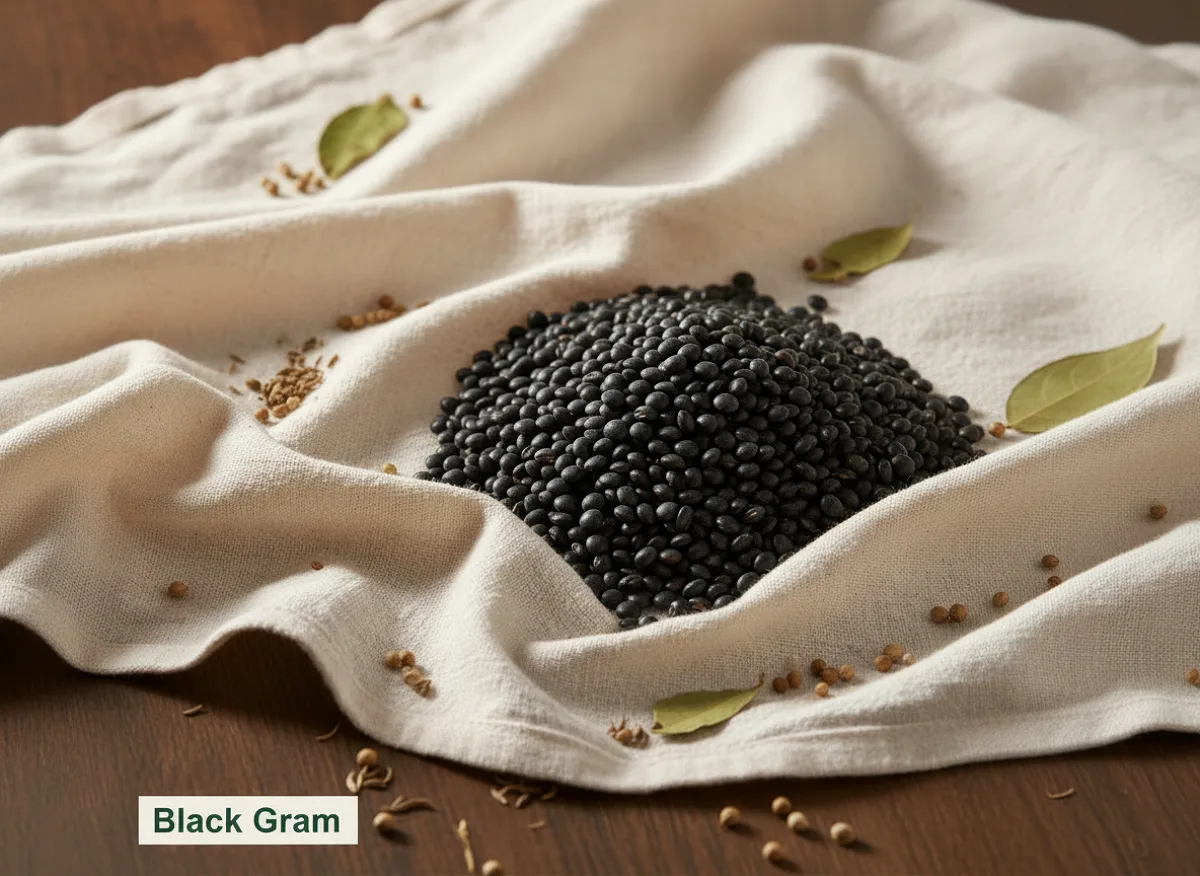
Black Gram
Phaseolus mungo · Also known as Urad
Black gram, or urad, is a small black lentil widely used across Indian kitchens in whole, split, and flour forms. A staple grain legume rich in protein and fibre, it is essential to South Indian batters, North Indian dal preparations, and regional snacks. (IFCT 2017, Ref #B004)
Nutrition per 100 g
Mean values ± IFCT published SD (edible portion).
More macros
Classification
About Black Gram
What it is
Black gram is a small, round legume with a shiny black seed coat and white interior. Native to the Indian subcontinent, it is one of the most versatile grain legumes in Indian cooking, used whole, split (urad dal), or ground into flour. The plant is also valued for its nitrogen-fixing properties in traditional crop rotation. (IFCT 2017, Ref #B004)
Use in Indian Kitchen
Black gram is indispensable across regions. In South India, urad dal and rice flour form the foundation of idli and dosa batters - fermented overnight to create that characteristic fluffy, tangy crumb. In North India, whole urad is simmered into creamy dal makhani or tempered with cumin and chilli for everyday comfort. East and West Indian kitchens use it in pakora batters, papad dough, and sweet preparations. The split dal cooks quickly and pairs beautifully with ghee and tempering spices. Urad flour appears in traditional sweets, ladoos, and halwas. It is a monsoon and winter staple, believed to warm the body and sustain energy through cooler months.
Ayurvedic Connection
In Ayurveda, black gram is considered warming (ushna virya) and grounding, traditionally used to balance vata dosha. It is believed to support strength and vitality, and is often recommended in winter and post-illness recovery diets. The split dal is considered easier to digest than the whole grain, making it a gentler choice for sensitive constitutions.
Key Nutrients
Black gram is a rich source of plant-based protein, dietary fibre, and complex carbohydrates. It contains B vitamins (especially folate and thiamine), iron, magnesium, phosphorus, and potassium. The presence of polyphenols and other bioactive compounds contributes to its antioxidant profile. Exact nutrient composition varies slightly by variety and processing; refer to IFCT 2017 (Ref #B004) for detailed micronutrient values.
Health Benefits (Evidence-based)
- May support steady energy and satiety due to high protein and fibre content, making it valuable in plant-based diets.
- Linked to improved digestive health when cooked with warming spices and ghee, as traditionally prepared.
- Rich in iron and folate, supporting blood health and oxygen transport, particularly beneficial for vegetarian households.
- Contains compounds that may help regulate blood sugar levels when part of a balanced meal.
- Traditionally used to support muscle recovery and strength, especially valued by athletes and those doing physical labour.
- Fermented preparations (idli, dosa batters) may improve nutrient bioavailability and support gut health through natural probiotics.
Culinary Uses (Vegetarian)
- Whole grain: Simmered into dal makhani, tadka dal, or slow-cooked curries; used in sambar and rasam bases.
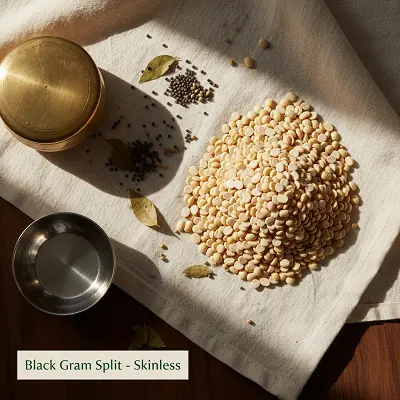
- Split dal (urad dal): Quick-cooking dal for everyday meals; tempered with ghee, cumin, and dried chilli; mixed into vegetable curries.
- Flour (urad powder): Idli and dosa batter (fermented with rice flour); pakora and bhajiya batters; traditional sweets like urad ladoo and halwa.
- Papad and wafers: Dried urad papad, a crispy accompaniment to meals.
- Sprouted: Added to salads and light preparations for extra nutrition and digestibility.
Caution
- Raw or undercooked black gram contains enzyme inhibitors and lectins; always cook thoroughly to improve digestibility and nutrient absorption.
- High in purines - those with gout or uric acid concerns should consume in moderation and consult a healthcare provider.
- May cause bloating or gas in sensitive individuals; cooking with asafoetida (hing), ginger, or cumin can help reduce this effect.
- Fermented preparations (idli, dosa) are generally easier to digest than whole cooked dal for those with weak digestion.
References
- Indian Council of Medical Research - National Institute of Nutrition (ICMR-NIN). Indian Food Composition Tables 2017. Hyderabad: NIN; 2017. Grain Legumes category, Ref #B004.
- Vaya, J. & Mahmood, S. (2006). Flavonoid content in leaf extracts of the fig (Ficus carrica L.), carob (Ceratonia siliqua L.) and locust bean (Ceratonia siliqua L.) trees. Journal of Agricultural and Food Chemistry, 54(20), 7651-7654. [General legume antioxidant reference; consult ICMR-NIN for urad-specific studies.]
Health Benefits
- Supports Digestion
- Supports Heart Health
- Helps Blood Sugar Control
- Provides Iron
- Supports Muscle Growth
Sourcing & Storage
Storage
Store black gram in an airtight container in a cool, dry place away from direct sunlight and moisture. In Indian climates with high humidity, keep the container in a cupboard or pantry with a desiccant packet (or a few dried chillies) to prevent moisture absorption and insect infestation. Whole grains store better than split dal; split dal is more prone to rancidity due to exposed surfaces.
Shelf Life
Whole black gram keeps for 6-8 months when stored in airtight conditions in a cool, dry place. Split urad dal has a shorter shelf life of 3-4 months due to greater surface exposure. Urad flour should be used within 2-3 months to prevent rancidity. Once opened, transfer to an airtight container and use within the recommended timeframe. In warm, humid climates, refrigeration in an airtight jar can extend shelf life by 1-2 months.
Check Before You Buy
Look for whole black gram that is uniformly black, shiny, and free of cracks, discolouration, or white spots (which may indicate mould or age). The grains should feel firm and heavy; avoid any with a musty or off smell. When buying split urad dal, check that it is bright white inside with no grey or yellowed pieces. Inspect for debris, stones, or broken grains. Buy from reputable kirana shops or mandis with good turnover to ensure freshness. Packaged varieties should have a clear date and be sealed; avoid bags with visible moisture or clumping inside.
In Ayurveda
Black Gram (urad dal) is esteemed for its nutritional and therapeutic benefits. It is thought to aid digestion, increase energy, and support overall wellness. Rich in protein and fiber, it is often recommended for balancing doshas and enhancing vitality. Also Black gram is utilized in forms like paste or powder to relieve skin irritations and improve complexion. Its nutrient-rich profile also supports detoxification and promotes healthy digestion.