Soursop
Annona muricata · Also known as Shul-ram fal, Lakshmanaphala/Mulluramphala, Mullatha, Malai seethapalam/ Paanghi pazham, Lakshamana phalamu.
Soursop is a large, heart-shaped tropical fruit with creamy white flesh and a distinctive sweet-tart flavour. Native to tropical regions and increasingly available in Indian markets, it is enjoyed fresh, blended into drinks, or used in desserts. (IFCT 2017, Ref #E061)
Nutrition per 100 g
Edible portion values from the master catalog.
More macros
Classification
About Soursop
What it is
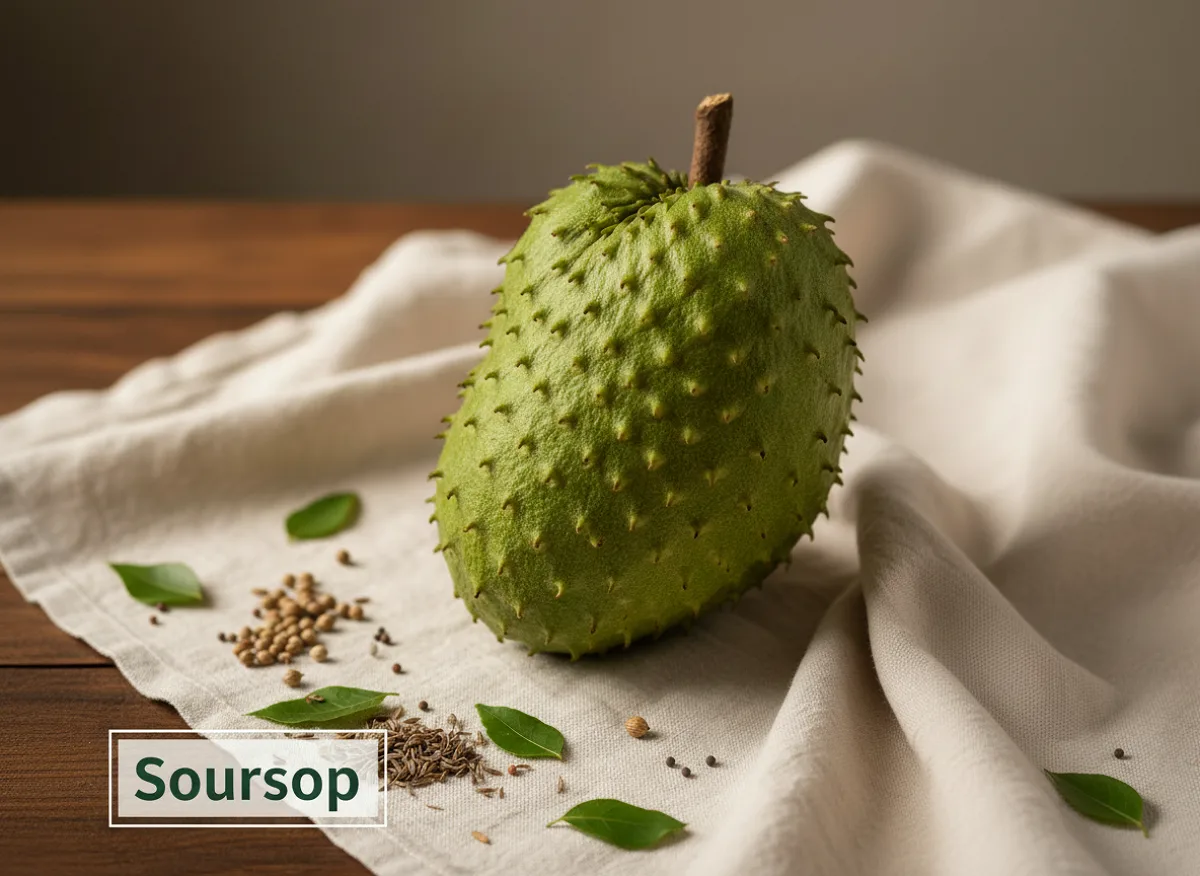
Soursop is a large, spiky-skinned tropical fruit with soft, fibrous white flesh inside. The fruit grows on a small tree and has a custard-like texture with a flavour that blends sweetness with a subtle tartness. It is native to Central and South America but is now cultivated in tropical and subtropical regions of India, particularly in Kerala, Karnataka, and parts of the Northeast. (IFCT 2017, Ref #E061)
Use in Indian Kitchen
Soursop is still relatively new to mainstream Indian home cooking, but it has found its place in tropical fruit markets and health-conscious kitchens. In Kerala and coastal regions, it is sometimes used fresh or blended into cooling drinks and smoothies, especially during hot months. The creamy flesh lends itself well to fruit salads, milkshakes, and traditional Indian desserts. Unlike the more familiar custard apple or sitaphal, soursop has a more pronounced tartness and a silkier texture, making it distinct in flavour and mouthfeel. It is often seen as a premium or specialty fruit in urban markets and is gaining popularity among those seeking tropical variety.
Key Nutrients
Soursop is rich in vitamin C, which supports immunity and skin health. It also contains dietary fibre, potassium, and B vitamins. The fruit provides carbohydrates and small amounts of minerals such as magnesium and copper. Exact nutrient composition per 100 g is documented in IFCT 2017, Ref #E061.
Health Benefits (Evidence-based)
- High in vitamin C, which may help support immune function and act as an antioxidant.
- Good source of dietary fibre, which may aid digestive health and regular bowel function.
- Contains potassium, linked to heart health and blood pressure regulation.
- Antioxidants present in the fruit may help protect cells from oxidative stress.
- The creamy texture and natural sugars make it a satisfying, energy-boosting fruit for active individuals.
Culinary Uses (Vegetarian)
- Fresh fruit - eaten chilled with a spoon, scooping the flesh directly from the skin.
- Smoothies and milkshakes - blended with yoghurt, milk, or coconut milk for cooling drinks.
- Fruit salads - combined with other tropical fruits and a light honey or lime dressing.
- Desserts and ice creams - puréed and folded into traditional Indian sweets or frozen treats.
- Juices - freshly pressed or blended with water and a touch of sugar or jaggery.
Caution
- Soursop seeds contain compounds that should not be consumed; always remove them before eating or blending.
- The fruit is high in natural sugars, so those managing blood sugar levels should consume in moderation.
- Some traditional medicine systems suggest caution for pregnant women; consult a healthcare provider if concerned.
- May cause mild digestive discomfort if eaten in very large quantities due to high fibre content.
References
- Indian Council of Medical Research - National Institute of Nutrition (ICMR-NIN). Indian Food Composition Tables (IFCT) 2017. Reference #E061 (Soursop).
- National Institute of Nutrition, ICMR. Nutritive Value of Indian Foods. ICMR Publications.
Sourcing & Storage
Storage
Store unripe soursop at room temperature (20–25°C) away from direct sunlight until it yields slightly to gentle pressure, which indicates ripeness. Once ripe, transfer to the refrigerator in a breathable bag or paper wrap to slow further ripening. Keep away from moisture and strong-smelling foods, as the fruit absorbs odours easily. In hot, humid Indian climates, refrigeration is essential to prevent rapid spoilage and fungal growth.
Shelf Life
An unripe soursop kept at room temperature will ripen in 3–5 days. Once ripe, it will keep in the refrigerator for 3–5 days. For longer storage, the flesh can be scooped, puréed, and frozen in airtight containers or ice cube trays for up to 2–3 months. Thaw in the refrigerator before use in smoothies or desserts.
Check Before You Buy
Choose soursop that feels slightly soft when gently pressed but not mushy. The skin should be a dull green colour with no dark patches, bruises, or soft spots. Avoid fruits that are very hard (underripe) or have a fermented or off smell. If buying from a mandi or kirana shop, ask the vendor when the fruit arrived; fresher stock will keep longer. Inspect the skin for signs of insect damage or mould, particularly in the creases. Packaged or pre-cut soursop should be stored in sealed containers and checked for any signs of browning or liquid leakage.