Snake gourd, short
Trichosanthes anguina · Also known as Chichinda, Chichingaa, Patola (South India), Padwal (Maharashtra), Poodol (Tamil Nadu), Serpent gourd
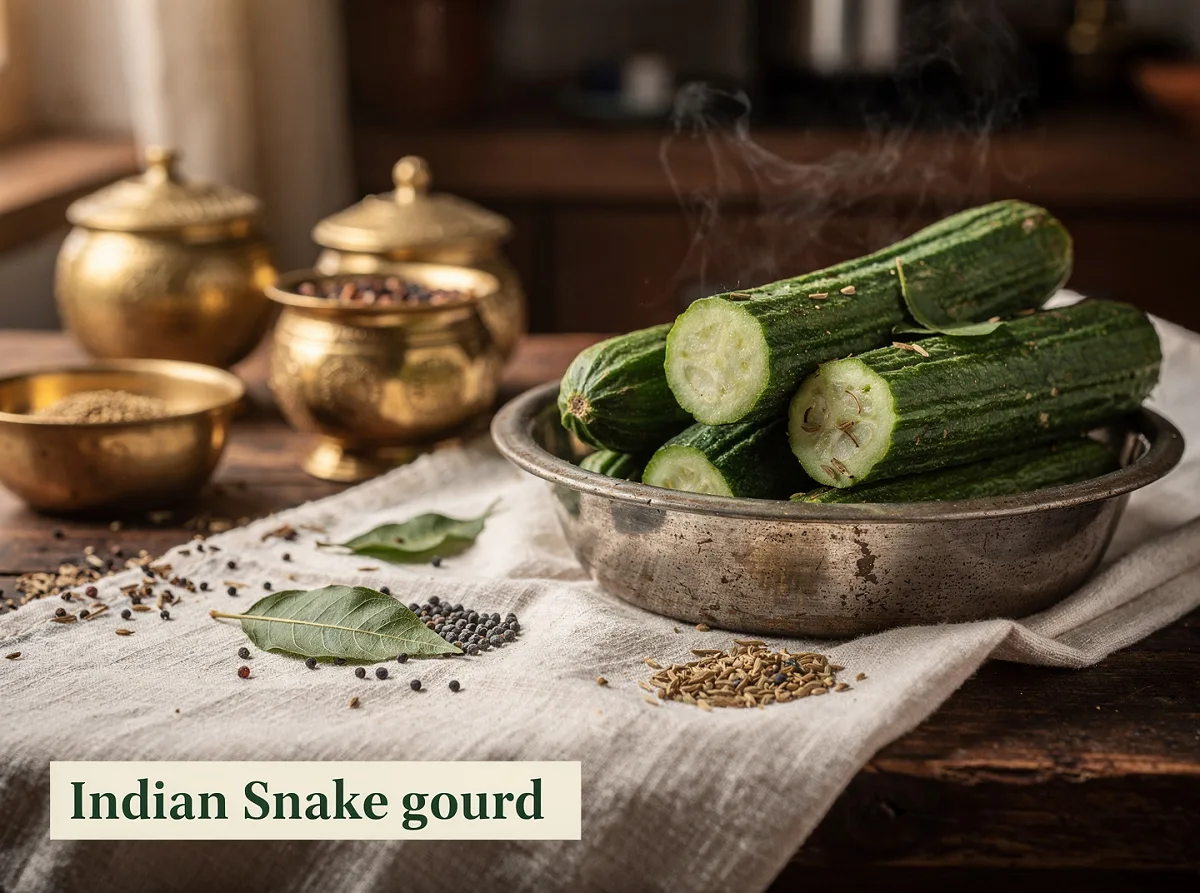
Snake gourd or chichinda is a slender, pale-green climbing vegetable with a distinctly elongated, sometimes curved shape - much like its name suggests. The tender pods have thin, edible skin and mild, slightly sweet flesh that absorbs flavours beautifully. Popular across South an...
Nutrition per 100 g
Edible portion values from the master catalog.
More macros
Classification
About Snake gourd, short
What it is
Snake gourd, known as chichinda in Hindi and patola in Tamil, is a long, slender climbing vegetable with pale-green, smooth skin and a gently tapered or sometimes curved shape. The flesh inside is tender, pale, and mild-flavoured - quite different from the firmer, more assertive bitter gourd. It's harvested young (6-12 inches) when the skin is still thin and edible, and the seeds are soft. Widely grown and eaten across South India, Maharashtra, and parts of North India, it's a monsoon and summer vegetable that appears regularly in home kitchens and markets. (IFCT 2017, Ref #D072)
Use in Indian Kitchen
Snake gourd is wonderfully versatile in everyday cooking. In South India, it's a staple in sambhar and kootu curries, where its mild flavour complements tamarind and coconut beautifully. In Maharashtra and Gujarat, it's often stir-fried with onions, green chillies, and a touch of turmeric - a simple, comforting sabzi. The tender pods are also stuffed with spiced besan and onion filling, then pan-fried until golden, or sliced thin and added to mixed vegetable curries. A practical tip: slice it just before cooking to prevent browning, and cook it quickly over medium-high heat so it stays tender and doesn't become mushy. The mild taste means it pairs well with coconut, tamarind, cumin, and coriander.
Key Nutrients
Snake gourd is low in calories and a good source of dietary fibre, supporting digestive health. It contains vitamin C, small amounts of B vitamins, and minerals including potassium and manganese. The exact nutrient profile is documented in IFCT 2017 (Ref #D072); values vary slightly depending on maturity and growing conditions.
Health Benefits (Evidence-based)
- Low in calories and high in water content, making it a hydrating choice during hot months.
- Dietary fibre supports healthy digestion and regular bowel function.
- Vitamin C content may help support immune function and skin health.
- Traditionally used in Ayurvedic cooking as a cooling, easily digestible vegetable.
- Potassium may help support heart health and blood pressure regulation.
Culinary Uses (Vegetarian)
- Sambhar and kootu curries (South Indian staples).
- Stir-fried with onions, green chillies, and coconut (everyday sabzi).
- Stuffed with spiced besan and onion, then pan-fried.
- Added to mixed vegetable curries and dal preparations.
- Sliced thin and used in light, quick stir-fries with minimal oil.
- Occasionally pickled or added to vegetable medleys.
Caution
Snake gourd is generally very mild and well-tolerated. Those with sensitive digestion should eat it cooked rather than raw. If you have a known allergy to gourds or cucurbits, introduce it cautiously. Always wash thoroughly before use, and discard any pods that are yellowed, soft, or show signs of decay.
References
- Indian Council of Medical Research - National Institute of Nutrition (ICMR-NIN). Indian Food Composition Tables (IFCT 2017). Reference #D072 - Other Vegetables category.
- Gopalan, C., Rama Sastri, B. V., & Balasubramanian, S. C. (2016). Nutritive Value of Indian Foods. National Institute of Nutrition, ICMR, Hyderabad.
Sourcing & Storage
Storage
Store snake gourd in a cool, well-ventilated place or in the vegetable drawer of the refrigerator, ideally between 10-15°C. Wrap loosely in a damp cloth or paper towel to retain moisture without trapping excess condensation, which can cause rot. Keep away from direct sunlight and ethylene-producing fruits (apples, bananas, tomatoes). In Indian kitchens during monsoon, ensure good air circulation to prevent fungal growth.
Shelf Life
When stored in a cool place, snake gourd keeps for 5-7 days. In the refrigerator, it will last up to 10-12 days if kept in a breathable wrapper. Once cut, use within 1-2 days. In hot, humid climates, consume within 3-5 days for best texture and flavour. Freezing is not recommended as it softens the delicate flesh.
Check Before You Buy
Choose young, tender pods that are 6-10 inches long, with smooth, unblemished pale-green skin and no yellowing or soft spots. The gourd should feel firm and slightly springy when gently pressed - avoid any that are limp or wrinkled. Look for a fresh, mild aroma; any musty or fermented smell indicates age or decay. At the mandi or kirana, select pods harvested within the last 1-2 days if possible. Avoid very large, thick pods, which tend to have tougher skin and larger seeds.
In Ayurveda
In classical Ayurvedic texts, snake gourd (chichinda) is recognized as a cooling vegetable with light, slightly bitter qualities. It is traditionally considered beneficial during summer months due to its natural cooling properties (sheeta virya). The vegetable is believed to support healthy digestion and is often recommended in Ayurvedic dietary guidance for those seeking to balance excess heat in the body. Its mild diuretic nature aligns with traditional Ayurvedic principles of supporting natural detoxification processes.