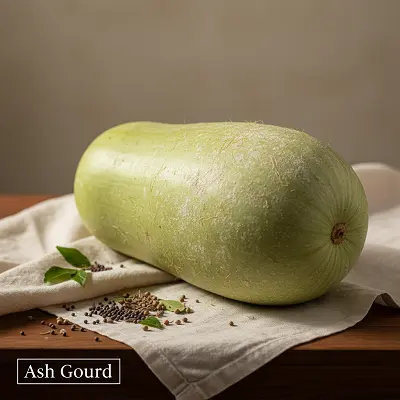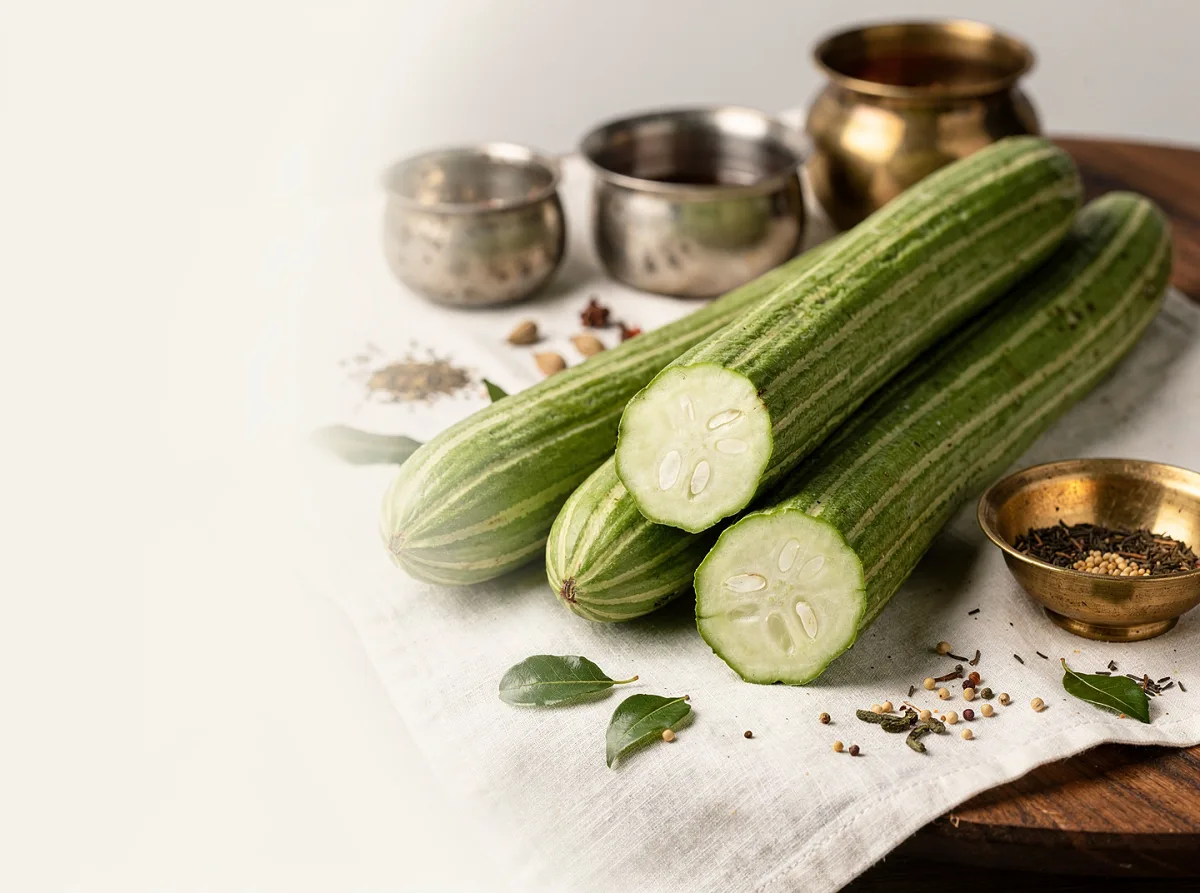
Snake Gourd (long - Pale Green)
Trichosanthes anguina · Also known as chichinda, Parval
Snake gourd, known as chichinda or parval in Hindi, is a long, pale-green climbing vegetable commonly used across Indian kitchens. Light and versatile, it features in curries, stir-fries, and pickles, especially in regional South and East Indian cooking (IFCT 2017, Ref #D070).
Nutrition per 100 g
Mean values ± IFCT published SD (edible portion).
More macros
Classification
About Snake Gourd (long - Pale Green)
What it is
Snake gourd is a slender, elongated climbing vegetable with pale-green skin and tender white flesh. Native to tropical Asia, it thrives in warm climates and is harvested when young and tender. The vegetable is classified under IFCT 2017, Ref #D070, as a member of the gourd family and is widely cultivated across India for home and market use.
Use in Indian Kitchen
Snake gourd holds a quiet place in Indian home cooking, especially beloved in South Indian (Tamil, Telugu, Kannada) and East Indian (Bengali, Odia) kitchens. In the South, it appears in sambar, rasam, and dry curries; in the East, it is often stir-fried with mustard seeds and turmeric or cooked into mild curries. The vegetable is also pickled and preserved for year-round use. Its mild, slightly sweet flavour and tender texture make it a comfort vegetable in monsoon and summer months, when it is at its peak. Many Indian grandmothers favour it for its digestibility and gentle taste, especially for children and those recovering from illness.
Key Nutrients
Snake gourd is low in calories and rich in dietary fibre, supporting digestive health. It contains vitamins C and A, along with minerals including potassium, magnesium, and iron. The vegetable also provides small amounts of B vitamins. Exact nutrient composition is documented in IFCT 2017, Ref #D070.
Health Benefits (Evidence-based)
- May support digestive health due to its high fibre content and mild nature, making it suitable for sensitive digestion.
- Low glycaemic index, linked to gentle blood sugar management when included in balanced meals.
- Rich in vitamin C, which may help support immune function and skin health.
- Contains potassium, traditionally valued for heart and kidney wellness in Ayurvedic practice.
- Its light, cooling nature may help during hot seasons and is often recommended in summer diets.
Culinary Uses (Vegetarian)
- Stir-fried with mustard seeds, turmeric, and green chilli (a simple East Indian preparation).
- Added to sambar and rasam for South Indian flavour and texture.
- Cooked into mild curries with coconut milk or yoghurt.
- Pickled or preserved with spices for long-term storage.
- Sliced and added to vegetable medleys and mixed sabzi.
- Steamed or boiled and served with a simple tempering of oil, mustard seeds, and curry leaves.
Caution
Snake gourd is generally safe for most people. Those with a history of kidney stones should consume in moderation, as it contains oxalates. Always wash thoroughly before use. If you are on blood-thinning medication, consult your doctor before making significant dietary changes, as vitamin K content may interact.
References
- Indian Council of Medical Research (ICMR) and National Institute of Nutrition (NIN). Indian Food Composition Tables (IFCT 2017). Reference #D070 - Other Vegetables category.
- National Institute of Nutrition, ICMR. Dietary Guidelines for Indians - A Manual. Hyderabad: NIN Publications.
Health Benefits
- Hydration
- Supports Digestion
- Boosts Immunity
- Detox Support
- Weight Management Support
Sourcing & Storage
Storage
Store snake gourd in a cool, well-ventilated place or in the vegetable compartment of your refrigerator. Keep it in a perforated plastic bag or open container to allow air circulation and prevent moisture buildup. Avoid storing near ethylene-producing fruits like bananas or tomatoes, as this will hasten ripening and spoilage. In hot, humid Indian climates, refrigeration is preferable to extend freshness.
Shelf Life
When stored in a cool place, snake gourd keeps for 3 to 5 days. In the refrigerator, it can last up to 7 to 10 days if kept in the vegetable drawer. Once cut, use within 1 to 2 days. For longer preservation, pickle or blanch and freeze in airtight containers for up to 3 months.
Check Before You Buy
Choose snake gourds that are firm, unblemished, and pale green with a smooth skin. Avoid those that are yellowing, soft, or have dark spots or cracks, as these indicate age or damage. The vegetable should feel light and crisp when gently pressed; a limp or wrinkled surface suggests it has been stored too long. When buying from a mandi or kirana shop, select younger, thinner specimens, as they are more tender and have fewer seeds. Check that the skin is free of mould or pest damage, and avoid any with a musty smell.
In Ayurveda
Snake Gourd is valued for its cooling properties and nutritional benefits. It is considered beneficial for balancing the Pitta dosha, making it ideal for individuals with heat-related issues. The vegetable is known for its ability to aid digestion, support hydration, and promote overall well-being. In home remedies, snake gourd is often used to treat conditions like constipation and urinary disorders due to its high fiber and water content. Its juice is believed to have detoxifying properties and can be consumed to alleviate inflammation and digestive issues. Overall, snake gourd is a wholesome addition to both dietary practices and natural remedies in Ayurveda.