Snake gourd
Trichosanthes anguina · Also known as Serpent gourd, long gourd, padwal, पदवल (padwal), चिचिंडा (chichinda), पुदल (pudal), పుదలకాయ (pudalakaya)
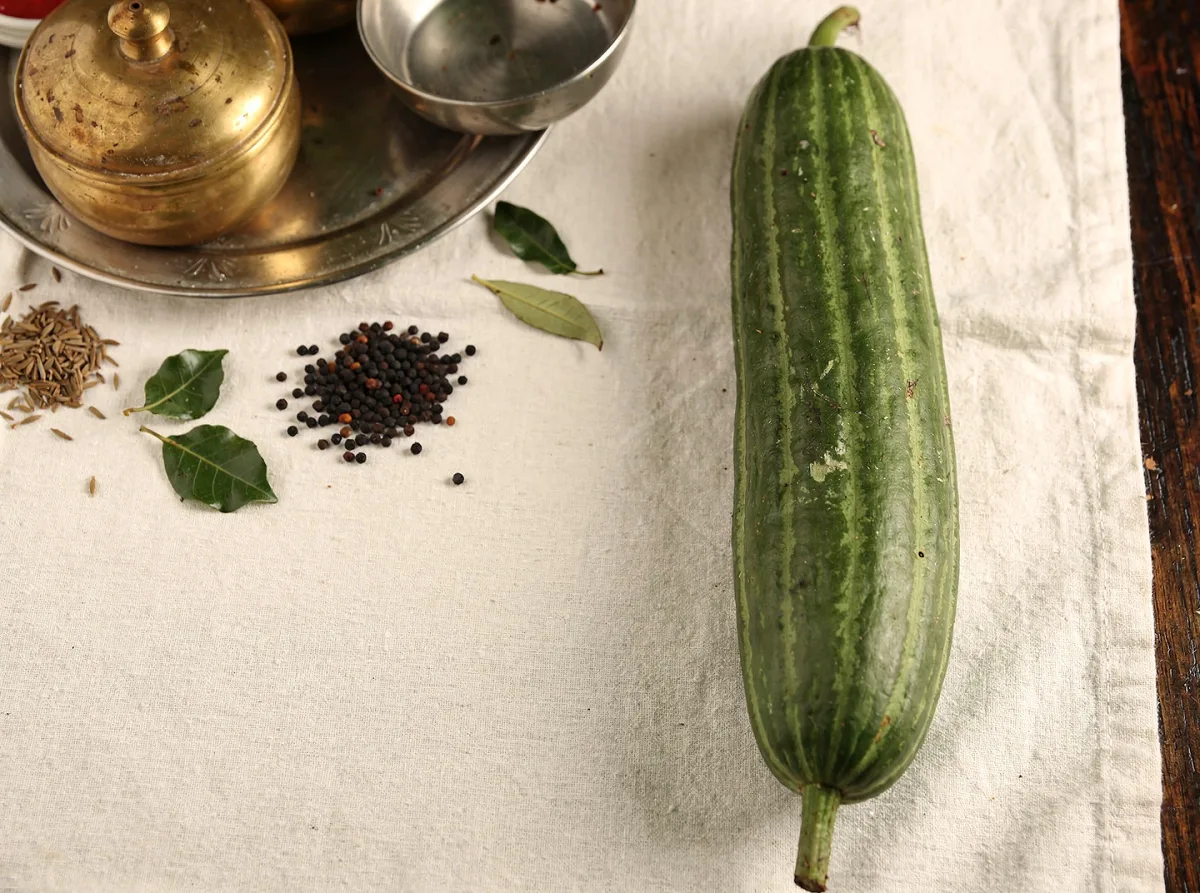
Snake gourd (पदवल, padwal) is a slender, pale to dark green climbing vine vegetable with a distinctive elongated, slightly curved shape and tender, watery flesh. Prized in South and East Indian kitchens for its mild, delicate flavour and crisp texture, it is typically cooked fres...
Nutrition per 100 g
Edible portion values from the master catalog.
More macros
Classification
About Snake gourd
What it is
Snake gourd (पदवल, padwal; also चिचिंडा, chichinda in parts of India) is a long, slender climbing vegetable with pale to dark green skin and a gently curved or coiled shape. The flesh is tender, watery, and pale green, with small soft seeds that are edible when the gourd is young. It is eaten fresh, whole or sliced, and is a staple in South Indian, Bengali, and Odia kitchens. (IFCT 2017, Ref #D071)
Use in Indian Kitchen
Snake gourd is most commonly cooked in sambar, a tangy lentil and vegetable stew, or in dry curries and stir-fries with mustard seeds, curry leaves, and coconut. In Bengal and Odisha, it is often prepared as a simple sabzi with onions and spices, or added to mixed vegetable curries. South Indian thoran (dry coconut-based vegetable) and kootu (lentil-based curry) also feature it regularly. The key is to use young, tender gourds and cook them quickly over medium heat so they remain crisp; older gourds can become stringy and develop a slightly bitter taste. Pairing with tamarind, coconut, or a squeeze of lemon balances the mild flavour beautifully.
Key Nutrients
Snake gourd is low in calories and rich in water content, making it a light, hydrating vegetable. It contains dietary fibre, small amounts of vitamin C, and minerals including potassium and magnesium. Exact nutrient composition is documented in IFCT 2017 (Ref #D071).
Health Benefits (Evidence-based)
- May support hydration and digestive health due to high water and fibre content.
- Low in calories, making it suitable for weight-conscious diets.
- Contains vitamin C, which may help support immune function.
- Traditionally used in Ayurvedic and folk medicine as a cooling, laxative vegetable.
- Potassium content may contribute to heart and bone health as part of a balanced diet.
Culinary Uses (Vegetarian)
- Sambar - a South Indian lentil and vegetable stew with tamarind and spices.
- Dry curry or stir-fry with mustard seeds, curry leaves, and grated coconut.
- Thoran - a dry, coconut-based vegetable side dish.
- Kootu - a creamy lentil and vegetable curry.
- Mixed vegetable curries and sabzi preparations.
- Sliced and added to rasam or light broths.
Caution
- Older, mature snake gourds may develop a slightly bitter or astringent taste and tougher texture; select young, tender pods for best results.
- Those with sensitive digestion may find the raw vegetable slightly cooling; cooking mellows this effect.
- No known significant drug interactions, but as with all vegetables, consume as part of a varied diet.
References
- Indian Council of Medical Research - National Institute of Nutrition (ICMR-NIN). Indian Food Composition Tables (IFCT) 2017. Reference #D071 (Other Vegetables category).
- Nutritive Value of Indian Foods, ICMR-NIN, New Delhi. Standard reference for Indian vegetable nutrient profiles.
Sourcing & Storage
Storage
Store fresh snake gourd in a cool, well-ventilated place or in the refrigerator's vegetable compartment, wrapped loosely in a damp cloth or paper towel to retain moisture without trapping excess condensation. In warm, humid Indian climates, keep in the coldest part of the fridge to slow ripening and decay. Do not store in airtight plastic bags, as this encourages mould and softening. Keep away from direct sunlight and ethylene-producing fruits (such as bananas and tomatoes).
Shelf Life
Fresh snake gourd keeps for 5-7 days when stored in the refrigerator at 4-8°C. In a cool pantry or unrefrigerated storage during cooler months, it may last 2-3 days. Once cut, use within 1-2 days. Cooked snake gourd curry or sabzi keeps refrigerated for 2-3 days in an airtight container.
Check Before You Buy
Choose young, tender snake gourds with smooth, unblemished dark green or pale green skin and a firm, crisp texture. Avoid gourds that are yellowing, soft, wrinkled, or have brown patches, as these indicate age and deterioration. The vegetable should feel light and not too heavy for its size (heaviness suggests mature seeds and tougher flesh). When buying from a mandi or kirana shop, gently squeeze - it should yield slightly to pressure but not feel mushy. Avoid gourds with visible cracks or cuts, which invite rot.
In Ayurveda
In Ayurvedic tradition, snake gourd is considered a light (laghu), cool-natured (sheeta virya) vegetable that supports digestion and promotes a sense of coolness in the body. It is traditionally used during summer months to help balance excess pitta (heat) and is believed to be easy on the digestive system. While detailed classical Ayurvedic texts do not extensively document this vegetable, its cooling properties and gentle nature align with Ayurvedic principles of seasonal eating and digestive wellness.