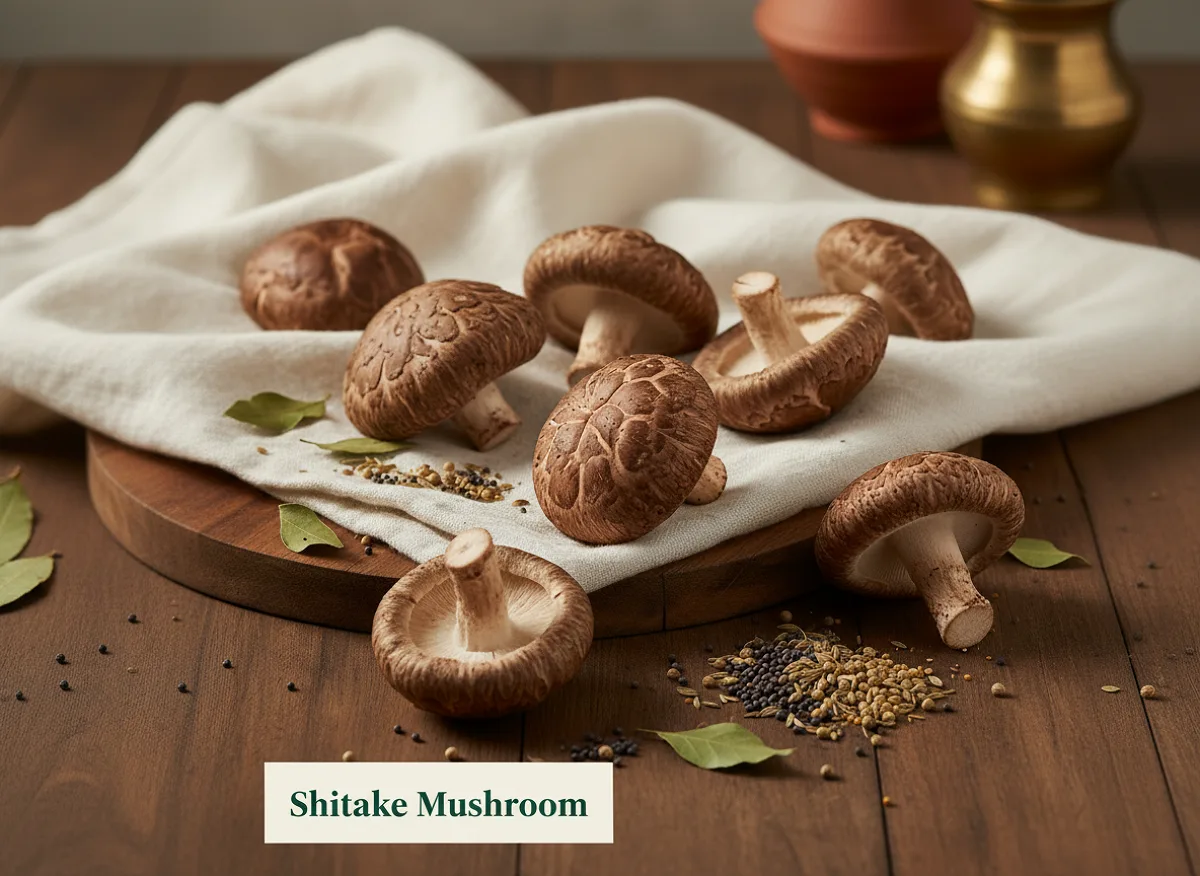
Shiitake Mushroom
Lentinula sp. · Also known as Mushroom, Banger chata, Biladi no top, Aanabay/Aanabe, Hadder, Kun koon, Uyen, Bhoochhtra, Chatu, Khoomba, Kaalaan, Putta Godugu.
Shiitake mushrooms are meaty, umami-rich fungi with dark brown caps, increasingly popular in Indian kitchens for stir-fries, curries, and soups. Native to East Asia but now cultivated locally, they bring depth and earthiness to vegetarian dishes. Classified under Other Vegetables...
Nutrition per 100 g
Edible portion values from the master catalog.
More macros
Classification
About Shiitake Mushroom
What it is
Shiitake mushrooms are a cultivated variety of fungus with firm, dark brown caps and pale undersides. Originally from Japan and China, they are now grown in controlled environments across India. Unlike button mushrooms, shiitakes have a distinctly meaty texture and rich, savoury flavour. They are classified under Other Vegetables in the Indian Food Composition Tables (IFCT 2017, Ref #J003).
Use in Indian Kitchen
While not traditional to classical Indian cuisine, shiitakes have found their way into modern Indian home kitchens, especially in urban areas and among health-conscious cooks. They work beautifully in vegetable curries, khichdi, dal preparations, and stir-fried sabzi. Their meaty bite makes them a favourite substitute in vegetarian versions of dishes traditionally made with meat. They pair well with ginger, garlic, cumin, and coriander, and take well to tadka. Some regional chefs use them in fusion preparations with paneer or in creamy curries with coconut milk. They are available year-round in packaged form, though fresh supplies peak during cooler months.
Key Nutrients
Shiitake mushrooms contain protein, dietary fibre, B vitamins (including B12 in small amounts), and minerals such as copper, selenium, and potassium. They are low in calories and fat. Exact nutrient composition per 100 g is documented in IFCT 2017 (Ref #J003); values vary slightly depending on whether mushrooms are fresh or dried.
Health Benefits (Evidence-based)
- May support immune function due to compounds like beta-glucans and polysaccharides linked to immune modulation.
- Rich in antioxidants and may help reduce oxidative stress in the body.
- Contain ergothioneine, a unique antioxidant that may support cellular health.
- Low glycaemic index and may help maintain steady blood sugar levels.
- Good source of plant-based protein and fibre, supporting digestive health and satiety.
- Traditionally used in East Asian wellness practices for general vitality and stamina.
Culinary Uses (Vegetarian)
- Stir-fried with onions, garlic, ginger, and green chillies as a simple sabzi.
- Added to vegetable curries, dal, and khichdi for depth and texture.
- Grilled or roasted with a light tadka of mustard seeds, curry leaves, and coconut oil.
- Sliced into soups, broths, and rasam for umami richness.
- Paired with paneer in fusion curries or layered in vegetable biryani.
- Dried shiitakes can be rehydrated and used in stocks and slow-cooked curries.
Caution
- Some people may experience mild digestive discomfort if eaten in large quantities; introduce gradually.
- Those with mushroom allergies should avoid.
- Always source from reputable suppliers to ensure proper cultivation and hygiene.
- Dried shiitakes should be rehydrated thoroughly before use.
References
- Indian Food Composition Tables (IFCT 2017), National Institute of Nutrition, Indian Council of Medical Research.
- Dai X, Stanilka JM, Rowe CA, Immunomodulatory compounds from Lentinula edodes (Shiitake) mushrooms. Journal of Traditional and Complementary Medicine, 2015.
Health Benefits
- Antioxidant
- Anti Inflammatory
- Boosts Immunity
- Weight Management Support
- Heart Health Support
Sourcing & Storage
Storage
Store fresh shiitake mushrooms in a paper bag or breathable container in the refrigerator at 2-4°C, away from direct moisture. Do not seal in plastic, as this traps humidity and encourages spoilage. Keep them in the vegetable drawer or a cool shelf. Dried shiitakes should be stored in an airtight container in a cool, dry place away from direct sunlight and strong odours.
Shelf Life
Fresh shiitake mushrooms keep for 5-7 days when refrigerated in a paper bag. Once opened or sliced, use within 2-3 days. Dried shiitakes, when stored properly in an airtight container, last 6-12 months. Cooked shiitake dishes can be refrigerated for 3-4 days or frozen for up to 3 months.
Check Before You Buy
Choose shiitakes with firm, dry caps that feel slightly springy when gently pressed. The colour should be dark brown to black, with no soft spots, slime, or mould. Avoid mushrooms that smell sour or ammonia-like. Check the underside - gills should be pale and intact, not darkened or damaged. If buying from a mandi or kirana store, ask when they arrived; fresher is always better. Packaged shiitakes should have a clear date and show no condensation inside the pack.