Seedless Black Grapes
Vitis vinifera · Also known as काली अंगूर (kali angoor), black grapes, table grapes, seedless black grapes, black muscat grapes
Seedless black grapes (काली अंगूर, kali angoor) are plump, dark purple to black berries with thin, tender skin and juicy, sweet flesh. Grown widely across India's grape-growing regions, they need no spitting and are eaten fresh, chilled, or added to fruit salads and desserts. The...
Nutrition per 100 g
Mean values ± IFCT published SD (edible portion).
More macros
Classification
About Seedless Black Grapes
What it is
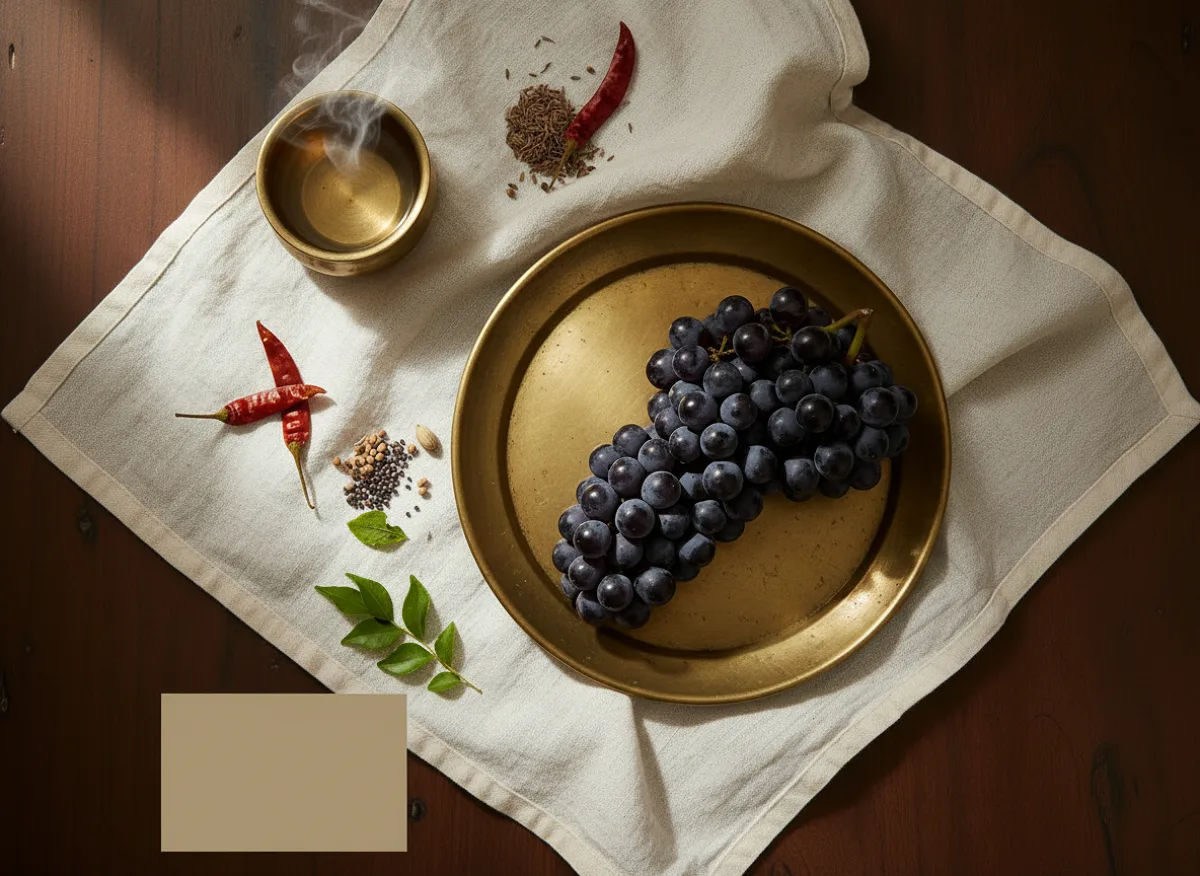
Seedless black grapes (काली अंगूर, kali angoor) are small, round berries with smooth, dark purple to black skin and translucent, juicy flesh inside. Unlike seeded varieties, they have no pips, making them convenient to eat whole. Fresh from the vine or chilled from the fridge, they are crisp, naturally sweet, and mildly tangy. Grown extensively in Maharashtra, Karnataka, and Andhra Pradesh, they are a staple table fruit across Indian households. (IFCT 2017, Ref #E027)
Use in Indian Kitchen
Seedless black grapes are primarily enjoyed fresh and chilled as a snack or dessert fruit. They are commonly added to fruit salads, mixed with other seasonal fruits, and served at the end of meals. In some households, they are frozen and eaten as a cooling summer treat. They pair well with paneer in fruit and cheese platters, and are sometimes used in kheer or rice pudding for texture and natural sweetness. A practical tip: rinse and dry them well before storing, and chill them for at least an hour before serving to enhance their crisp, refreshing bite.
Key Nutrients
Seedless black grapes are a source of natural sugars (glucose and fructose), dietary fibre, and water. They contain vitamin C, potassium, and polyphenols including resveratrol, a compound found in grape skin. Exact nutrient composition per 100 g is available in IFCT 2017.
Health Benefits (Evidence-based)
- May support heart health due to polyphenols and potassium, which help maintain healthy blood pressure.
- Linked to antioxidant activity, helping protect cells from oxidative stress.
- High water content aids hydration and supports kidney function.
- Natural sugars provide quick energy, making them a good pre- or post-activity snack.
- Fibre content supports digestive health and regular bowel function.
- Traditionally valued in Ayurvedic practice as a cooling, nourishing fruit for summer months.
Culinary Uses (Vegetarian)
- Fresh chilled snack, eaten whole or halved.
- Mixed fruit salads with pomegranate, papaya, and citrus.
- Frozen grapes as a cooling summer dessert.
- Paneer and grape platters for light meals or gatherings.
- Kheer or rice pudding garnish for texture and sweetness.
- Pressed into fresh juice or blended into smoothies with yoghurt and honey.
Caution
- High natural sugar content; those managing blood sugar should consume in moderation and pair with protein or fat.
- Pesticide residue risk if not organically grown; wash thoroughly under running water before eating.
- May cause bloating or digestive discomfort if eaten in very large quantities on an empty stomach.
- Choking hazard for very young children; cut into halves or quarters if serving to toddlers.
References
- Indian Council of Medical Research - National Institute of Nutrition (ICMR-NIN). Indian Food Composition Tables (IFCT) 2017. Hyderabad: NIN; 2017. [Ref #E027 - Grapes, black, seedless]
- Katz DL, Doner CM. Unfattening our children: forks over feet. International Journal of Obesity. 2014; 38(S1): S34-S39. [General fruit and polyphenol benefits in diet]
Sourcing & Storage
Storage
Store seedless black grapes in a breathable container or perforated plastic bag in the refrigerator at 4-7°C (crisper drawer is ideal). Do not wash them before storage; moisture encourages mould. Keep them away from strong-smelling foods as they absorb odours easily. In warm Indian climates without reliable refrigeration, consume within 1-2 days of purchase. Frozen grapes can be stored in an airtight container in the freezer for up to 3 months.
Shelf Life
Fresh seedless black grapes keep for 5-7 days in the refrigerator when stored dry and unwashed. Once washed and opened, consume within 2-3 days. Frozen grapes remain good for up to 3 months in the freezer. At room temperature in warm weather, they deteriorate within 1-2 days.
Check Before You Buy
Choose grapes that are plump, firm, and deeply coloured (dark purple to black), with no soft spots, wrinkles, or mould. The skin should feel taut and the berries should be tightly clustered on the stem. Avoid bunches with many loose or shrivelled berries. If buying from a mandi or kirana store, ask when they arrived; fresher stock will last longer. Packaged grapes should have no condensation inside the container, which signals moisture and early decay.
In Ayurveda
In classical Ayurvedic texts, grapes (angoor) are considered a cooling, nourishing fruit with sweet (madhura) rasa and cooling (sheeta) virya. They are traditionally used to support digestive health and are believed to have a mild laxative effect when consumed regularly. Black grapes, being richer in antioxidants, are thought to have additional rejuvenating properties. However, grapes are also heavy to digest (guru guna), so moderation is advised, especially for those with weak digestion or kapha imbalance.