Sapota
Achras sapota · Also known as चीकू, Chiku
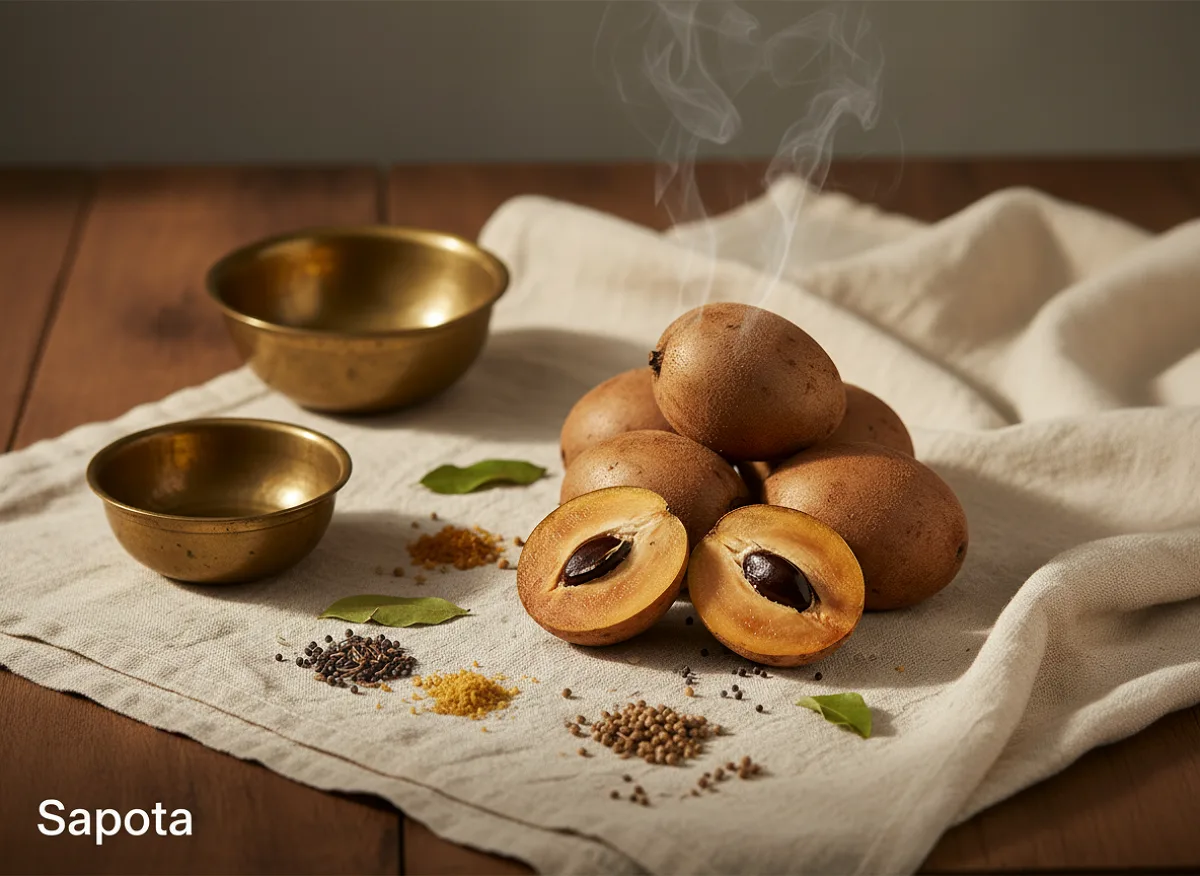
Sapota (चीकू, chiku) is a sweet, brown tropical fruit with soft, grainy flesh and a mild, honey-like flavour. Common across Indian markets, it's eaten fresh or blended into milkshakes and desserts. (IFCT 2017, Ref #E060)
Nutrition per 100 g
Mean values ± IFCT published SD (edible portion).
More macros
Classification
About Sapota
What it is
Sapota is a tropical stone fruit native to Central America but now widely cultivated across India, especially in Maharashtra, Gujarat, and Tamil Nadu. The fruit has a thin brown skin, soft beige flesh, and 1-4 large black seeds. It is eaten fresh, peeled and sliced, or blended into drinks and desserts. (IFCT 2017, Ref #E060)
Use in Indian Kitchen
Sapota is primarily enjoyed as a fresh fruit - peeled and eaten raw, often as a quick snack or part of a fruit platter. In South India, it appears in fruit salads and is sometimes added to curd-based desserts. Across urban Indian kitchens, sapota milkshake (blended with milk and a touch of jaggery or sugar) is a popular summer drink. The fruit's natural sweetness means it needs little added sugar. Seasonally abundant in late summer and monsoon, it carries a nostalgic comfort - the kind of fruit grandmothers would keep in the pantry for children's afternoon snacks.
Key Nutrients
Sapota is a good source of dietary fibre, vitamin C, and carbohydrates. It also contains small amounts of copper, iron, and B vitamins. The exact nutrient profile per 100 g is documented in IFCT 2017 (Ref #E060).
Health Benefits (Evidence-based)
- May support digestive health due to its dietary fibre content, helping maintain regular bowel function.
- Vitamin C content may help support immune function and skin health.
- The natural sugars and carbohydrates provide quick energy, making it a practical pre- or post-activity snack.
- Copper and iron in sapota may contribute to oxygen transport and metabolic function.
- Traditionally used in Indian home remedies as a gentle, easily digestible fruit for children and convalescents.
Culinary Uses (Vegetarian)
- Fresh fruit - peeled, sliced, and eaten raw as a snack or in fruit salads.
- Sapota milkshake - blended with milk, a pinch of cardamom, and jaggery or sugar.
- Smoothie bowls - layered with yoghurt, granola, and other fruits.
- Fruit custard or kheer - added to milk-based desserts.
- Curd parfait - alternated with sweetened curd and nuts for a simple dessert.
Caution
Sapota seeds are not edible and should be removed before eating or blending. The fruit is high in natural sugars, so those managing blood sugar levels should consume it in moderation. Unripe sapota can be astringent and unpleasant; always choose ripe fruit. Rarely, individuals with latex allergies may experience cross-reactivity, as sapota trees produce latex, though this is uncommon in culinary use.
References
- Indian Council of Medical Research - National Institute of Nutrition (ICMR-NIN). Indian Food Composition Tables (IFCT 2017). Hyderabad: NIN; 2017. Ref #E060.
- Gopalan C, Rama Sastri BV, Balasubramanian SC. Nutritive Value of Indian Foods. National Institute of Nutrition, ICMR. Hyderabad; 2016.
Health Benefits
- Provides Energy
- Supports Digestion
- Boosts Immunity
- Improves Skin Health
Sourcing & Storage
Storage
Store ripe sapota in a cool, dry place at room temperature (18-22°C) away from direct sunlight for 2-3 days. For longer storage, place ripe fruit in a perforated plastic bag in the refrigerator's fruit compartment. Unripe sapota can be kept at room temperature to ripen naturally. In hot, humid Indian climates, refrigeration extends shelf life and prevents mould. Do not store near ethylene-producing fruits like bananas or mangoes, as this will over-ripen the sapota quickly.
Shelf Life
Ripe sapota keeps for 2-3 days at room temperature and up to 5-7 days in the refrigerator when stored in a perforated bag. Once cut or blended into a milkshake, consume immediately or refrigerate for no more than 1-2 hours. Unripe fruit can be stored at room temperature for 3-5 days until it softens and ripens naturally.
Check Before You Buy
Choose sapota that yields slightly to gentle pressure - a sign of ripeness - but is not mushy or bruised. The skin should be brown and unblemished; avoid fruit with dark spots, cracks, or oozing. A ripe sapota will have a mild, sweet aroma when held close. At the mandi or kirana shop, ask for fruit that was picked 1-2 days ago rather than freshly harvested, as sapota ripens better off the tree. Avoid fruit that is rock-hard or has a greenish tinge, as these will be astringent and unpleasant. For packed sapota, check the packaging date and ensure no fruit is bruised or leaking.