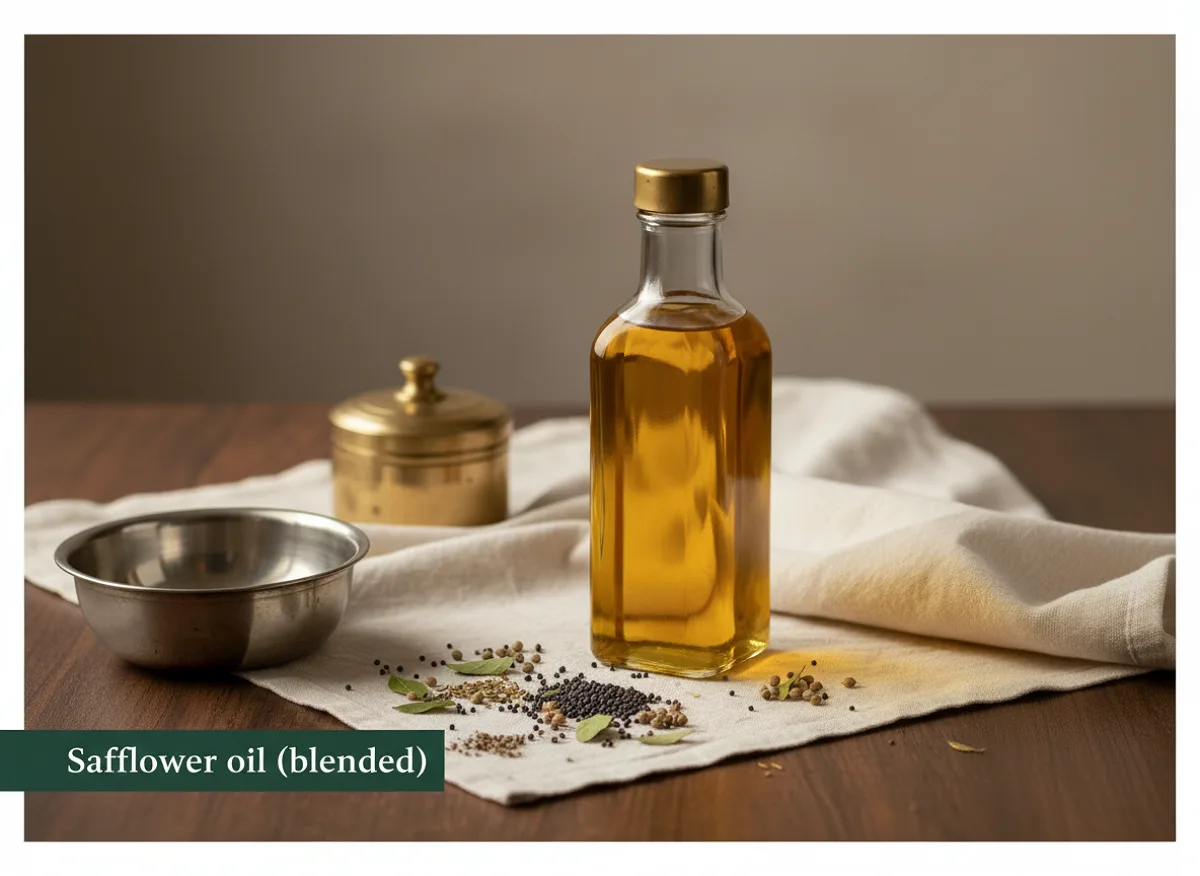
Safflower oil (blended)
Also known as Kardi ka tel, safflower oil, carthamus oil, blended safflower oil
Safflower oil (कर्दी का तेल, kardi ka tel) is a light, neutral-tasting cooking oil pressed from safflower seeds, often blended with other vegetable oils for everyday kitchen use. Golden to pale yellow in colour, it has a high smoke point and mild flavour, making it ideal for temp...
Nutrition per 100 g
Edible portion values from the master catalog.
More macros
Classification
About Safflower oil (blended)
What it is
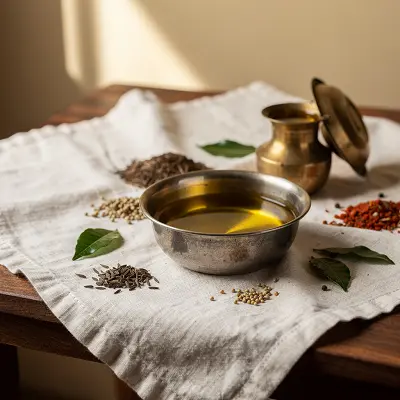
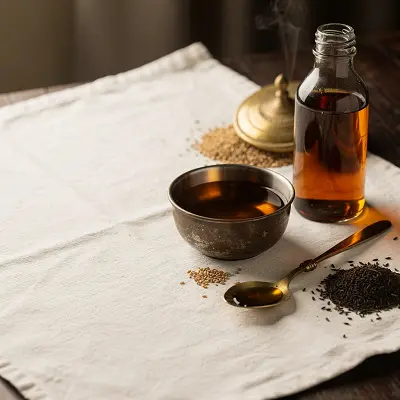
Safflower oil is a vegetable oil extracted from the seeds of the safflower plant (Carthamus tinctorius), a thistle-like crop grown across India. When blended, it is mixed with other neutral oils to balance cost and cooking properties. The oil is pale golden to light yellow, with a clean, mild aroma and neutral taste that does not compete with spice blends. Its high smoke point (around 450°F / 232°C) makes it stable for tempering and pan-frying without breaking down. (IFCT 2017, Ref #T010)
Use in Indian Kitchen
Safflower oil is a workhorse in everyday Indian cooking. Use it for tadka - tempering mustard seeds, cumin, and curry leaves in dal or sambar without the oil smoking or darkening the spices. It works well for shallow-frying vegetables like okra, potatoes, and aubergine, and for making light curries where you want the flavours of turmeric, coriander, and tamarind to shine. In South Indian kitchens, it is common for coconut-based curries and vegetable kootu; in North Indian homes, it suits lighter sabzi and paratha-making. A practical tip: because it is neutral, it pairs well with both tempering spices and finishing tadka without leaving a strong aftertaste.
Key Nutrients
Safflower oil is primarily fat (99.9 g per 100 g), with a notable proportion of polyunsaturated fatty acids (linoleic acid) and monounsaturated fatty acids (oleic acid). It contains vitamin E (tocopherols), which acts as an antioxidant. Exact nutrient composition varies with blending ratios; refer to the specific product label for precise figures. (IFCT 2017, Ref #T010)
Health Benefits (Evidence-based)
- May support heart health due to its polyunsaturated and monounsaturated fat content, which can help maintain healthy cholesterol levels when used in moderation.
- Rich in vitamin E, which acts as an antioxidant and may help protect cells from oxidative stress.
- High smoke point makes it suitable for cooking methods that require stable heat without harmful breakdown products.
- Neutral flavour allows for balanced use of spices and herbs without masking their therapeutic properties in traditional cooking.
- Traditionally used in Indian home remedies for skin massage and as a carrier oil in Ayurvedic preparations.
Culinary Uses (Vegetarian)
- Tempering spices for dal, sambar, rasam, and vegetable curries.
- Shallow-frying vegetables such as okra, potatoes, aubergine, and leafy greens.
- Making light sabzi and stir-fried preparations.
- Dressing cooked vegetables and salads with a mild finish.
- Kneading dough for parathas and rotis when a neutral oil is preferred.
- Finishing tadka for soups and lentil dishes.
Caution
- Like all oils, safflower oil is calorie-dense (120 kcal per tablespoon); use in measured amounts as part of a balanced diet.
- Those with seed allergies should check product labels for cross-contamination warnings.
- Blended oils may contain additives or other vegetable oils; read the label to understand the blend composition if you have specific dietary preferences.
- Store away from direct heat and light to prevent oxidation and rancidity.
References
- Indian Council of Medical Research - National Institute of Nutrition (ICMR-NIN). Indian Food Composition Tables (IFCT 2017). Reference #T010 - Safflower oil.
- Food Safety and Standards Authority of India (FSSAI). Labelling and display standards for edible oils and fats. Available at https://www.fssai.gov.in/
Sourcing & Storage
Storage
Store safflower oil in a cool, dark place away from direct sunlight and heat sources. Use a dark glass bottle or opaque container to protect the oil from light exposure, which can cause oxidation. Keep the lid tightly sealed to prevent air contact. In Indian climates with high humidity and heat, store in a cupboard away from the stove or in a cool pantry. Refrigeration is not necessary unless the oil has been opened and you live in a very warm climate; cold temperatures may cause the oil to become cloudy, but this does not affect quality.
Shelf Life
Unopened safflower oil typically lasts 12-18 months when stored in a cool, dark place. Once opened, use within 6-8 months for best quality and flavour. In warm, humid Indian climates, the shelf life may be shorter; store in the refrigerator after opening if you notice any rancid smell or taste. Blended oils may have slightly different shelf lives depending on the blend composition; check the manufacturer's date on the label.
Check Before You Buy
When buying safflower oil, check the label for the extraction method (cold-pressed or refined) and the blend composition if it is a blended product. Look for a clear, golden to pale yellow colour with no cloudiness or sediment. Smell the oil if possible - it should have a mild, neutral aroma with no rancid or off odours. Check the manufacturing and expiry dates on the bottle. Buy from reputable brands or trusted kirana shops to avoid adulteration with cheaper oils. For packaged oils, ensure the seal is intact and the bottle is not damaged or leaking.
In Ayurveda
In classical Ayurvedic texts, safflower oil (कुसुम तेल) is recognized as a warming oil with properties that support circulation and skin health. It is traditionally considered to have a slightly heating (ushna) nature and is used in Ayurvedic massage (abhyanga) and cooking practices across India.
The oil is believed to balance vata and kapha doshas when used in moderation, though individuals with high pitta constitution are advised to use it sparingly. Traditional Ayurvedic practitioners have long valued safflower oil for its role in supporting overall wellness and digestive function when incorporated into daily cooking.