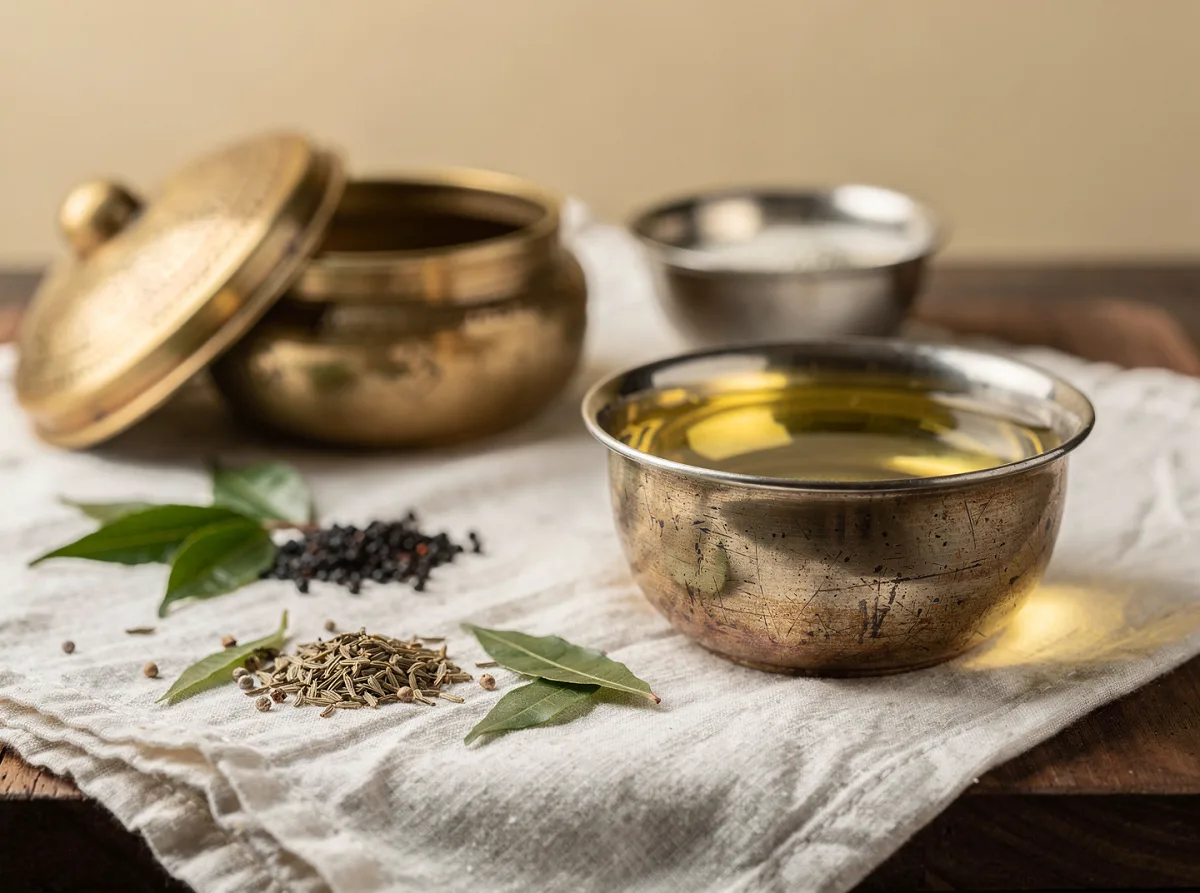
Safflower oil
Also known as Kardi ka tel, safflower seed oil, carthamus oil
Safflower oil (कर्दी का तेल, kardi ka tel) is a light, pale golden cooking oil pressed from safflower seeds, prized in Indian kitchens for its high smoke point and neutral flavour. It works well for tempering spices in dal and sambar, pan-frying vegetables, and making pickles wit...
Nutrition per 100 g
Edible portion values from the master catalog.
More macros
Classification
About Safflower oil
What it is
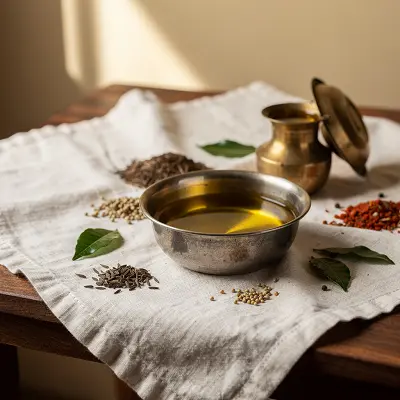
Safflower oil is a light, clear golden oil extracted from the seeds of the safflower plant (Carthamus tinctorius). It has a mild, almost neutral taste and a high smoke point (around 450°F / 232°C), making it stable for most Indian cooking methods. The oil is thin and pours easily, and its pale colour means it won't darken your dal or lighten your pickle's appearance. Traditionally used across India, especially in regions where groundnut oil was scarce, safflower oil remains a reliable everyday choice for home cooks. (IFCT 2017, Ref #T009)
Use in Indian Kitchen
Safflower oil is ideal for tempering mustard seeds, cumin, and dried chillies in sambar, rasam, and dal - its neutral flavour lets the spices shine. It works beautifully for pan-frying vegetables like okra, aubergine, and potatoes without absorbing strong flavours. In South Indian kitchens, it's common for making coconut-based curries and vegetable kootu; in North India, it suits light sabzi and paratha-making. A practical tip: because it has a high smoke point and doesn't easily turn rancid, it's excellent for pickling and preserving. Many home cooks prefer it over heavier oils when they want the taste of the main ingredient - not the oil - to come through.
Key Nutrients
Safflower oil is predominantly composed of polyunsaturated fatty acids (linoleic acid) and monounsaturated fats, with small amounts of saturated fat. It contains vitamin E (tocopherol), a natural antioxidant. Like all oils, it is calorie-dense at approximately 120 calories per tablespoon. Exact micronutrient composition is documented in IFCT 2017.
Health Benefits (Evidence-based)
- High in linoleic acid (omega-6 polyunsaturated fat), which may support heart health when used as part of a balanced diet.
- Contains natural vitamin E, which acts as an antioxidant and may help protect cells from oxidative stress.
- High smoke point makes it suitable for cooking methods that require stable oils, reducing the formation of harmful compounds at high temperatures.
- Traditionally used in Indian home cooking as a lighter alternative to ghee or coconut oil for everyday meals.
- May help maintain healthy cholesterol levels when used in moderation as part of a varied diet rich in whole grains and vegetables.
Culinary Uses (Vegetarian)
- Tempering mustard seeds, cumin, and dried chillies for dal, sambar, and rasam.
- Pan-frying vegetables (okra, aubergine, potatoes, green beans) without imparting strong flavour.
- Making vegetable curries, kootu, and light sabzi.
- Pickling and preserving vegetables and chutneys.
- Preparing parathas and light Indian breads.
- Dressing salads and light vegetable sides.
Caution
- Like all oils, safflower oil is calorie-dense; use in moderation as part of a balanced diet.
- High in omega-6 polyunsaturated fats; balance with omega-3 sources (flax, chia, walnuts) for optimal fatty acid ratio.
- Once opened, store away from heat and light to prevent oxidation and rancidity.
- People with seed allergies should check for cross-contamination during processing.
References
- Indian Council of Medical Research - National Institute of Nutrition (ICMR-NIN). Indian Food Composition Tables (IFCT 2017). Reference code T009 - Safflower oil.
- Food Safety and Standards Authority of India (FSSAI). Regulations on edible oils and fats - labelling and quality standards for vegetable oils.
Sourcing & Storage
Storage
Store safflower oil in a cool, dark place in a tightly sealed glass or dark plastic bottle. Keep it away from direct sunlight, heat sources, and moisture. An airtight container prevents oxidation and rancidity. In Indian kitchens, many home cooks keep a small daily-use bottle on the shelf and store the bulk supply in a cool cupboard or, in hot climates, in the refrigerator. Avoid storing near the stove or in clear glass bottles exposed to light.
Shelf Life
Unopened safflower oil typically lasts 1 to 2 years when stored in a cool, dark place. Once opened, it remains fresh for 6 to 12 months if kept in an airtight container away from heat and light. In warm or humid Indian climates, refrigeration after opening can extend shelf life. Discard if the oil develops a musty or off smell, or if it becomes cloudy or thick.
Check Before You Buy
Look for safflower oil sold in dark glass bottles or opaque containers to ensure it has been protected from light. Check the label for a recent pressing or manufacturing date, and verify that it is pure safflower oil with no blending or additives. The oil should be clear and pale golden, not cloudy or dark. Avoid bottles with sediment or discolouration. Buy from reputable kirana shops or branded suppliers to reduce the risk of adulteration with cheaper oils. If buying loose oil from a mandi or bulk supplier, smell it first - it should have a mild, neutral aroma with no rancid or musty notes.
In Ayurveda
Safflower oil holds a modest place in classical Ayurvedic texts. It is considered to have a warming (ushna) quality and is traditionally used in some regional Ayurvedic preparations. However, it does not feature prominently in major Ayurvedic pharmacopeias like the Charaka Samhita or Sushruta Samhita as a primary therapeutic oil. In contemporary Ayurvedic practice, it is sometimes recommended as a cooking medium for those seeking lighter alternatives to ghee, though sesame oil and coconut oil remain more central to classical Ayurvedic dietary guidance.