Rumex leaves
Rumex patientia · Also known as Suka sak, Bun palung, Ambada, Sorrel, Chukki soppu, Amlavetasa, Tukhm hummaz
Rumex leaves, known as suka sak or ambada in regional Indian kitchens, are tender green leafy vegetables with a distinctive tangy, slightly sour taste. These broad, soft leaves are prized in South and East Indian cooking for their sharp flavour and delicate texture. Commonly wilt...
Nutrition per 100 g
Edible portion values from the master catalog.
More macros
Classification
About Rumex leaves
What it is
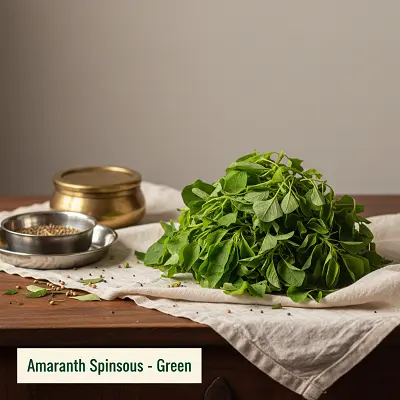
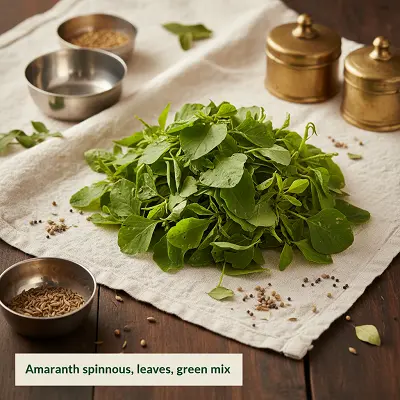
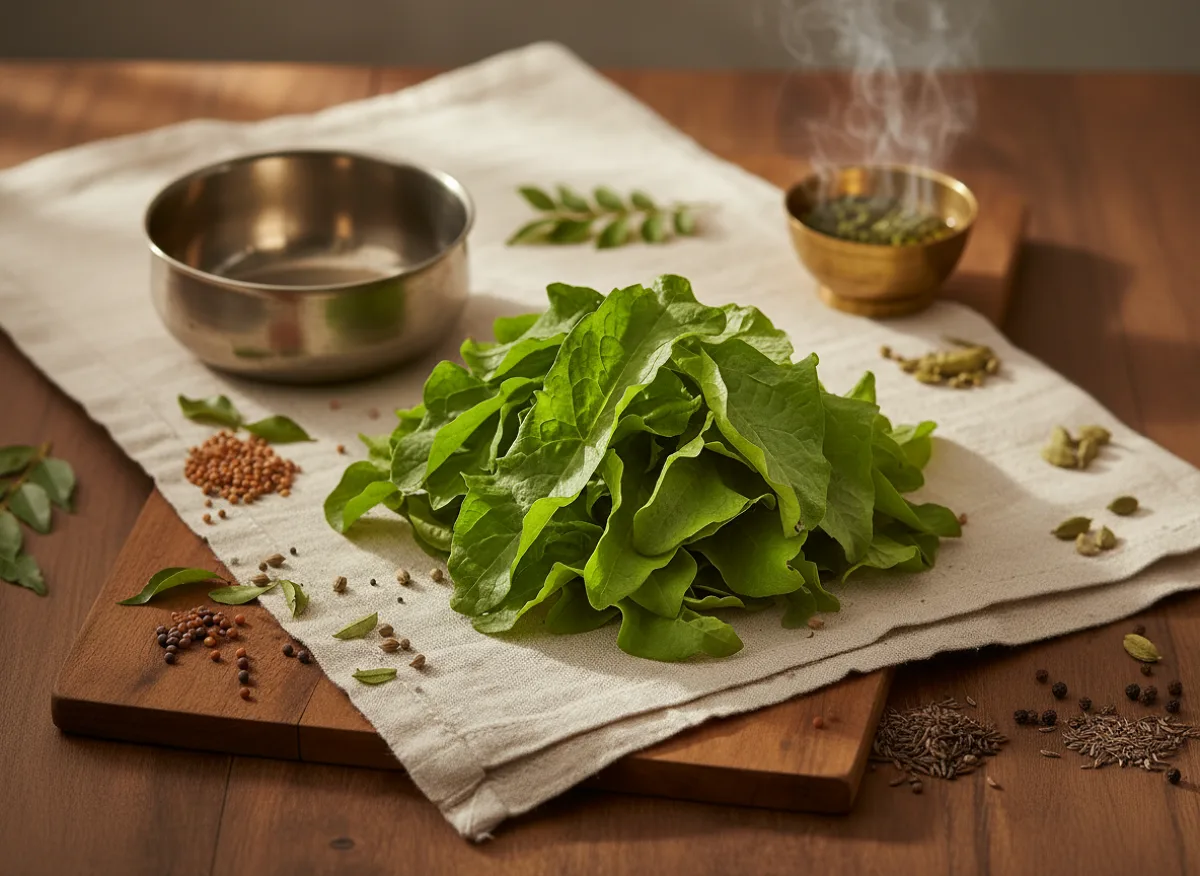
Rumex leaves (Rumex patientia), called suka sak, bun palung, or ambada across India, are soft, broad-bladed green leafy vegetables with a characteristic tangy, slightly sour bite. The leaves are tender and pale to mid-green, with prominent veins and a delicate texture that wilts quickly when cooked. Fresh rumex is seasonal in many regions and is typically used whole or roughly chopped in curries, dal preparations, and leafy sabzi dishes. (IFCT 2017, Ref #C032)
Use in Indian Kitchen
Rumex leaves are a beloved ingredient in South Indian and East Indian home cooking. They are commonly added to sambar for a tangy lift, cooked into kootu or curry with coconut and spices, or simply wilted with mustard seeds and chilli in a quick tadka. In some regions, the leaves are blanched and mixed into dal or added raw to chutneys for their sour edge. A practical tip: add rumex leaves towards the end of cooking to preserve their tender texture and bright flavour; prolonged heat can make them mushy and dull their characteristic tang.
Key Nutrients
Rumex leaves are a good source of dietary fibre, vitamins (particularly vitamin A and vitamin C), and minerals including iron, calcium, and potassium. They also contain oxalic acid, which gives them their characteristic sour taste. Exact nutrient composition is documented in IFCT 2017.
Health Benefits (Evidence-based)
- May support digestive health due to their fibre content and traditional use as a mild digestive aid.
- Linked to antioxidant activity, helping protect cells from oxidative stress.
- Good source of iron and vitamin C, which together support healthy blood formation and oxygen transport.
- Traditionally used in Ayurvedic and folk medicine to support liver and digestive function.
- May help maintain healthy cholesterol levels as part of a balanced diet rich in leafy greens.
Culinary Uses (Vegetarian)
- Wilted into sambar with tamarind and spices for a tangy vegetable curry.
- Cooked as a simple sautéed sabzi with mustard seeds, chilli, and coconut.
- Added to kootu or mixed vegetable curries with lentils and coconut.
- Blanched and mixed into dal or rice dishes for a sour note.
- Used fresh in chutneys or as a souring agent in place of tamarind or lemon in some regional recipes.
Caution
- Rumex leaves contain oxalic acid; those with a history of kidney stones or oxalate sensitivity should consume in moderation.
- Pregnant women and those on blood-thinning medications should consult a healthcare provider before regular consumption, as some leafy greens may interact with certain medications.
- Always wash thoroughly before use to remove soil and any field residues.
References
- Indian Council of Medical Research - National Institute of Nutrition (ICMR-NIN). Indian Food Composition Tables (IFCT 2017). Reference #C032 - Green Leafy Vegetables.
- Simopoulos, A. P. (2002). The importance of the ratio of omega-6/omega-3 essential fatty acids. Biomedicine & Pharmacotherapy, 56(8), 365-379. (General leafy green nutritional profile reference.)
Sourcing & Storage
Storage
Store fresh rumex leaves in a breathable cloth bag or perforated plastic bag in the refrigerator crisper drawer, away from ethylene-producing fruits. Keep them dry; excess moisture encourages wilting and decay. In warm, humid Indian climates, use within 1-2 days of purchase for best quality. Do not wash before storage; rinse just before cooking.
Shelf Life
Fresh rumex leaves keep for 2-3 days in the refrigerator when stored in a cool, dry crisper. Once cooked, store in an airtight container in the fridge for up to 2 days. Rumex does not freeze well due to its delicate texture; freezing causes significant loss of crispness and flavour.
Check Before You Buy
Look for bright, tender green leaves with no yellowing, browning, or slimy patches. The leaves should feel crisp and snap cleanly when bent; wilted or limp leaves indicate age or poor storage. Avoid bunches with thick, woody stems or leaves that smell musty or fermented. When buying from a mandi or kirana, choose freshly harvested bundles with intact leaves and minimal damage. Packaged rumex should have a clear, moisture-free pack with no condensation inside.
In Ayurveda
Rumex leaves hold a place in traditional Indian home remedies, though they are not extensively documented in classical Ayurvedic texts as a primary therapeutic herb. Their sour and astringent taste (amla rasa) and cooling nature (sheeta virya) suggest a potential role in supporting digestion and balancing pitta dosha, according to folk practice. In some regional Ayurvedic traditions, the leaves are used to support liver health and as a gentle digestive aid, though formal classical references are limited.