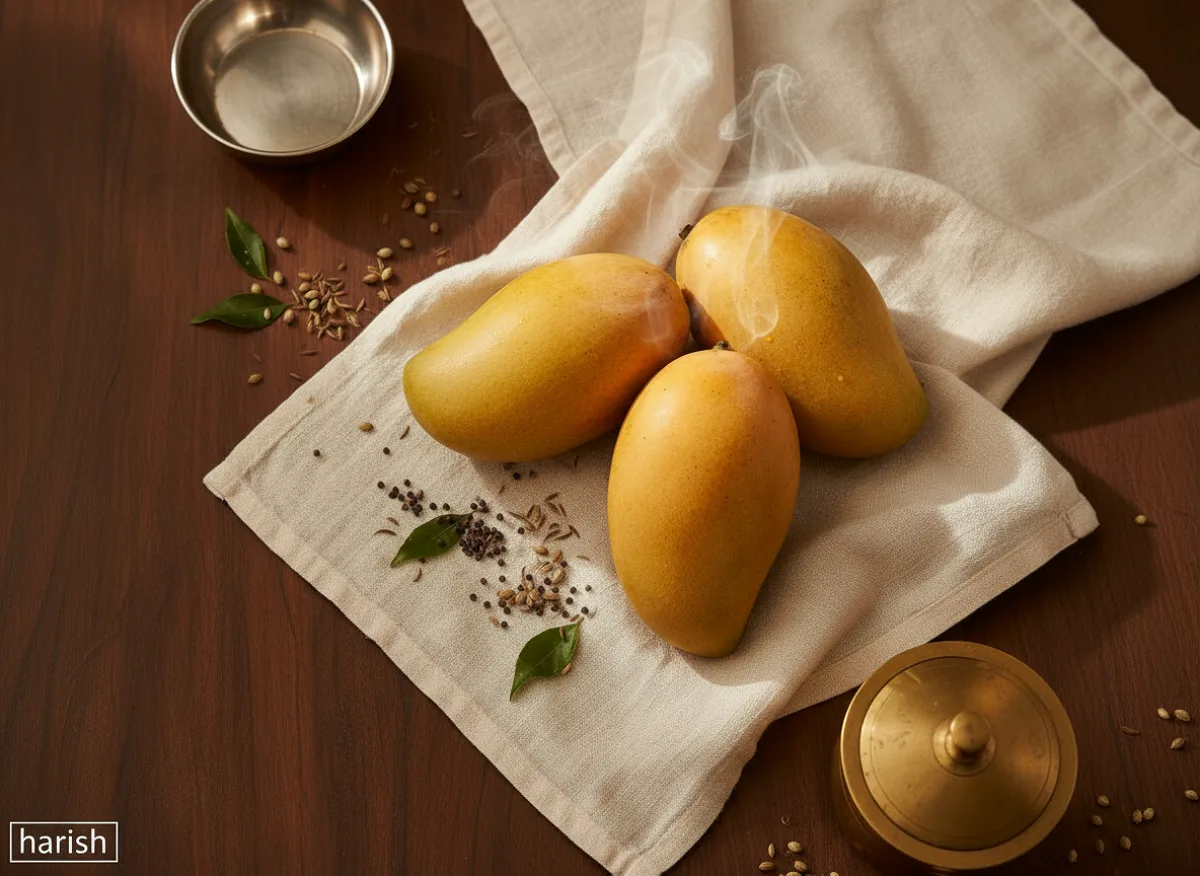
Ripe mango, Neelam
Mangifera indica · Also known as Aam, Pakka aam, Nilam kedi, Mvina hannu, Aamb, Soh pieng, Mam pazham, Heinou Amunba, Amba, Ampa, Aamra, Mampazham, Mamidi pandu
Ripe Neelam mango (आम, aam) is a beloved Indian summer fruit with smooth golden-yellow skin, creamy pale-yellow flesh, and a sweet, aromatic flavour. This medium-sized variety is prized for eating fresh, blending into lassi and shakes, or folding into desserts and chutneys. The f...
Nutrition per 100 g
Edible portion values from the master catalog.
More macros
Classification
About Ripe mango, Neelam
Ripe Mango, Neelam / आम (aam)
What it is
Ripe Neelam mango is a medium-sized, oblong fruit with a smooth, thin golden-yellow skin and creamy pale-yellow flesh inside. The variety is known for its low fibre content, sweet aroma, and virtually seedless eating experience - the stone is small and flat, leaving more flesh to enjoy. Grown widely across South India (especially Andhra Pradesh and Karnataka) and increasingly in other regions, Neelam is a summer staple from May to July. (IFCT 2017, Ref #E040)
Use in Indian Kitchen
Neelam mangoes are eaten fresh as a dessert fruit, sliced and served chilled on hot afternoons. The creamy texture makes them perfect for blending into mango lassi, mango milkshake, and smoothies - a cooling summer drink across Indian homes. They are also used in mango pickle (aam ka achar), mango pulp for kheer and payasam, and folded into ice cream and falooda. In South Indian kitchens, ripe mango is often paired with jaggery or palm sugar in traditional sweets. A practical tip: chill the fruit in the fridge for 1-2 hours before eating to enhance the creamy texture and natural sweetness.
Key Nutrients
Ripe Neelam mango is a good source of vitamin C, vitamin A (as beta-carotene), dietary fibre, and natural sugars. It also contains small amounts of copper, manganese, and B vitamins. Exact nutrient composition varies with ripeness and growing conditions; refer to IFCT 2017 for detailed micronutrient profiles.
Health Benefits (Evidence-based)
- Rich in vitamin C, which supports immune function and skin health.
- Contains beta-carotene (vitamin A precursor), linked to eye health and antioxidant protection.
- Dietary fibre aids digestive regularity and may support healthy cholesterol levels.
- Natural sugars provide quick energy, making it a refreshing summer snack.
- Polyphenols and other plant compounds may have anti-inflammatory properties.
- Traditionally valued in Indian wellness practices as a cooling, nourishing fruit during hot months.
Culinary Uses (Vegetarian)
- Fresh sliced fruit, chilled and served as dessert or breakfast.
- Blended into mango lassi, smoothies, and milkshakes.
- Mango pulp for kheer, payasam, and traditional South Indian sweets.
- Mango pickle (aam ka achar) and chutneys.
- Folded into ice cream, falooda, and custards.
- Paired with jaggery or palm sugar in festive desserts.
Caution
- High natural sugar content; people managing blood sugar should eat in moderation and pair with protein or fat (e.g. yoghurt, nuts).
- Mangoes are a common allergen; those with tree fruit allergies should exercise caution.
- The skin and unripe fruit contain urushiol oil (also found in poison ivy), which can cause contact dermatitis in sensitive individuals; wash hands after handling.
- Eating very large quantities may cause digestive discomfort in some people.
References
- Indian Council of Medical Research - National Institute of Nutrition (ICMR-NIN). Indian Food Composition Tables (IFCT) 2017. Reference #E040 (Fruits category).
- National Institute of Nutrition, Hyderabad. Nutritive Value of Indian Foods. ICMR publication.
Sourcing & Storage
Storage
Store ripe Neelam mangoes in a cool, well-ventilated place away from direct sunlight to slow ripening and prevent skin browning. In warm Indian climates, keep them in the refrigerator (4-6°C) in a perforated plastic bag or paper bag to allow air circulation and prevent moisture buildup. Do not store in airtight containers, as trapped moisture encourages fungal growth. Keep away from ethylene-producing fruits (apples, bananas) if you wish to slow further ripening.
Shelf Life
Ripe Neelam mangoes last 3-5 days at room temperature in cool conditions, or 7-10 days in the refrigerator when stored in a breathable bag. Once cut, consume within 1-2 days; store cut pieces in an airtight container in the fridge. Mango pulp can be frozen in ice-cube trays or containers for up to 3 months for later use in smoothies, kheer, or chutneys.
Check Before You Buy
Choose Neelam mangoes that yield slightly to gentle palm pressure - a sign of ripeness without mushiness. The skin should be uniformly golden-yellow with no large dark spots, cracks, or blemishes. Smell the fruit near the stem end; a sweet, fragrant aroma indicates good ripeness and flavour. Avoid mangoes that are rock-hard (underripe) or feel mushy (overripe). When buying from a mandi or kirana shop, ask the vendor to select fruit picked 1-2 days earlier if you plan to eat within a day or two.
In Ayurveda
In Ayurveda, ripe mango is considered a "rasayana" (rejuvenative tonic) that nourishes the body and balances vata and pitta doshas. The sweet, cooling nature of ripe mango makes it particularly beneficial during summer, when it helps restore energy and supports digestion. The fruit is believed to strengthen the digestive fire (agni) and promote healthy elimination when consumed in moderation.