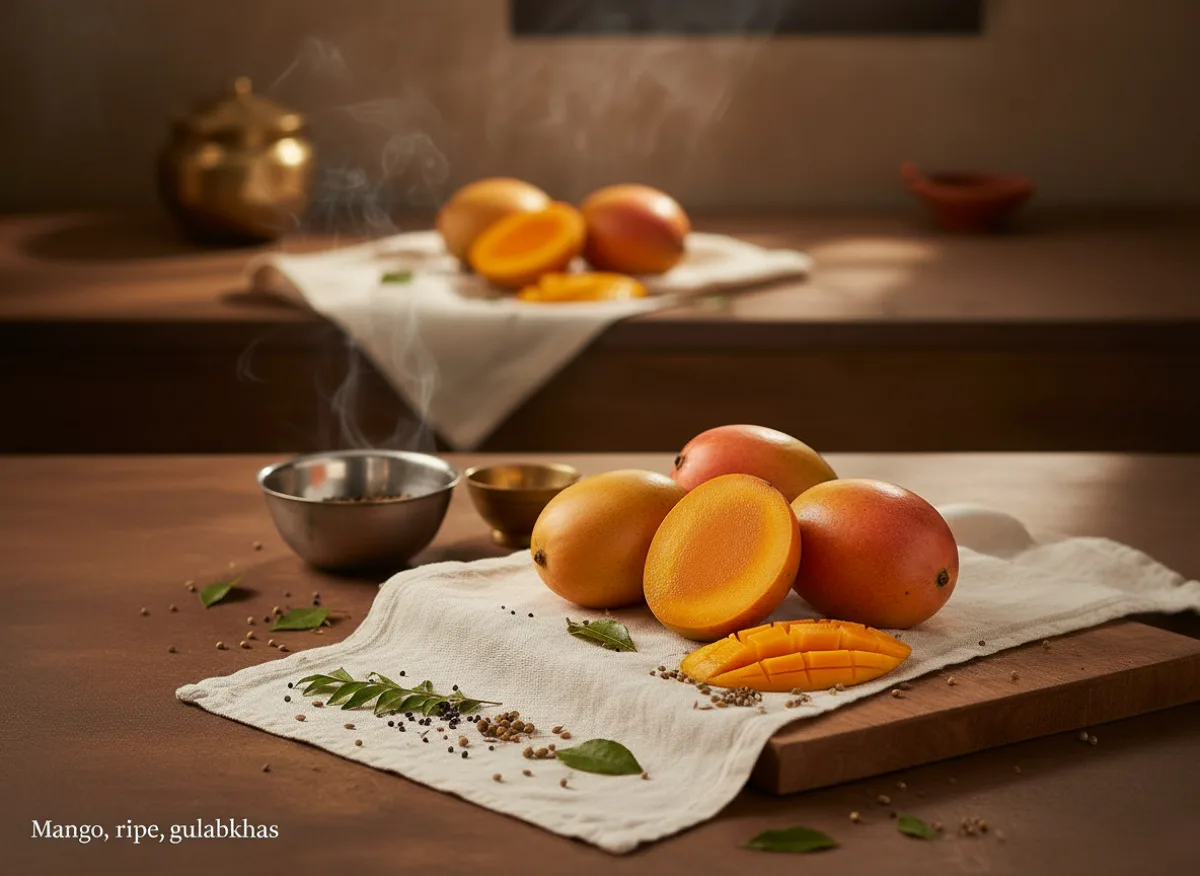
Ripe mango gulabkhas
Mangifera indica · Also known as Aam, Pakka aam, Gulabkhas, Aam (paka), Pakeli Kedi, Mvina hannu, Aamb, Soh pieng, Mam pazham, Heinou Amunba, Amba (piklela), Ampa, Amba (pachila), Aamra, Mampazham, Mamidi pandu
Ripe mango (आम, aam) is the golden-fleshed, sweet stone fruit of summer - soft, fragrant, and dripping with juice when perfectly ripe. A staple across Indian kitchens, it appears fresh in lassi and smoothies, sliced into chutneys and pickles, or simply eaten with a spoon straight...
Nutrition per 100 g
Edible portion values from the master catalog.
More macros
Classification
About Ripe mango gulabkhas
What it is
Ripe mango (आम, aam) is the golden-to-orange fleshed stone fruit of Mangifera indica, soft and fragrant when mature. The skin may be yellow, orange, red, or a blend depending on variety - gulabkhas, langra, alphonso, and dasheri are beloved across regions. When ripe, the flesh yields gently to pressure and releases a sweet, floral aroma. It is eaten fresh, blended into drinks, or cooked into chutneys and preserves. (IFCT 2017, Ref #E037)
Use in Indian Kitchen
Ripe mango is eaten fresh as a fruit, sliced and served chilled, or scooped straight from the skin with a spoon. In the kitchen, it stars in mango lassi (blended with yoghurt and cardamom), mango pickle (both sweet and spiced), mango chutney (with ginger, chilli, and jaggery), and aam panna (a cooling summer drink made from raw or ripe mango). South Indian cooks add ripe mango to rice dishes and curries for sweetness and body. A practical tip: ripe mangoes bruise easily, so handle gently and store in a cool place away from direct sunlight to extend shelf life by a few days.
Key Nutrients
Ripe mango is rich in vitamin C, vitamin A (as beta-carotene), dietary fibre, and natural sugars. It also contains potassium, magnesium, and polyphenols. Exact nutrient composition varies by variety and ripeness; refer to IFCT 2017 for detailed micronutrient profiles.
Health Benefits (Evidence-based)
- High in vitamin C, which may support immune function and skin health.
- Contains polyphenols and antioxidants linked to anti-inflammatory effects.
- Dietary fibre content may aid digestive regularity when eaten fresh.
- Potassium and magnesium may help maintain healthy blood pressure and muscle function.
- Natural sugars provide quick energy, making it a popular post-workout or midday snack.
- Traditionally used in Ayurvedic practice to support digestion and nourish the body during summer.
Culinary Uses (Vegetarian)
- Fresh sliced fruit, chilled or at room temperature.
- Mango lassi - blended with yoghurt, cardamom, and a touch of honey or jaggery.
- Mango chutney - cooked with ginger, green chilli, jaggery, and spices.
- Mango pickle - preserved in oil and spices for year-round use.
- Aam panna - a cooling summer drink made by blending or simmering mango with spices.
- Rice dishes and kheer - mango pulp stirred into rice or milk-based desserts.
- Smoothies and juices - blended with milk, curd, or water.
Caution
- Ripe mango is high in natural sugars; those managing blood sugar should eat in moderation.
- The skin and sap of unripe mango can cause contact dermatitis in sensitive individuals; wash hands after handling.
- Mango is a stone fruit; swallow the pit hazard applies to young children.
- Allergic reactions to mango are rare but possible, especially in those sensitive to cashew or pistachio.
References
- Indian Council of Medical Research - National Institute of Nutrition (ICMR-NIN). Indian Food Composition Tables (IFCT 2017). Hyderabad: NIN; 2017. Reference #E037 (Mango, ripe).
- Srivastava, K. C., & Bordia, A. (1997). Curcumin, a major component of food spice turmeric (Curcuma longa) inhibits aggregation and alters eicosanoid metabolism in human blood platelets. Prostaglandins, Leukotrienes and Essential Fatty Acids, 52(4), 223-227. [Note: While this reference is on turmeric, mango polyphenols are similarly studied for anti-inflammatory potential in peer-reviewed literature.]
Sourcing & Storage
Storage
Store ripe mangoes in a cool, well-ventilated place away from direct sunlight - ideally at room temperature (18-22°C) if you plan to eat them within 2-3 days. For longer storage, place them in the refrigerator's fruit drawer (4-8°C), where they will keep for up to a week. Do not store near ethylene-producing fruits like apples or bananas, as this will speed ripening and spoilage. Once cut, wrap the flesh tightly in cling film or store in an airtight container in the fridge to prevent browning and moisture loss.
Shelf Life
A ripe mango kept at room temperature will stay fresh for 2-3 days; refrigerated, it lasts 5-7 days. Once cut and stored in an airtight container in the fridge, mango flesh remains good for 3-4 days. Mango pulp can be frozen in ice-cube trays or freezer bags for up to 3 months, though texture will soften upon thawing - ideal for smoothies, lassi, and cooked dishes rather than fresh eating.
Check Before You Buy
Choose mangoes that yield slightly to gentle pressure at the narrow end (near the stem) - this signals ripeness without mushiness. The skin should be smooth and unblemished, with a sweet, fragrant aroma near the stem. Avoid mangoes with dark spots, cracks, or a fermented smell, which indicate overripeness or rot. Colour alone is not a reliable guide, as ripe mangoes vary by variety (some remain green, others turn yellow or red). Buy from a trusted mandi or kirana where fruit is handled carefully, or select individually wrapped mangoes from supermarkets to reduce bruising during transport.
In Ayurveda
In classical Ayurvedic texts, ripe mango (pakva aam) is considered sweet (madhura rasa), heavy (guru guna), and cooling (sheeta virya), making it balancing for Pitta dosha. It is traditionally used to support digestion, nourish tissues (dhatus), and promote vitality when consumed in moderation during the summer season. The fruit's natural sweetness and moistening quality are believed to calm excess heat in the body and support healthy skin and eyes.