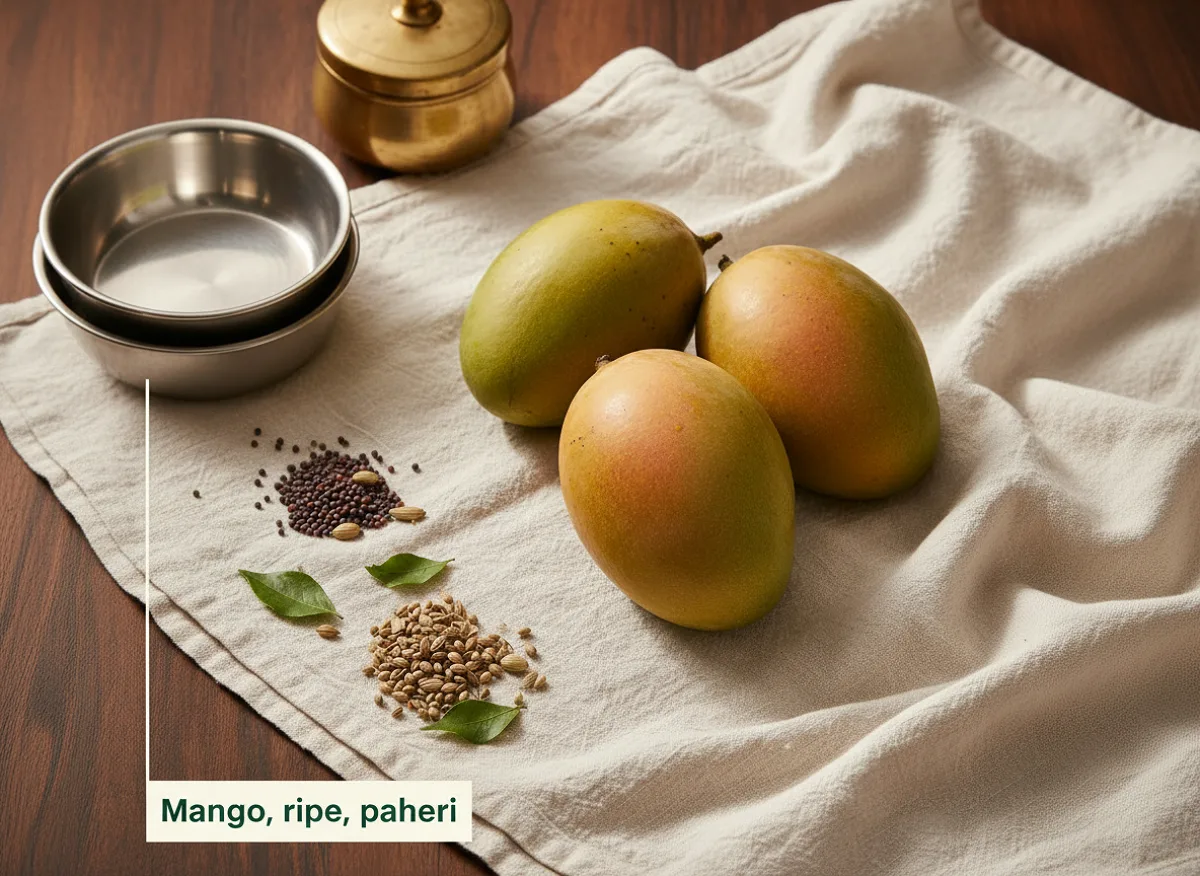
Ripe mango
Mangifera indica · Also known as Aam, Pakka aam, Keri, Aamb, Mam pazham, Mamidi pandu, Amba, Mvina hannu, Soh pieng, Heinou Amunba, Ampa, Aamra, Mampazham
Ripe mango (आम, aam) is the golden-fleshed, sweet stone fruit of summer - soft, juicy, and fragrant when ready to eat. Prized across India for its creamy texture and natural sweetness, it appears fresh in fruit bowls, blended into lassi and shakes, ripened into jams and chutneys,...
Nutrition per 100 g
Edible portion values from the master catalog.
More macros
Classification
About Ripe mango
What it is
Ripe mango (आम, aam) is the mature, sweet fruit of Mangifera indica - soft golden or orange flesh, thin papery skin in shades of yellow, red, or green depending on variety, and a large flat stone in the centre. When ripe, the fruit yields gently to pressure and releases a fragrant, honeyed aroma. Eaten fresh, it is the most beloved summer fruit across India, from Kashmir to Kerala. (IFCT 2017, Ref #E041)
Use in Indian Kitchen
Ripe mango is eaten fresh - sliced, cubed, or scooped straight from the skin with a spoon - often with a sprinkle of salt, chilli powder, and sometimes a squeeze of lemon. It is blended into thick, creamy lassi (yoghurt drink) with cardamom, whipped into shakes with milk and sugar, and cooked down into jams, chutneys, and murabba (preserve). In the South, ripe mango is layered into payasam (rice pudding) or mixed into curd rice. The pulp is also dried into leather (aam papad) or candied. A practical tip: if your mango is slightly firm, wrap it in newspaper and leave it at room temperature for a day or two to soften and sweeten further.
Key Nutrients
Ripe mango is rich in vitamin C (ascorbic acid), vitamin A (beta-carotene), dietary fibre, and natural sugars. It also contains copper, manganese, and smaller amounts of B vitamins. The exact nutrient profile varies by variety and ripeness; refer to IFCT 2017 (Ref #E041) for detailed composition data.
Health Benefits (Evidence-based)
- High in vitamin C, which may support immune function and skin health.
- Contains beta-carotene (vitamin A precursor), linked to eye health and antioxidant protection.
- Dietary fibre content may support digestive regularity when eaten fresh.
- Natural sugars provide quick energy, making it a popular post-workout or mid-afternoon snack.
- Polyphenols and other plant compounds in mango are traditionally associated with anti-inflammatory properties.
- May help maintain healthy skin and mucous membranes due to vitamin A and C content.
Culinary Uses (Vegetarian)
- Fresh sliced or cubed in fruit salads, or eaten plain with salt and chilli powder.
- Blended into lassi, smoothies, and milkshakes with yoghurt and cardamom.
- Cooked into jams, chutneys, and murabba (sweet preserve).
- Layered into payasam, kheer, and curd rice (South Indian desserts).
- Dried into aam papad (mango leather) or candied as a sweet snack.
- Pulped and frozen for off-season use in desserts and drinks.
Caution
- Ripe mango is high in natural sugars; those managing blood sugar should eat in moderation.
- The skin and stem contain urushiol oil (also found in poison ivy), which can cause contact dermatitis in sensitive individuals - wash hands after handling or peel carefully.
- Eating large quantities may cause digestive discomfort or loose stools in some people due to fibre and natural sugars.
- Those with latex allergy may experience cross-reactivity with mango skin and sap (oral allergy syndrome); peeling and cooking may reduce risk.
References
- Indian Council of Medical Research - National Institute of Nutrition (ICMR-NIN). Indian Food Composition Tables (IFCT 2017). Hyderabad: NIN; 2017. Reference #E041 (Mango, ripe).
- Srivastava, K. C., & Bordia, A. (1997). Curcumin, a major component of food spice turmeric (Curcuma longa) inhibits aggregation and alters eicosanoid metabolism in human blood platelets. Prostaglandins, Leukotrienes and Essential Fatty Acids, 52(4), 223-227. [Note: While this reference is on turmeric, mango polyphenols have been studied in similar contexts; consult NIN publications for mango-specific phytochemistry.]
Sourcing & Storage
Storage
Store ripe mangoes in a cool, dry place away from direct sunlight - a fruit bowl on the kitchen counter or a cool cupboard is ideal. If you need to keep them longer, place them in the refrigerator (4-6°C) in a paper bag or perforated plastic bag to allow air circulation and prevent moisture buildup. Do not store in an airtight container, as this can cause the fruit to sweat and develop mould. Keep away from ethylene-producing fruits like apples and bananas if you want to slow further ripening.
Shelf Life
A ripe mango will keep for 3-5 days at room temperature and up to 7-10 days in the refrigerator, depending on how ripe it was when stored. Once cut, consume within 1-2 days and store the pieces in an airtight container in the fridge. Mango pulp can be frozen in ice-cube trays or airtight containers for up to 3 months and used later in smoothies, desserts, or chutneys.
Check Before You Buy
Choose mangoes that yield slightly to gentle pressure - not rock-hard, but not mushy either. The skin should be smooth and unblemished, with a rich colour (yellow, orange, or red depending on variety). Smell the stem end: a sweet, fragrant aroma indicates ripeness. Avoid mangoes with dark spots, cracks, or soft patches, which signal overripeness or decay. If buying from a mandi or kirana shop, ask the vendor when the fruit arrived and whether it has been ripened artificially (some vendors use calcium carbide, which is unsafe - look for naturally ripened fruit with a consistent colour and aroma).
In Ayurveda
In Ayurvedic tradition, ripe mango is classified as sweet (madhura rasa), cooling (sheeta virya), and deeply nourishing. It is believed to pacify Pitta dosha and support Vata balance when consumed in moderation. Classical texts describe mango as a rasayana (rejuvenative) fruit that strengthens digestion, purifies blood, and promotes overall vitality. Summer consumption is traditionally recommended to cool the body and provide sustained energy during heat.