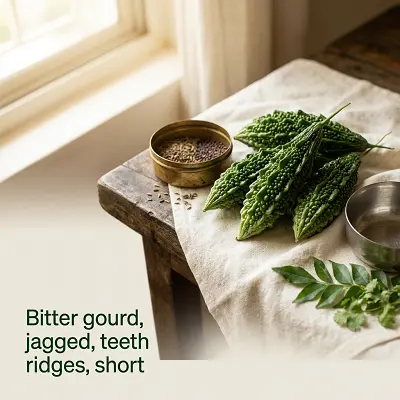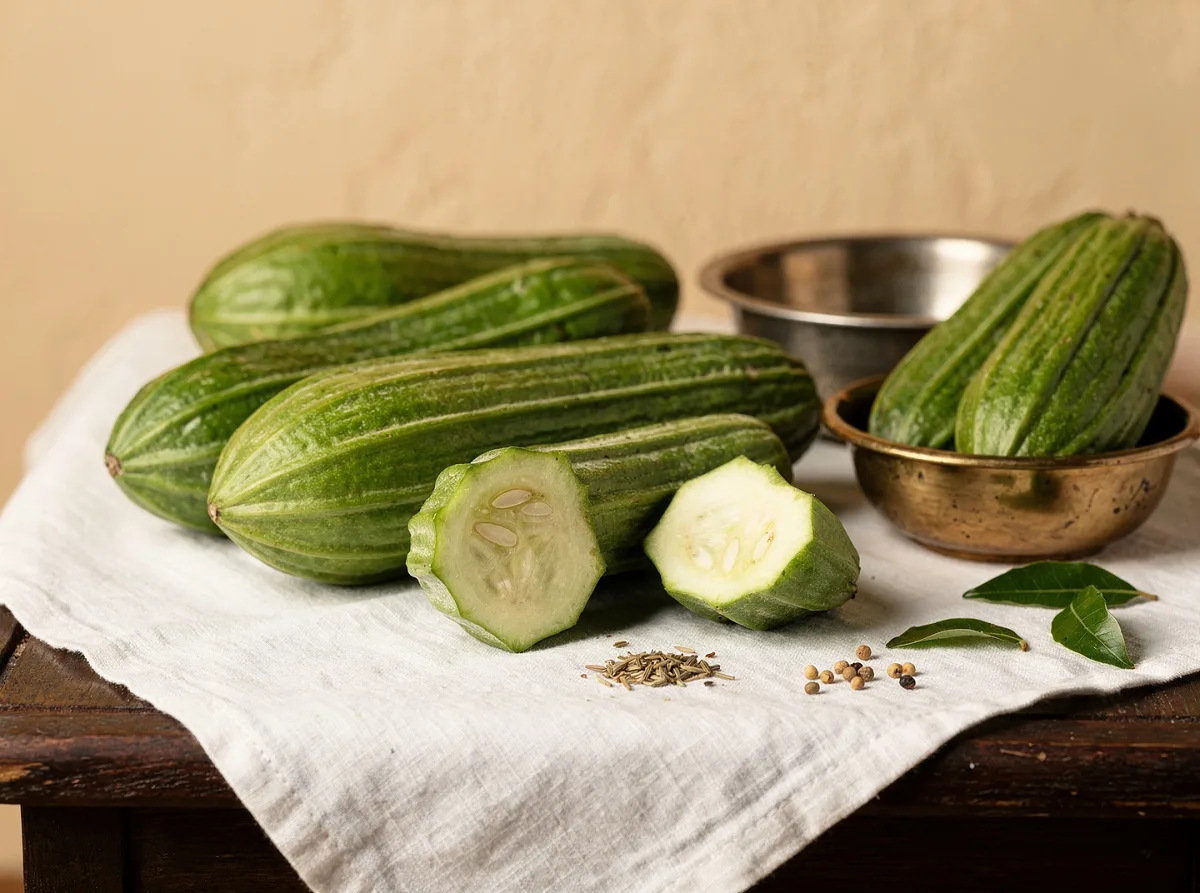
ridge gourd smooth skin
Luffa acutangula · Also known as Bhol, Jhinge, Luffa, Loofah, Turia, Torai, Heeraikai, Turrel, Jingka, Gurdudde, Peechinga, Sebot, Dodka, Janchi, Kali tori, Peerkankai, Beera kaya
Ridge gourd (तुरई, torai or झिंगा, jhinga) is a slender, ridged summer vegetable with pale green skin and tender, spongy white flesh. Mild and slightly sweet, it cooks down quickly and absorbs flavours beautifully. Commonly stir-fried with onions and spices, stuffed with besan fi...
Nutrition per 100 g
Mean values ± IFCT published SD (edible portion).
More macros
Classification
About ridge gourd smooth skin
What it is
Ridge gourd, known as तुरई (torai) in Hindi and झिंगा (jhinga) in Marathi, is a tender summer squash with distinctive lengthwise ridges running along its pale green skin. The flesh is soft, spongy, and ivory-white, with a mild, slightly sweet taste and delicate crunch when cooked just right. Fresh ridge gourd is sold whole or pre-cut in Indian markets and is a seasonal favourite from June to September. (IFCT 2017, Ref #D069)
Use in Indian Kitchen
Ridge gourd is a workhorse in South and East Indian home cooking. It is most commonly stir-fried (तुरई की सब्जी, torai ki sabzi) with onions, green chilli, and a tadka of mustard seeds and curry leaves, or stuffed with a spiced besan-onion filling and pan-fried until golden. In Tamil and Kannada kitchens, it appears in sambar and kootu curries, where its soft texture soaks up the coconut and spice base beautifully. Bengali cooks prepare it as a simple, light sabzi with minimal oil and a touch of turmeric. A practical tip: peel the ridges lightly with a vegetable peeler or knife to remove any fibrous outer layer, then cut into rounds or batons. Ridge gourd cooks very quickly - just 5-7 minutes over medium heat - so add it near the end of cooking to keep it tender and not mushy.
Key Nutrients
Ridge gourd is low in calories and rich in dietary fibre, supporting digestive health. It contains vitamin C for immunity, small amounts of B vitamins, and minerals including potassium and magnesium. The high water content (over 90%) makes it hydrating and light on the stomach. Exact nutrient composition per 100 g is available in IFCT 2017, Ref #D069.
Health Benefits (Evidence-based)
- High water and fibre content may support healthy digestion and regular bowel function.
- Low calorie density makes it suitable for weight-conscious diets and blood sugar management.
- Vitamin C content supports immune function and skin health.
- Potassium and magnesium may help maintain healthy blood pressure and heart function.
- Traditionally used in Ayurvedic and folk medicine as a cooling, light vegetable for summer wellness.
Culinary Uses (Vegetarian)
- Stir-fried with onions, green chilli, and mustard seed tadka (North and South Indian style).
- Stuffed with spiced besan-onion filling and pan-fried or baked.
- Simmered in sambar, kootu, or rasam curries (South Indian).
- Light sabzi with turmeric and minimal oil (Bengali and Odia style).
- Sliced thin and added to mixed vegetable curries or dal-based dishes.
- Occasionally pickled or preserved in oil with spices for longer storage.
Caution
- Ridge gourd is generally safe for all ages and dietary preferences. Those with sensitive digestion may find the raw vegetable slightly harder to digest; cooking softens it completely.
- Ensure thorough cooking to avoid any residual bitterness or fibrous texture.
- Store away from ethylene-producing fruits (apples, bananas) to prevent premature softening.
References
- Indian Council of Medical Research - National Institute of Nutrition (ICMR-NIN). Indian Food Composition Tables (IFCT) 2017. Reference #D069 (Other Vegetables - Ridge Gourd).
- Gopalan, C., Rama Sastri, B. V., & Balasubramanian, S. C. (2007). Nutritive Value of Indian Foods. National Institute of Nutrition, ICMR, Hyderabad.
Sourcing & Storage
Storage
Store ridge gourd in the vegetable compartment of the refrigerator in a perforated plastic bag or open container to allow air circulation. Keep it away from ethylene-producing fruits such as apples and bananas, which accelerate ripening and softening. In warm, humid Indian climates, use the coldest part of the fridge (around 8-10°C). Do not wash before storing; wipe gently with a dry cloth if needed. Avoid stacking heavy items on top to prevent bruising.
Shelf Life
Fresh ridge gourd keeps for 4-6 days in the refrigerator when stored properly. Once cut, wrap the unused portion tightly in cling film and use within 2-3 days. Ridge gourd does not freeze well due to its high water content and soft texture; freezing causes mushiness upon thawing. For longer preservation, pickle or preserve in oil with spices, which can last 2-3 weeks in an airtight jar in a cool place.
Check Before You Buy
Choose ridge gourds that are firm, unblemished, and pale to medium green in colour. The skin should feel smooth and slightly waxy, with prominent ridges. Avoid any that are yellowing, soft, or have dark spots or cracks, which indicate age or decay. The vegetable should feel light and not overly heavy for its size; excessive weight suggests waterlogging or internal rot. In Indian markets, buy from vendors with good turnover to ensure freshness. Pre-cut or packaged ridge gourd should be stored in sealed, moisture-controlled packaging; check the date and reject any with visible slime or off-odour.
In Ayurveda
In classical Ayurvedic texts, ridge gourd (तोरई) is recognized as a light, cooling vegetable with a naturally sweet taste (madhura rasa). It is considered easy to digest and beneficial for balancing Pitta dosha, particularly during summer months. Its high water content and mild nature make it suitable for those with sensitive digestion or weak digestive fire.