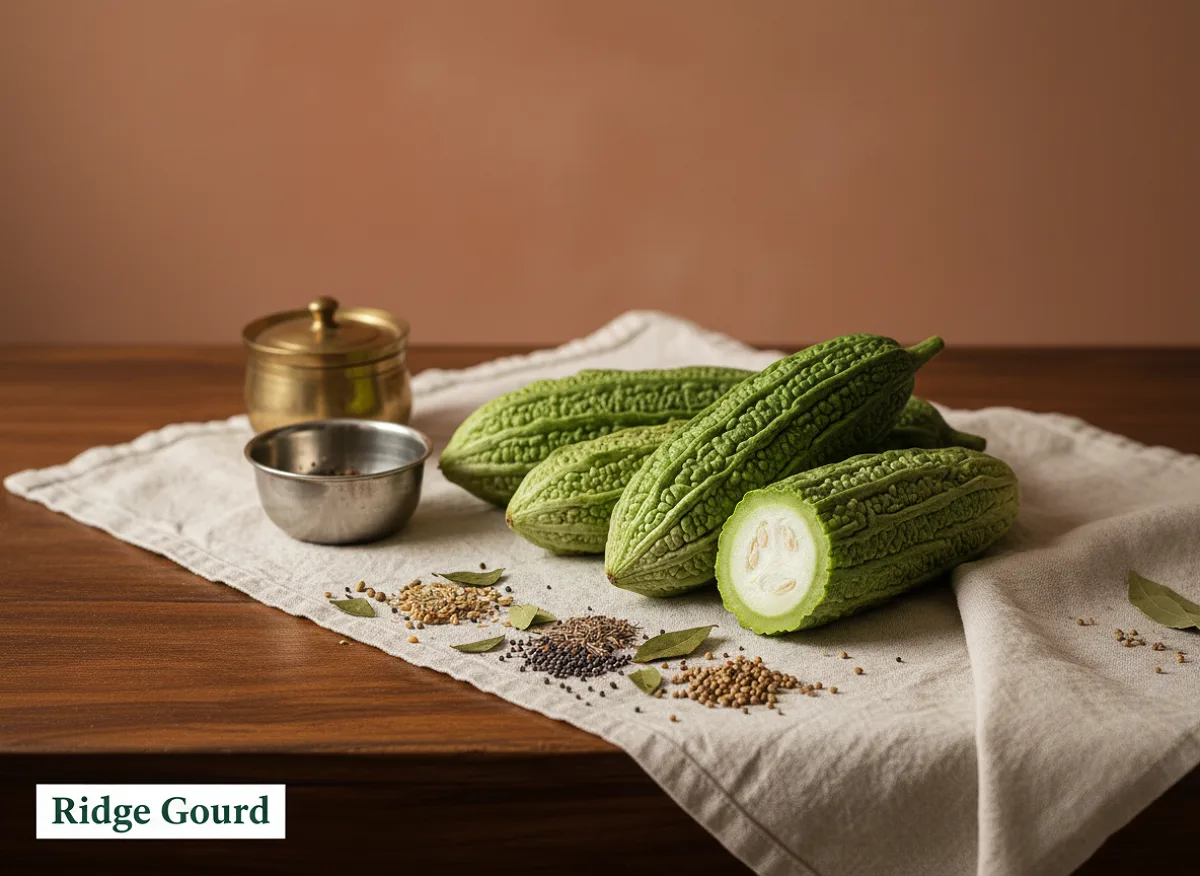
Ridge Gourd
Luffa acutangula · Also known as toree, tori, turai, turiya, turi, ridged gourd, angled luffa
Ridge gourd (तोरई, toree) is a slender, pale-green vegetable with distinctive lengthwise ridges running along its skin, giving it a crisp, slightly fibrous texture when cooked. Fresh and tender, it is a monsoon and summer favourite across Indian kitchens, prized for its mild, del...
Nutrition per 100 g
Mean values ± IFCT published SD (edible portion).
More macros
Classification
About Ridge Gourd
What it is
Ridge gourd (तोरई, toree) is a slender, pale-green vegetable with distinctive lengthwise ridges running along its skin, giving it a crisp, slightly fibrous texture when cooked. Fresh and tender, it is a monsoon and summer favourite across Indian kitchens, prized for its mild, delicate flavour and quick cooking time. Commonly stir-fried with onions and spices, stuffed with besan filling, or simmered in sambar and kootu curries, ridge gourd absorbs flavours beautifully while retaining a pleasant crunch. (IFCT 2017, Ref #D068)
Use in Indian Kitchen
Ridge gourd is a versatile summer vegetable that shines in both everyday and festive cooking. In South India, it features in sambar, kootu, and puli kuzhambu, where its mild flavour complements tamarind and coconut. Across North and West India, it is commonly pan-fried or stir-fried with onions, tomatoes, and tempering spices, or stuffed with a spiced besan-onion mixture and shallow-fried. In Bengali kitchens, it appears in light curries and stir-fries. A practical tip: peel the ridges lightly before cooking to reduce any bitterness, and slice into rounds or lengthwise strips depending on the dish. Ridge gourd cooks quickly, so add it near the end of a curry to keep it tender and slightly crisp.
Key Nutrients
Ridge gourd is low in calories and rich in dietary fibre, supporting digestive health. It contains vitamin C, small amounts of B vitamins, and minerals including potassium and magnesium. The vegetable also provides water-soluble compounds that contribute to its cooling and hydrating properties, making it especially valued in summer cooking. (IFCT 2017, Ref #D068)
Health Benefits (Evidence-based)
- May support digestive health due to its high dietary fibre content, promoting regular bowel movement.
- Low in calories and fat, making it a suitable choice for weight management and balanced meals.
- Rich in vitamin C, which may help support immune function and skin health.
- Contains potassium, linked to heart health and blood pressure regulation.
- Traditionally considered cooling and hydrating in Ayurvedic practice, valued during hot seasons.
- May help reduce inflammation due to its mild nature and water content.
Culinary Uses (Vegetarian)
- Stir-fried or pan-fried with onions, tomatoes, and tempering spices (mustard seeds, curry leaves, dried chilli).
- Stuffed with spiced besan-onion filling and shallow-fried or baked.
- Added to sambar, kootu, and puli kuzhambu curries in South Indian cooking.
- Sliced and simmered in light coconut or tamarind-based gravies.
- Included in mixed vegetable curries and dal-based dishes.
- Pickled or preserved for longer shelf life.
Caution
- Ridge gourd is generally safe for most people; however, those with sensitive digestion may find the fibrous skin slightly irritating if not peeled.
- Individuals on blood-thinning medications should consume in moderation due to its vitamin K content, though amounts in typical servings are small.
- Always source from trusted vendors to avoid adulterated or pesticide-laden produce; wash thoroughly before use.
References
- Indian Council of Medical Research - National Institute of Nutrition (ICMR-NIN). Indian Food Composition Tables (IFCT 2017). Reference #D068 - Other Vegetables category.
- Gopalan, C., Rama Sastri, B. V., & Balasubramanian, S. C. (2007). Nutritive Value of Indian Foods. National Institute of Nutrition, ICMR, Hyderabad.
Health Benefits
- Hydration
- Supports Digestion
- Detox Support
- Weight Management Support
- Heart Health Support
Sourcing & Storage
Storage
Store ridge gourd in a cool, well-ventilated place or in the refrigerator's vegetable compartment in a perforated plastic bag or paper wrap to allow air circulation. Keep away from direct sunlight and moisture to prevent premature softening and mould. In warm, humid climates, refrigeration is recommended to extend freshness. Do not store near ethylene-producing fruits (apples, bananas) as they may accelerate ripening and decay.
Shelf Life
Fresh ridge gourd keeps for 4-7 days when stored in the refrigerator at 4-8°C. At room temperature in a cool place, it lasts 2-3 days. Once cut, use within 1-2 days for best quality and texture. Ridge gourd does not freeze well due to its high water content and fibrous structure; however, it can be blanched and frozen for up to 2-3 months if needed for later use in cooked dishes.
Check Before You Buy
Choose ridge gourds that are firm, bright pale-green, and free from soft spots, bruises, or blemishes. The ridges should be well-defined and the skin unblemished. Avoid overly mature or yellowing specimens, as they tend to be fibrous and bitter. Check that the vegetable is not wrinkled or shrivelled, which indicates age and moisture loss. When buying from a mandi or kirana store, gently squeeze to ensure firmness; the vegetable should feel crisp and not yield to pressure.
In Ayurveda
Ridge gourd (तोरई) is traditionally considered a cooling vegetable in Ayurvedic practice, making it suitable for balancing Pitta dosha during summer months. Its light, easily digestible nature and high water content align with Ayurvedic principles of supporting digestive health without creating heaviness. While not extensively documented in classical Ayurvedic texts as a primary therapeutic ingredient, it is widely used in Indian home kitchens as a gentle, nourishing vegetable for everyday wellness.