Ricebean
Vigna umbellata · Also known as Galmoong, Meth, Rymbai ja, Kattuzhunnu, Chakwai
Ricebean (गलमुंग, galmoong) is a small, glossy legume with a mild, slightly sweet flavour - quite different from the earthiness of larger dals. Whole or split, it cooks quickly and holds its shape well, making it ideal for sambar, rasam, and everyday dal curries across South and...
Nutrition per 100 g
Edible portion values from the master catalog.
More macros
Classification
About Ricebean
Ricebean / गलमुंग (Galmoong)
What it is
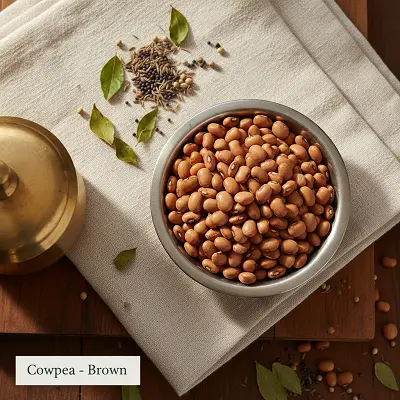
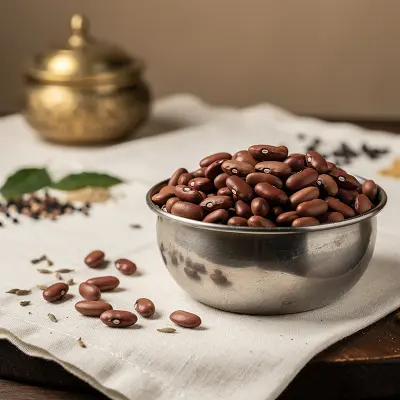
Ricebean (गलमुंग, galmoong) is a small, glossy legume with a smooth, rounded shape and a distinctive mild, slightly sweet taste. Native to South and Southeast Asia, it is commonly sold whole or split in Indian markets, particularly in Tamil Nadu, Andhra Pradesh, and parts of the Northeast. The whole bean is dark reddish-brown or mottled; when split, it reveals a pale cream interior. It cooks faster than most dals - typically in 20-30 minutes without soaking - and absorbs flavours readily while maintaining a tender, creamy texture. (IFCT 2017, Ref #B023)
Use in Indian Kitchen
Ricebean is a workhorse in South Indian kitchens, especially in sambar and rasam where its mild flavour complements tamarind and spices without overpowering. It is also used in everyday dal curries, kootu (vegetable and dal stew), and mixed vegetable sambhar. In the Northeast, it appears in traditional rice-and-dal meals. A practical tip: rinse well before cooking and add salt only after the dal is soft, as salt can toughen the skin if added too early. Pair it with coconut, turmeric, and mustard tempering for authentic South Indian flavour.
Key Nutrients
Ricebean is a good source of plant-based protein, dietary fibre, and carbohydrates. It also contains iron, phosphorus, and B vitamins (particularly folate and thiamine). Exact nutrient composition per 100 g is available in IFCT 2017 (Ref #B023).
Health Benefits (Evidence-based)
- May support steady blood sugar levels due to its fibre and resistant starch content, making it suitable for balanced meals.
- Provides plant-based protein, helping to meet daily protein needs when combined with grains or dairy.
- Rich in dietary fibre, which may support digestive health and regular bowel function.
- Contains folate and other B vitamins, linked to energy metabolism and nervous system support.
- Iron content (though plant-based) contributes to oxygen transport when consumed with vitamin C-rich foods like tamarind or citrus.
Culinary Uses (Vegetarian)
- Sambar - the classic South Indian vegetable and dal stew.
- Rasam - a spiced, tamarind-based broth.
- Kootu - a creamy vegetable and dal curry with coconut.
- Everyday dal curry with tempering of mustard, cumin, and curry leaves.
- Mixed vegetable stews and one-pot rice-and-dal meals.
- Whole bean salads when cooked until just tender.
Caution
- Like all legumes, ricebean contains oligosaccharides that may cause bloating or gas in sensitive individuals; soaking (though not essential) or cooking with asafoetida (hing) may help.
- Those with kidney disease or on a potassium-restricted diet should consult a healthcare provider, as legumes are potassium-rich.
- Raw or undercooked legumes contain enzyme inhibitors; always cook thoroughly until soft.
References
- Indian Council of Medical Research - National Institute of Nutrition (ICMR-NIN). Indian Food Composition Tables (IFCT 2017). Reference #B023 (Grain Legumes category).
- Gopalan, C., Rama Sastri, B. V., & Balasubramanian, S. C. (2007). Nutritive Value of Indian Foods. National Institute of Nutrition, ICMR, Hyderabad.
Sourcing & Storage
Storage
Store dried ricebean in an airtight container (glass jar, metal tin, or sealed cloth bag) in a cool, dry place away from direct sunlight and moisture. In humid climates (common in India during monsoon), keep the container in a cupboard or pantry with good air circulation. Avoid storing near strong-smelling spices or foods, as legumes can absorb odours. If you live in a very hot or damp region, refrigerate in an airtight container to prevent insect infestation and moisture absorption.
Shelf Life
Whole dried ricebean keeps well for 6-8 months when stored in an airtight container in a cool, dry place. Split ricebean (dal) has a slightly shorter shelf life of 4-6 months due to greater surface area exposure. Once cooked, ricebean dal or curry should be refrigerated and consumed within 2-3 days, or frozen in portions for up to 2-3 months.
Check Before You Buy
When buying ricebean from a mandi or kirana shop, look for whole beans that are uniform in colour (reddish-brown or mottled), glossy, and free of cracks, discolouration, or visible insect damage. Avoid beans that feel soft, damp, or smell musty - signs of moisture or age. If buying from a bulk bin, ensure the shop has good turnover and the container is clean and dry. Packed ricebean should have a clear date and be sealed; check the packet for any holes or signs of tampering. A quick rub between your fingers should produce a clean, dry feel with no stickiness.
In Ayurveda
Ricebean is traditionally regarded in Ayurveda as a light and easily digestible legume. It is believed to help balance Vata and Pitta doshas and is commonly used in khichdi and other nourishing preparations for recovery and gentle nutrition.