Red Pumpkin
Cucurbita maxima · Also known as Rongalao, Kumro, Kohlu, Kaddu, Kumbala kash, Paarimal, Pathaw saw, Mathan, Mairen, Lal bhopla, Farsi, Kakharu, Kummaandah, Parangikkai, Gummadi
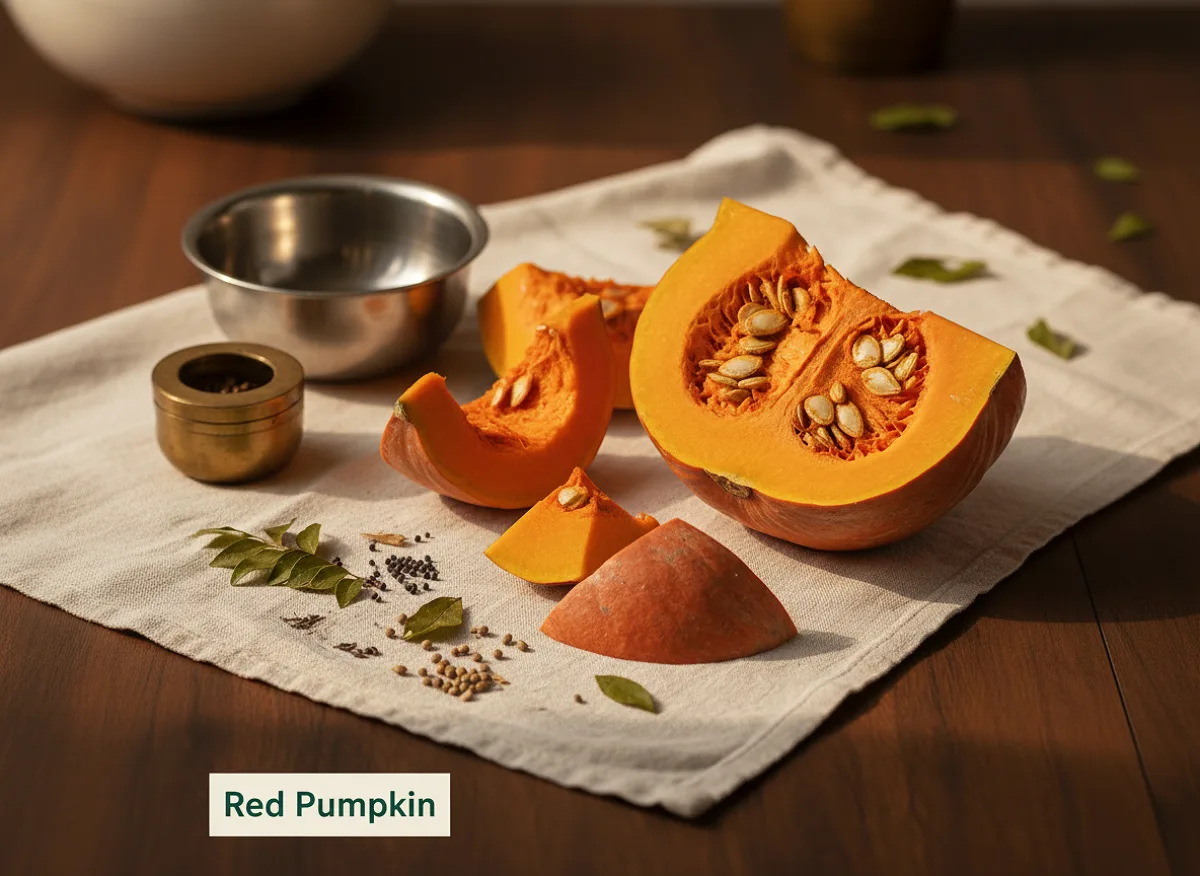
Red pumpkin (लाल भोपला, lal bhopla) is a large, round winter squash with deep orange-red skin and dense, sweet golden flesh. Mild and slightly nutty in flavour, it is a staple in Indian home kitchens for curries, soups, and halwa. The flesh softens beautifully when roasted or sim...
Nutrition per 100 g
Mean values ± IFCT published SD (edible portion).
More macros
Classification
About Red Pumpkin
What it is
Red pumpkin, known as लाल भोपला (lal bhopla) in Hindi and by many regional names across India - Kaddu in North India, Kumro in Bengal, Parangikkai in Tamil Nadu, and Gummadi in Telugu - is a large, round winter squash with thick, ridged orange-red skin and pale golden, fibrous flesh inside. The flesh is naturally sweet, mild, and slightly earthy, becoming creamy when cooked. It is sold fresh year-round in Indian markets, whole or cut into wedges, and is a workhorse vegetable in home kitchens across the country. (IFCT 2017, Ref #D066)
Use in Indian Kitchen
Red pumpkin appears in countless regional dishes: North Indian pumpkin curry (kaddu ki sabzi) simmered with onions and tomatoes; South Indian pumpkin kootu with lentils and coconut; Bengali pumpkin bhaja (crispy pan-fried slices); and the beloved festive halwa made by slow-cooking grated pumpkin with ghee and jaggery. It is also stuffed into parathas, added to sambar, and roasted until caramelised for a simple side dish. A practical tip: cut pumpkin into smaller pieces before cooking to speed up softening, and reserve the seeds for roasting as a snack or grinding into curries for body and nutrition.
Key Nutrients
Red pumpkin is rich in beta-carotene (converted to vitamin A in the body), fibre, potassium, and vitamin C. It also contains small amounts of manganese, B vitamins, and antioxidants including lutein and zeaxanthin. Exact nutrient composition varies by variety and growing conditions; refer to IFCT 2017 (Ref #D066) for standardised Indian food values.
Health Benefits (Evidence-based)
- High in beta-carotene, which supports eye health and may help protect against age-related vision decline.
- Rich in fibre, which supports digestive health and may help maintain healthy cholesterol levels.
- Contains potassium, linked to heart health and healthy blood pressure regulation.
- Low in calories and high in water content, making it a filling, nutrient-dense choice for weight management.
- Antioxidants such as lutein and zeaxanthin may help reduce oxidative stress in the body.
- Traditionally used in Ayurvedic cooking as a grounding, nourishing vegetable for autumn and winter seasons.
Culinary Uses (Vegetarian)
- Curries and sabzi - simmered with onions, tomatoes, and spices (North Indian style) or with coconut and lentils (South Indian kootu).
- Halwa - grated and slow-cooked with ghee, jaggery, and cardamom for a festive dessert.
- Roasted or pan-fried - wedges or cubes tossed with oil, salt, and spices until golden and caramelised.
- Parathas - grated pumpkin mixed with flour and spices for stuffed flatbread.
- Soups and khichdi - added to lentil or rice dishes for sweetness and body.
- Pickles and preserves - fermented or cooked down with spices for long storage.
- Seeds - roasted whole as a snack or ground into curries and dals for added nutrition.
Caution
- Red pumpkin is generally safe for all ages and diets. Those with diabetes should monitor portion sizes, as pumpkin contains natural sugars.
- Rarely, individuals with pollen allergies (particularly birch pollen) may experience mild cross-reactivity; cooking usually eliminates this risk.
- Store cut pumpkin in the refrigerator to prevent mould growth in warm, humid climates.
References
- Indian Council of Medical Research - National Institute of Nutrition (ICMR-NIN). Indian Food Composition Tables (IFCT 2017). Reference #D066 (Other Vegetables - Pumpkin).
- Sharma, S., Rani, R., & Harshvardhan, K. (2013). Nutritional composition and health benefits of pumpkin (Cucurbita maxima). Journal of Medicinal Plants Research, 7(46), 3468-3476.
Health Benefits
- Improves Digestion
- Boosts Immunity
- Supports Eye Health
- Weight Management Support
- Heart Health Support
Sourcing & Storage
Storage
Whole, uncut red pumpkin keeps best in a cool, dry, well-ventilated place away from direct sunlight - a pantry, cellar, or cool corner of the kitchen. In warm, humid climates, store in the coolest part of the house or in a refrigerator if space allows. Once cut, wrap the pieces tightly in plastic wrap or store in an airtight container in the refrigerator to prevent mould and drying out. Cooked pumpkin should be refrigerated in an airtight container.
Shelf Life
A whole, uncut red pumpkin stored in cool, dry conditions can last 2 to 3 months, sometimes longer if the skin remains unblemished. Cut pumpkin, when wrapped and refrigerated, keeps for 5 to 7 days. Cooked pumpkin lasts 3 to 4 days in the refrigerator. Pumpkin can also be frozen (raw, cubed, or cooked) for up to 3 months in an airtight freezer container or bag.
Check Before You Buy
Choose a red pumpkin with thick, unblemished skin that feels heavy for its size - a sign of dense, mature flesh. The skin should be deep orange-red with no soft spots, cracks, or mould. Tap the pumpkin gently; a hollow sound indicates ripeness. Avoid pumpkins with cuts, bruises, or damp patches, as these invite rot. At the mandi or kirana shop, ask the vendor to cut a small wedge so you can inspect the flesh colour (should be pale golden, not pale or watery) and confirm it is not stringy or overly fibrous.
In Ayurveda
In classical Ayurvedic texts, pumpkin (कद्दू) is recognized as a cooling, nourishing vegetable with a sweet taste (madhura rasa) and a naturally sweet post-digestive effect (vipaka). It is traditionally considered beneficial for balancing Pitta dosha due to its cooling nature and is often recommended in Ayurvedic dietary guidance for gentle digestion and overall wellness. The vegetable is valued in traditional Indian medicine for its mild, easily digestible properties and its use in seasonal and restorative cooking.