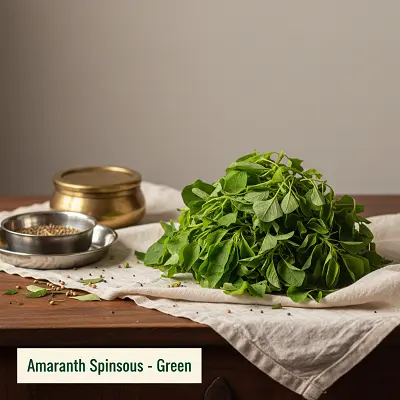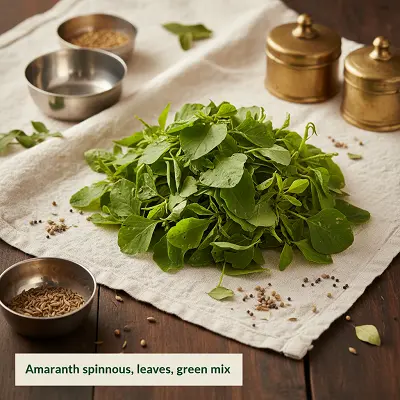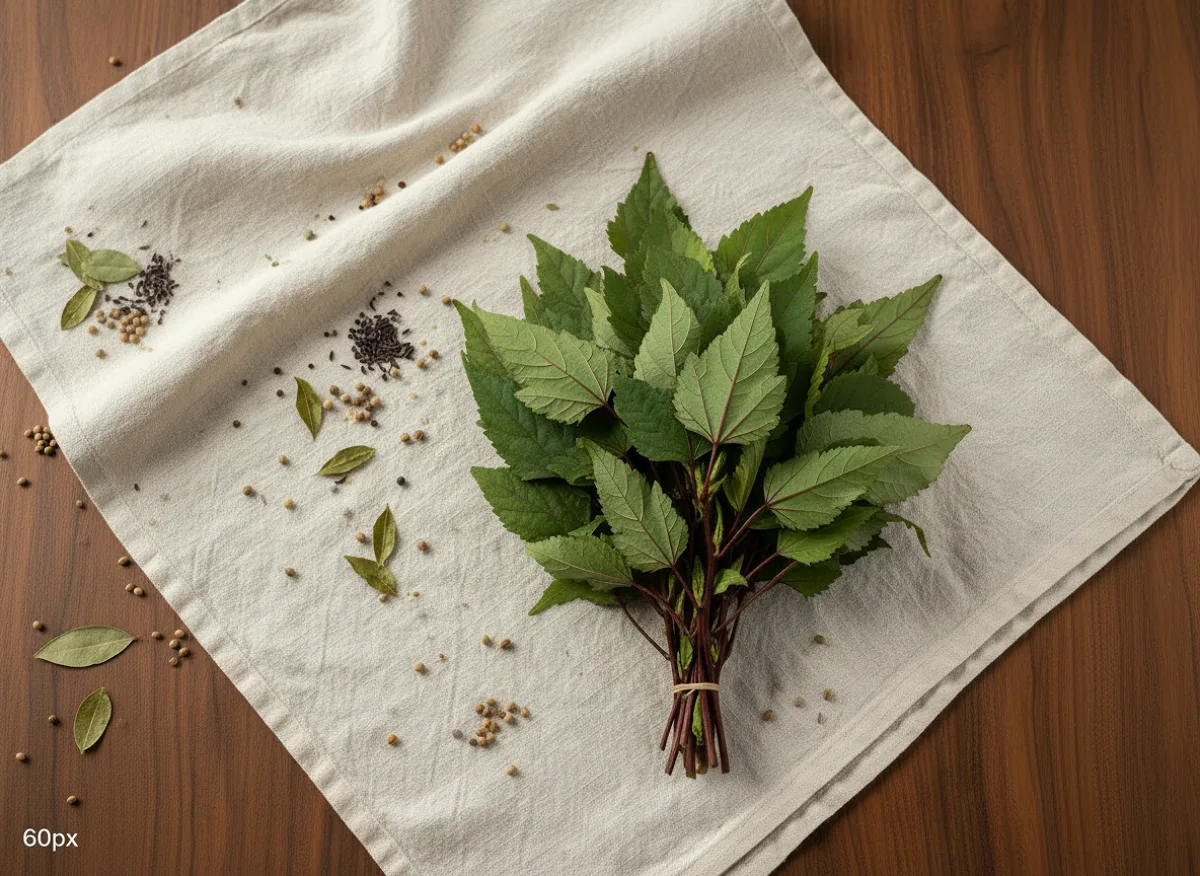
Red Gogu leaves
Hibiscus cannabinus · Also known as Tengamora, Mestapat, Roselle Leaves, Ambadi, Pitwa, Pundi, Pulichai cheera, Gongura, Ambada ki bhaji
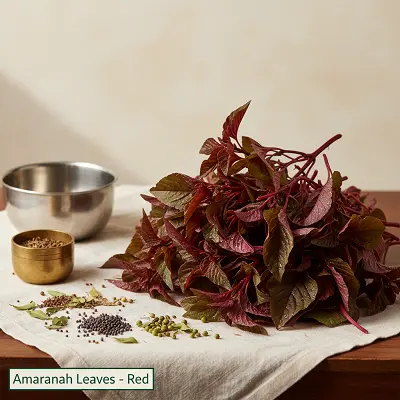
Red Gogu leaves (also called Ambadi, Gongura, or Pulichai cheera) are tender, slightly tangy leafy greens with a distinctive sour bite and deep reddish-green colour. Fresh or dried, they bring a sharp, lemony flavour to South Indian sambar, rasam, and stir-fries, and are prized i...
Nutrition per 100 g
Edible portion values from the master catalog.
More macros
Classification
About Red Gogu leaves
What it is
Red Gogu leaves (Hibiscus cannabinus), known as Ambadi, Gongura, Pulichai cheera, or Mestapat across India, are tender green leafy vegetables with a distinctive sour, slightly tangy taste and a reddish-green hue. The leaves are soft and delicate, often with a subtle ribbed texture, and are used fresh or dried in regional Indian cooking. They thrive in warm climates and are a seasonal favourite in South Indian, Deccan, and East Indian home kitchens. (IFCT 2017, Ref #C023)
Use in Indian Kitchen
Red Gogu leaves are a cornerstone of South Indian and Deccan vegetable curries. In Tamil and Andhra kitchens, they are simmered into sambar with lentils and spices, or whisked into a tangy rasam with tamarind and pepper. Gongura curry - a beloved Telangana and Andhra dish - pairs the leaves with onion, garlic, and a tempering of mustard seeds and red chilli for a sharp, comforting side. In coastal and Eastern regions, they are stir-fried with minimal oil and a touch of turmeric, or added to dal and kootu. A practical tip: if the leaves feel very sour or tough, soak them briefly in water or add a pinch of jaggery to balance the tang and soften the bite.
Key Nutrients
Red Gogu leaves are a good source of dietary fibre, vitamin C, and minerals including iron, calcium, and phosphorus. They also contain carotenoids and polyphenols. Exact nutrient composition is documented in IFCT 2017 (Ref #C023).
Health Benefits (Evidence-based)
- May support digestive health due to high dietary fibre content and traditional use in digestive curries and rasams.
- Linked to antioxidant activity through carotenoids and polyphenols, which may help protect cells from oxidative stress.
- Good source of iron and vitamin C, which together support healthy blood formation and oxygen transport.
- Traditionally used in South Indian home remedies to support liver and digestive function.
- Low in calories and nutrient-dense, making them a practical choice for everyday vegetable intake.
Culinary Uses (Vegetarian)
- Sambar - simmered with lentils, tamarind, and spices for a tangy South Indian vegetable stew.
- Gongura curry - the signature Telangana and Andhra dish, cooked with onion, garlic, and a mustard-chilli tempering.
- Rasam - whisked into a peppery, tangy broth with tamarind and cumin.
- Stir-fried with minimal oil, turmeric, and mustard seeds for a simple side dish.
- Added to dal and kootu for extra tang and nutrition.
- Dried leaves used as a souring agent in place of tamarind or amchur in some regional kitchens.
Caution
- The natural sourness may be too sharp for those with sensitive digestion or acid reflux; balance with jaggery or cook with cooling spices like coriander.
- Pregnant women should consume in moderation and consult a healthcare provider, as traditional use in large quantities is not well-studied.
- Those on blood-thinning medications should check with their doctor before regular consumption, as leafy greens are high in vitamin K.
References
- Indian Council of Medical Research - National Institute of Nutrition (ICMR-NIN). Indian Food Composition Tables (IFCT 2017). Reference #C023 - Green Leafy Vegetables.
- Sivaraman Pillai, K. & Srinivasan, K. (2012). "Antioxidant and anti-inflammatory properties of Hibiscus cannabinus leaves." Journal of Medicinal Food, 15(10), 891-899.
Sourcing & Storage
Storage
Store fresh Red Gogu leaves in a breathable cloth bag or perforated plastic container in the refrigerator's vegetable drawer, away from ethylene-producing fruits. Keep them dry; excess moisture encourages wilting and mould. In warm, humid Indian climates, use within 1-2 days for best texture and flavour. Dried leaves should be stored in an airtight glass jar or metal tin in a cool, dark, dry cupboard, away from direct sunlight and moisture.
Shelf Life
Fresh Red Gogu leaves keep for 2-3 days in the refrigerator when stored in a breathable container. Once cooked, use within 1-2 days. Dried leaves, when stored in an airtight container in a cool, dark place, remain usable for 3-4 months; discard if they show signs of dampness or insect damage.
Check Before You Buy
Choose fresh Red Gogu leaves that are tender, bright reddish-green, and free from yellowing, bruising, or slime. The leaves should feel crisp and snap cleanly when bent; avoid wilted or discoloured bunches. If buying from a mandi or kirana, ask for leaves harvested the same day or the previous day. Check for any earthy smell (a sign of freshness) and avoid bunches with a musty or fermented odour. Dried leaves should be uniformly coloured, free from dust, and stored in sealed packs; open the pack and smell before buying to ensure no mustiness or mould.
In Ayurveda
In classical Ayurvedic texts, red gogu leaves (गोंगुरा) are recognized for their pungent (कटु) and sour (अम्ल) taste properties, which stimulate digestive fire (अग्नि) and enhance appetite. The leaves are traditionally used to balance excess Kapha and Pitta doshas, though their heating nature means they should be used mindfully by those with high Pitta constitution.
The herb has been employed in traditional Ayurvedic practice to support healthy digestion, promote blood purification (रक्त शोधन), and aid in the management of sluggish metabolism. Its astringent and slightly bitter undertones align with classical descriptions of leafy greens that support detoxification pathways.