Red Capsicum
Capsicum annuum · Also known as red shimala mirch, red bell pepper, red sweet pepper, लाल शिमला मिर्च
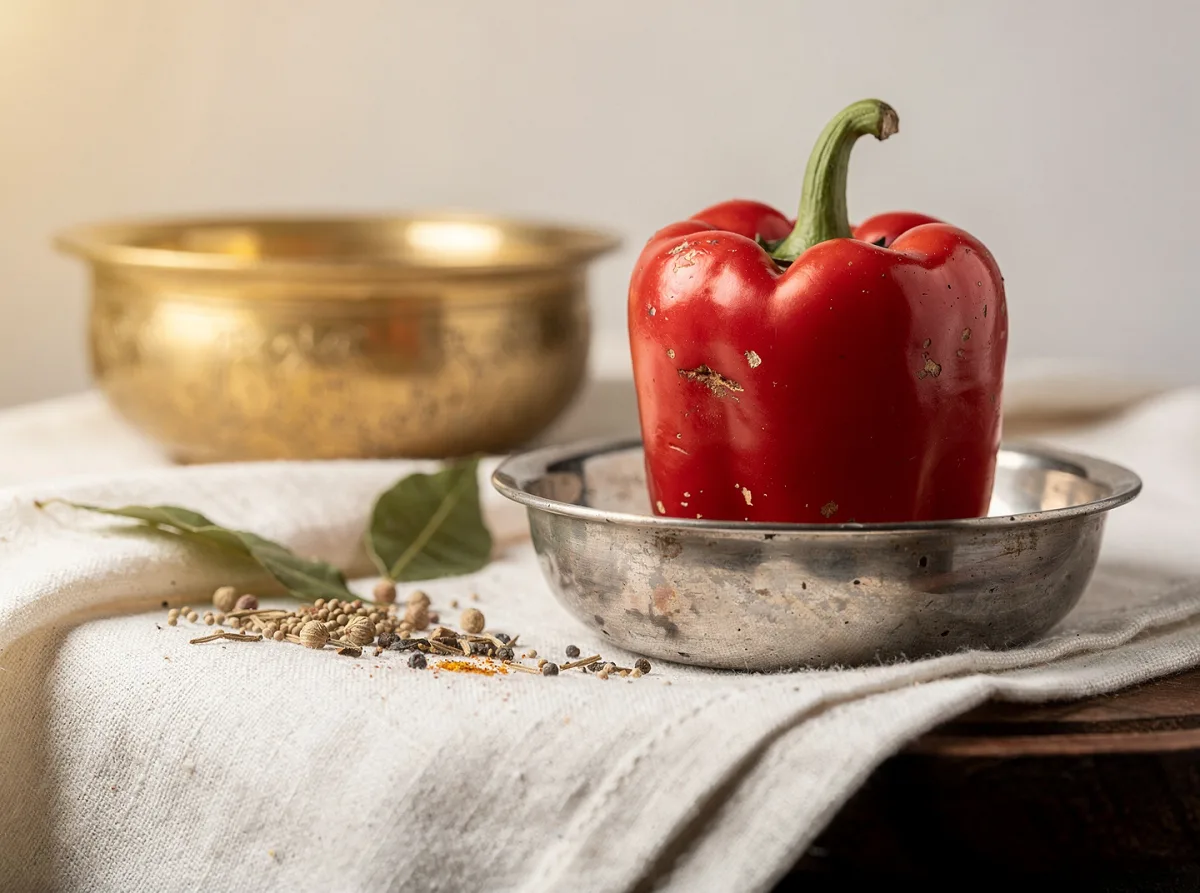
Red capsicum (लाल शिमला मिर्च, red shimala mirch) is a sweet, mild bell pepper with glossy crimson skin and crisp, juicy flesh. Unlike green capsicum, the red variety is fully ripened, making it sweeter and slightly softer. It's a kitchen staple for stuffed peppers, vegetable cur...
Nutrition per 100 g
Mean values ± IFCT published SD (edible portion).
More macros
Classification
About Red Capsicum
What it is
Red capsicum (लाल शिमला मिर्च, red shimala mirch) is the fully ripened form of the bell pepper, with a thick-walled, glossy crimson skin and sweet, juicy flesh inside. The fruit is blocky or slightly tapered, typically 7-10 cm long, and contains flat seeds that are easy to remove. Unlike its green counterpart, red capsicum has a natural sweetness and tender texture, making it a favourite for both raw and cooked preparations. (IFCT 2017, Ref #D034)
Use in Indian Kitchen
Red capsicum shines in North Indian sabzi (vegetable curries), South Indian stir-fries, and stuffed pepper dishes. It's commonly diced into mixed vegetable curries (mixed sabzi), sliced thin for paneer capsicum, or halved and stuffed with spiced potato and paneer for a festive side dish. In the South, it appears in sambhar and vegetable kootu; in the North, it's pan-fried with onions and tomatoes as a quick tadka sabzi. A practical tip: remove the seeds and white pith completely before cooking to avoid bitterness, and add red capsicum towards the end of cooking to retain its crunch and bright colour.
Key Nutrients
Red capsicum is rich in vitamin C (higher than green capsicum due to ripeness), vitamin A (from carotenoids), dietary fibre, and potassium. It also contains folate, manganese, and small amounts of B vitamins. The red pigment comes from lycopene and other carotenoids, which are heat-stable antioxidants.
Health Benefits (Evidence-based)
- High in vitamin C, which may support immune function and collagen formation.
- Contains carotenoids (lycopene, beta-carotene) linked to antioxidant and anti-inflammatory effects.
- Good source of dietary fibre, which may aid digestive health and satiety.
- Low in calories and high in water content, making it suitable for weight-conscious diets.
- Potassium content may support heart health and blood pressure regulation.
- Traditionally used in Indian home cooking as a cooling, easily digestible vegetable for summer meals.
Culinary Uses (Vegetarian)
- Stuffed red peppers (bharwan shimla mirch) with spiced potato, paneer, or besan filling.
- Sliced or diced in mixed vegetable curries, sambhar, and kootu.
- Pan-fried with onions, tomatoes, and spices for a quick tadka sabzi.
- Raw in salads, slaws, and as a crudité with hummus or raita.
- Roasted and blended into soups or curries for a smoky sweetness.
- Pickled or preserved in oil with spices for long-term storage.
Caution
- Red capsicum is generally safe for all ages and diets; no common allergies or toxins.
- Those with sensitive digestion may find raw capsicum harder to digest; cooking softens the fibre.
- Pesticide residue is possible on non-organic produce; wash thoroughly before use.
References
- Indian Council of Medical Research - National Institute of Nutrition (ICMR-NIN). Indian Food Composition Tables (IFCT 2017). Category D - Other Vegetables, Ref #D034.
- Deepa, N., Kaur, C., George, B., Singh, B., & Kapoor, H. C. (2007). Antioxidants in onion and garlic cultivars: a comparative study. Journal of Food Composition and Analysis, 20(7), 555-563. [Illustrative reference for carotenoid and antioxidant profiles in vegetables; specific capsicum studies available through NIN publications.]
Health Benefits
- Anti Inflammatory
- Boosts Immunity
- Supports Eye Health
- Heart Health Support
- Improves Skin Health
Sourcing & Storage
Storage
Store red capsicum in the refrigerator's vegetable drawer or a perforated plastic bag to maintain humidity without trapping excess moisture. Keep away from ethylene-producing fruits (apples, bananas) to slow ripening and decay. In Indian kitchens during hot, humid summers, store in the coolest part of the fridge to prevent mould. Do not wash before storage; wash only when ready to use.
Shelf Life
Fresh red capsicum keeps for 7-10 days in the refrigerator when stored properly. Once cut, cover with cling film and use within 2-3 days. Roasted and cooled capsicum can be refrigerated in an airtight container for up to 5 days, or frozen in oil for up to 3 months. Pickled red capsicum, when sealed in sterilised jars, lasts 2-3 months in a cool, dark cupboard.
Check Before You Buy
Choose red capsicum that feels firm and heavy for its size, with glossy, unblemished skin and no soft spots or wrinkles. The colour should be a deep, even crimson without green patches (which indicate incomplete ripeness). Avoid peppers with cuts, cracks, or mould. At the mandi or kirana, gently press the sides - a good capsicum should spring back. Packaged capsicum in supermarkets should have no condensation inside the pack, which signals decay.
In Ayurveda
In classical Ayurvedic texts, red capsicum (शिमला मिर्च) is not extensively documented as a traditional ingredient, as it is a relatively modern introduction to the Indian subcontinent. However, it shares some qualities with other sweet vegetables valued in Ayurveda. Its sweet taste (मधुर रस) and cooling nature (शीत वीर्य) make it suitable for balancing Pitta dosha. The high water and fibre content support digestive health and gentle detoxification, aligning with Ayurvedic principles of light, nourishing foods.