Raw Mango
Mangifera indica · Also known as Green mango, कच्चा आम (kachcha aam), unripe mango
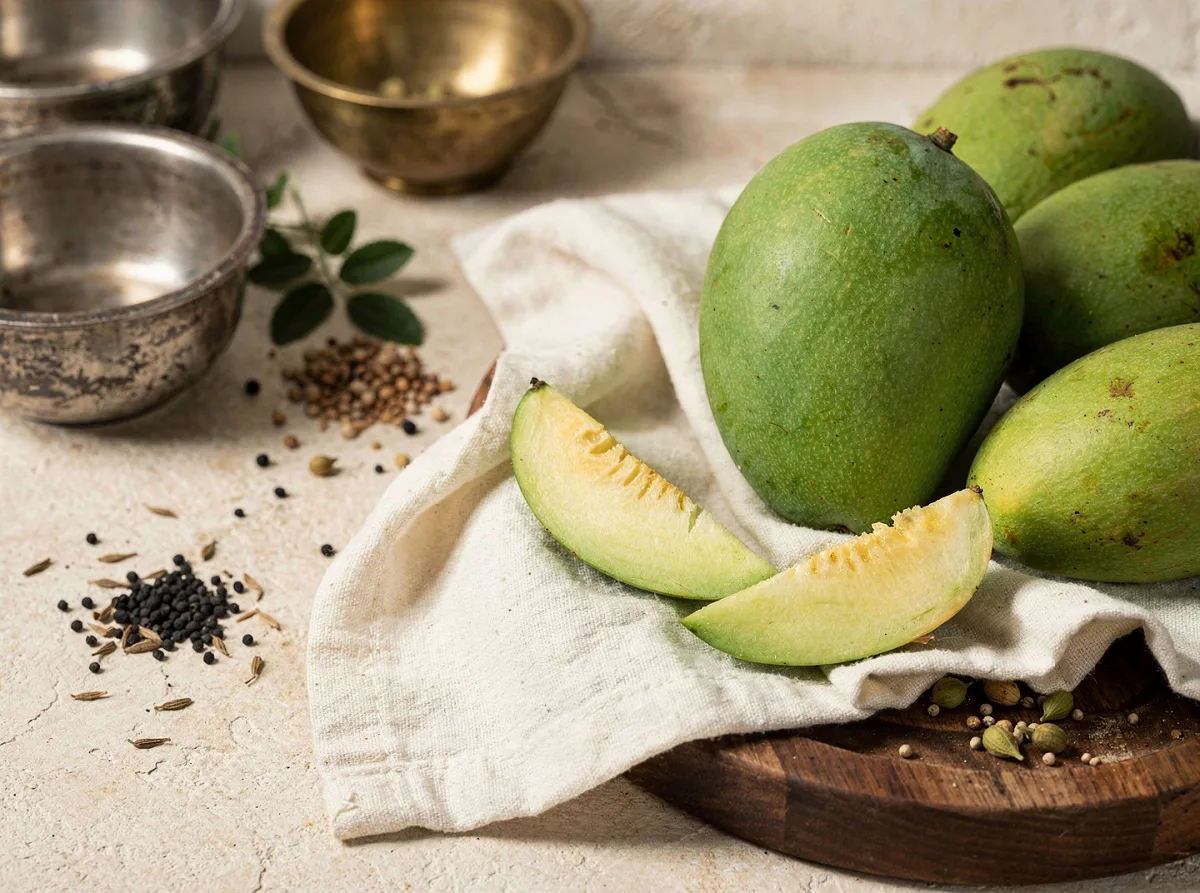
Raw mango (कच्चा आम, kachcha aam) is the unripe fruit of the mango tree, picked while still firm and green with a sharp, tangy flavour. Crisp and juicy with a slight astringency, it is a staple souring agent in Indian kitchens, used fresh in chutneys, pickles, and curries, or dri...
Nutrition per 100 g
Mean values ± IFCT published SD (edible portion).
More macros
Classification
About Raw Mango
What it is
Raw mango (कच्चा आम, kachcha aam) is the unripe fruit of Mangifera indica, harvested before maturity when the skin is still green and the flesh is firm, crisp, and pale yellow. The taste is distinctly tart and slightly astringent, with a refreshing sourness that makes it invaluable in Indian cooking. It is used fresh, dried as powder (amchur), or preserved as pickle and is a cornerstone souring ingredient across regional Indian kitchens. (IFCT 2017, Ref #D057)
Use in Indian Kitchen
Raw mango is indispensable in South Indian cooking - a key souring agent in sambar, rasam, and kootu curries where it replaces tamarind or complements it. In North India, it features in chutneys, pickles (achar), and stuffed parathas. The dried powder form, amchur, is sprinkled on chaats, dal, and vegetable fries for instant tang without added liquid. Fresh raw mango is also blended into cooling summer drinks like aam panna (with jaggery, cumin, and mint) and used in sweet-sour chutneys paired with dal and rice. A practical tip: slice raw mango just before use to prevent browning, and if the fruit is very fibrous, grate it finely for smoother incorporation into curries and chutneys.
Key Nutrients
Raw mango is a good source of vitamin C (ascorbic acid), which supports immunity and collagen formation. It also contains dietary fibre, potassium, and small amounts of vitamin A and B vitamins. The tannins present give it its characteristic astringency and may have mild digestive properties. Exact nutrient composition varies with ripeness and variety; refer to IFCT 2017 for detailed micronutrient profiles.
Health Benefits (Evidence-based)
- High in vitamin C, which may support immune function and skin health.
- Contains dietary fibre that may aid digestive regularity when consumed fresh.
- Traditionally used in summer drinks (aam panna) to help prevent heat-related dehydration and electrolyte loss.
- The tannins and polyphenols may have mild antioxidant properties, linked to general wellness support.
- Low glycaemic index when unripe, making it suitable for moderate consumption in balanced meals.
Culinary Uses (Vegetarian)
- Fresh sliced or grated in sambar, rasam, and vegetable curries for souring.
- Pickled whole or sliced as achar, often with mustard seeds, fenugreek, and chilli.
- Dried as amchur powder, sprinkled on chaats, dal, and fried vegetables.
- Blended into chutneys with coconut, green chilli, and jaggery.
- Cooked into sweet-sour chutneys paired with dal and rice.
- Stewed with jaggery and spices in aam panna, a traditional summer cooler.
- Stuffed with spiced besan-onion filling in raw mango parathas (North India).
Caution
- Raw mango is high in tannins and may cause mild constipation or stomach upset if consumed in very large quantities on an empty stomach.
- Those with sensitive teeth or enamel erosion should be cautious of prolonged contact with the acidic juice.
- Individuals with IBS or digestive sensitivity may need to moderate intake or consume it cooked in curries rather than raw.
References
- Indian Council of Medical Research - National Institute of Nutrition (ICMR-NIN). Indian Food Composition Tables (IFCT 2017). Reference #D057 - Other Vegetables category.
- Nutritive Value of Indian Foods, ICMR-NIN publication, for micronutrient and fibre data on unripe mango.
Health Benefits
- Improves Digestion
- Boosts Immunity
- Enhances Appetite
- Prevents Heatstroke
Sourcing & Storage
Storage
Store raw mangoes in a cool, dry place at room temperature (18-22°C) away from direct sunlight and moisture. In warm climates, keep them in a ventilated basket or cloth bag to allow air circulation and prevent mould. For longer storage, refrigerate unwashed mangoes in the crisper drawer at 10-12°C for up to 2-3 weeks. Do not store in sealed plastic bags, as trapped moisture encourages rot. Once cut, wrap the exposed flesh tightly in cling film and refrigerate; use within 1-2 days.
Shelf Life
Whole raw mangoes stored at room temperature in a cool, dry place last 5-7 days. Refrigerated in the crisper, they keep for 2-3 weeks. Once sliced or grated, use within 1-2 days when refrigerated. Dried amchur powder, when stored in an airtight container away from moisture and heat, remains fresh for 6-8 months. Pickled raw mango, when properly sealed and stored in a cool cupboard, keeps for several months to over a year.
Check Before You Buy
Choose raw mangoes that are firm to the touch with unblemished, evenly green skin - avoid any with soft spots, dark patches, or signs of insect damage. The fruit should feel heavy for its size, indicating good juice content. Smell near the stem end; a fresh, slightly fruity aroma is a good sign. Avoid mangoes that are too soft or show yellowing, as these are beginning to ripen and will not have the desired tartness and crispness for cooking. When buying from a mandi or kirana, ask for "कच्चे आम" (kachche aam) specifically to ensure you receive unripe fruit, not partially ripened stock.
In Ayurveda
In classical Ayurveda, raw mango (कच्चा आम) is recognized for its sour (amla) and astringent (kashaya) tastes, with a cooling (sheeta) virya. It is traditionally used to support digestive health and is believed to help balance excess pitta when prepared with salt and spices. The fruit's natural acidity and enzyme content align with Ayurvedic principles of aiding agni (digestive fire) and promoting healthy elimination.