Rambutan
Nephelium lappaceum
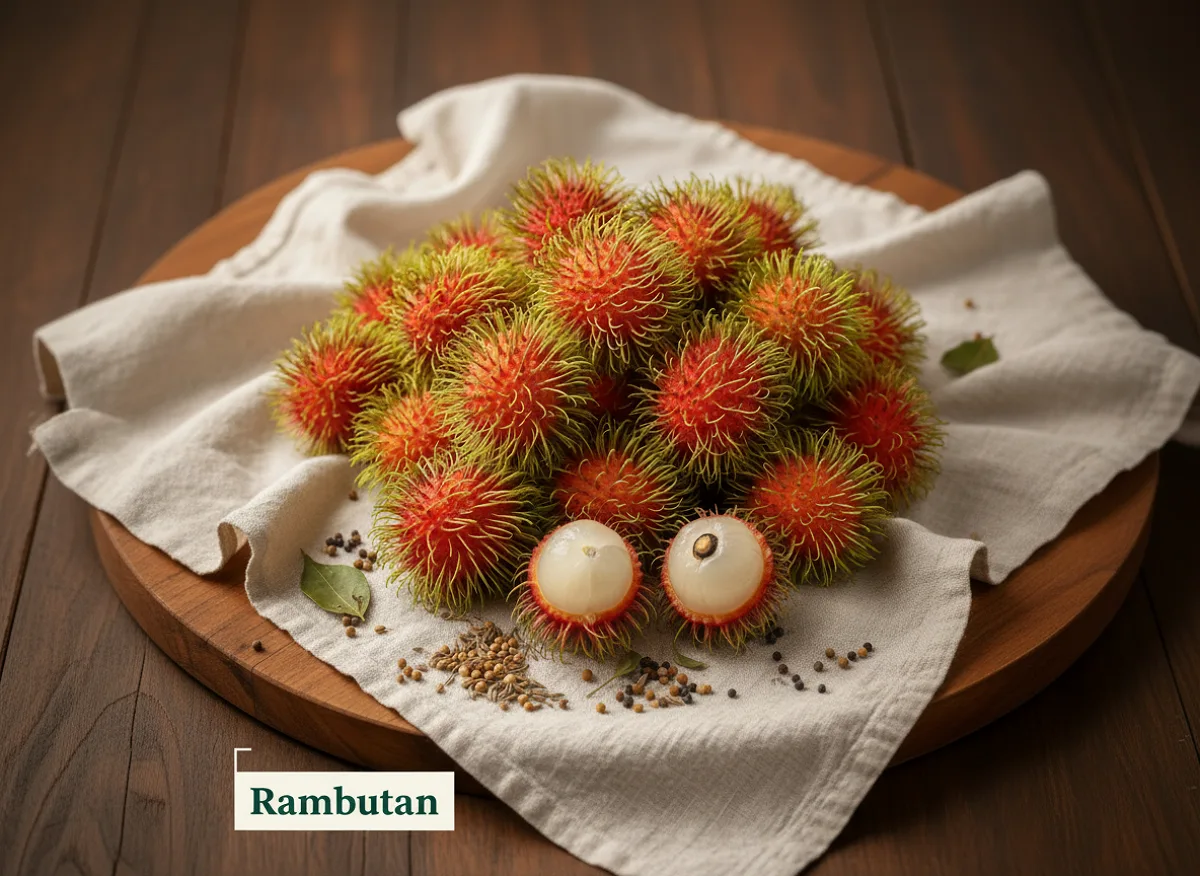
Rambutan is a tropical fruit with a distinctive hairy red or yellow skin, native to Southeast Asia and increasingly available in Indian markets. Sweet, juicy, and refreshing, it's eaten fresh or used in desserts and beverages. Rich in vitamin C and antioxidants, it makes a light,...
Nutrition per 100 g
Edible portion values from the master catalog.
More macros
Classification
About Rambutan
What it is
Rambutan (Nephelium lappaceum) is a tropical stone fruit with a distinctive hairy or spiky exterior - the name comes from the Malay word "rambut" meaning hair. Native to Southeast Asia, it has become increasingly available in Indian fruit markets, particularly in metro cities and coastal regions. The translucent white or pinkish flesh inside is sweet, juicy, and mildly fragrant. It is classified under IFCT 2017 as a tropical fruit (Category E - Fruits).
Use in Indian Kitchen
While not traditionally rooted in classical Indian cuisine, rambutan has found its way into modern Indian kitchens as an exotic summer fruit. It is most commonly eaten fresh, chilled, and served as a dessert or in fruit platters at celebrations and gatherings. In South India, it occasionally appears in fruit salads and is sometimes paired with coconut-based desserts. The fruit's natural sweetness and refreshing juice make it popular in smoothies, milkshakes, and summer coolers blended with yoghurt or milk. Its novelty and visual appeal have made it a favourite at festive tables and upscale fruit markets in urban India.
Key Nutrients
Rambutan is a good source of vitamin C, which supports immunity and skin health. It contains dietary fibre, supporting digestive wellness. The fruit also provides copper, manganese, and antioxidants including flavonoids and polyphenols. Exact nutrient composition varies by ripeness and growing conditions; detailed values are typically found in tropical fruit composition databases.
Health Benefits (Evidence-based)
- High in vitamin C, which may help support immune function and collagen formation.
- Contains antioxidants linked to reducing oxidative stress in the body.
- Dietary fibre content may support healthy digestion and regular bowel function.
- Low in calories and high in water content, making it a hydrating, light fruit choice for warm weather.
- Copper and manganese content may support bone health and metabolic function.
Culinary Uses (Vegetarian)
- Eaten fresh, chilled, as a simple dessert or in fruit platters.
- Blended into smoothies, lassi, and summer coolers with yoghurt or milk.
- Mixed into fruit salads with coconut, citrus, and other tropical fruits.
- Used as a topping for ice cream, kheer, or rice pudding.
- Occasionally candied or preserved in light syrups for festive sweets.
Caution
Rambutan is generally safe for most people. Those with a known allergy to tropical fruits should introduce it cautiously. The seed inside should not be eaten. People managing blood sugar levels should consume in moderation, as the fruit contains natural sugars. If taking blood-thinning medications, consult a healthcare provider, as some studies suggest high antioxidant fruits may have mild interactions.
References
- Indian Food Composition Tables (IFCT 2017), National Institute of Nutrition, Indian Council of Medical Research.
- Lim, T. K. (2012). Edible Medicinal and Non-Medicinal Plants: Volume 2, Fruits. Springer Science+Business Media.
Sourcing & Storage
Storage
Store rambutan in a cool, well-ventilated place or in the refrigerator at 4-8°C in a breathable container or paper bag. Avoid plastic bags, which trap moisture and encourage mould. Keep away from direct sunlight and strong-smelling foods, as the fruit absorbs odours easily. In warm, humid Indian climates, refrigeration is essential to extend shelf life and prevent rapid spoilage.
Shelf Life
Fresh rambutan keeps for 3-5 days at room temperature in a cool spot, and up to 1-2 weeks when refrigerated in a paper bag or ventilated container. Once cut or peeled, consume immediately or store the flesh in an airtight container in the fridge for no more than 1-2 days. Rambutan does not freeze well due to its delicate texture, though the juice can be frozen for later use in smoothies or drinks.
Check Before You Buy
Choose rambutan with bright, vibrant red or yellow skin (depending on variety) and firm, flexible hair-like spines. Avoid fruits with dark spots, soft patches, or a fermented smell, which indicate overripeness or decay. The fruit should feel slightly heavy for its size, indicating good juice content. Buy from reputable fruit vendors or supermarkets with good turnover; check the packaging date if buying pre-packed fruit. Gently squeeze - it should yield slightly to pressure but not feel mushy. Avoid fruits with visible cracks or leaking juice.