Raisin - Black
Vitis vinifera · Also known as kishamish, kismis, काली किशमिश, काली मुनक्का, black grape, dried black grape
Black raisins (kishamish) are plump, wrinkled dried grapes with a deep purple-black skin and chewy, sweet flesh. Naturally concentrated in sugars and minerals, they are eaten as a snack, soaked in milk or water for energy drinks, and folded into kheer, halwa, and laddoo across In...
Nutrition per 100 g
Mean values ± IFCT published SD (edible portion).
More macros
Classification
About Raisin - Black
What it is
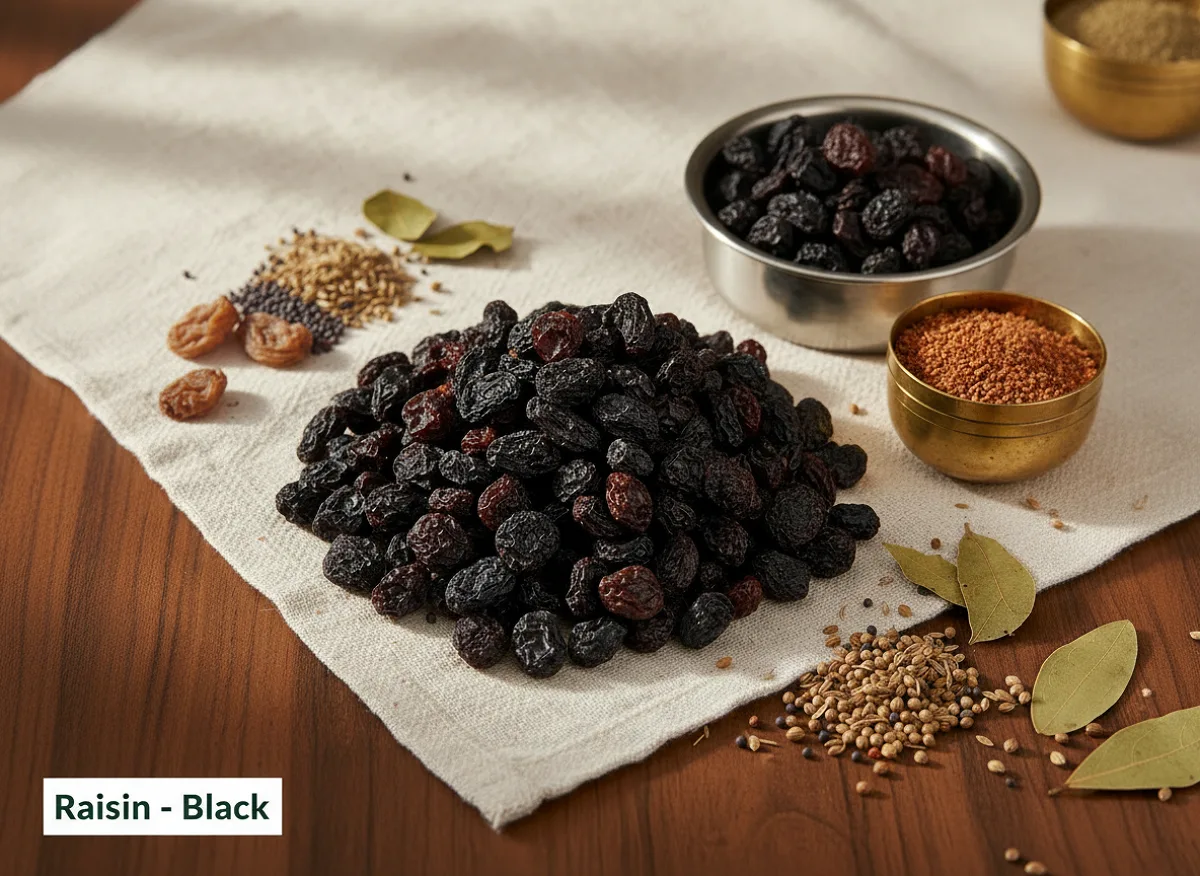
Black raisins (kishamish or kismis) are sun-dried grapes with a dark purple-black wrinkled skin and soft, chewy interior. Unlike green or golden raisins, they retain a deeper, more concentrated sweetness and are prized in Indian sweets, beverages, and festive cooking. They are typically sold whole and dried, ready to eat or soak. (IFCT 2017, Ref #E057)
Use in Indian Kitchen
Black raisins are a cornerstone of Indian festive and everyday cooking. Soak them in warm milk or water to plump them up for kheer, payasam, and halwa; fold them into laddoo dough (besan, atta, or coconut-based), barfi, and modak fillings; scatter them into rice pulao, biryani, and vegetable upma for bursts of natural sweetness. In the South, they feature in payasam and kesari; in the North, they are essential to kheer and gajar ka halwa. A practical tip: soak raisins for 10-15 minutes in warm water or milk before adding to hot dishes so they soften evenly and release their flavour without becoming mushy.
Key Nutrients
Black raisins are rich in natural sugars (glucose and fructose), dietary fibre, potassium, iron, and antioxidants including polyphenols. They also contain small amounts of calcium, magnesium, and B vitamins. Exact nutrient composition varies by variety and origin; refer to IFCT 2017 for standardised Indian food values.
Health Benefits (Evidence-based)
- May support digestive health due to soluble and insoluble fibre content, traditionally used to ease constipation.
- Linked to sustained energy release thanks to natural sugars and carbohydrates, making them a popular pre-workout or mid-day snack.
- Rich in polyphenol antioxidants, which may help reduce oxidative stress in the body.
- Contain iron and copper, minerals important for healthy blood formation and oxygen transport.
- Traditionally used in Ayurvedic tonics and milk-based drinks to support vitality and recovery.
- May help maintain bone health due to mineral content including calcium and magnesium.
Culinary Uses (Vegetarian)
- Soaked in warm milk for kheer, payasam, and rice pudding.
- Folded into besan or atta laddoo, barfi, and modak fillings.
- Scattered into rice pulao, biryani, and vegetable upma.
- Added to halwa (carrot, semolina, or moong dal halwa).
- Mixed into chutneys, pickles, and dry fruit powders.
- Eaten as a standalone snack or trail mix with nuts and seeds.
Caution
- High in natural sugars; those managing blood sugar or diabetes should consume in moderation and pair with protein or fat to slow absorption.
- May cause bloating or digestive discomfort if eaten in large quantities without adequate water intake.
- Choking hazard for very young children; soak or chop before serving to toddlers.
- Ensure raisins are free from mould or off odours before use, especially in humid climates.
References
- Indian Council of Medical Research - National Institute of Nutrition (ICMR-NIN). IFCT 2017: Indian Food Composition Tables. Hyderabad: NIN; 2017. Reference #E057 (Dried Grapes / Raisins).
- Vaya, J. and Mahmood, S. (2006). Flavonoid content in leaf extracts of the fig (Ficus carrica L.), carob (Ceratonia siliqua L.) and locust bean (Ceratonia siliqua L.) trees. Journal of Agricultural and Food Chemistry, 54(20), 7651-7654. [General antioxidant reference for dried fruits.]
Health Benefits
- Provides Energy
- Supports Digestion
- Boosts Immunity
- Improves Hemoglobin
Sourcing & Storage
Storage
Store black raisins in an airtight container or resealable pouch in a cool, dry place away from direct sunlight and moisture. In humid climates (especially during monsoon), keep them in the refrigerator or freezer to prevent mould and insect infestation. Transfer to glass jars with tight lids if buying in bulk from the mandi or kirana store. Avoid storing near strong-smelling foods, as raisins can absorb odours.
Shelf Life
Well-stored black raisins keep for 6-12 months in a cool, dry pantry. In the refrigerator, they remain fresh for up to 18 months; in the freezer, they can last 2 years or more. Once opened, reseal the container promptly and use within 2-3 months for best flavour and texture. Discard if you notice mould, clumping with off odours, or insect damage.
Check Before You Buy
Look for plump, dark purple-black raisins with a slight sheen and no visible mould, dust, or debris. Avoid raisins that are hard, shrivelled excessively, or smell fermented or musty - signs of poor storage or age. If buying loose from the mandi, ask the vendor when they were dried and stored; reputable sellers will have stock rotated regularly. Packed raisins should have a clear expiry date and be sealed in moisture-proof packaging. A quick squeeze test: raisins should feel slightly soft and give a little, not rock-hard or sticky.
In Ayurveda
In classical Ayurvedic texts, dried grapes (किशमिश) are considered warming and nourishing. They are traditionally used to support digestion and are believed to have a sweet (madhura) rasa and a warming (ushna) virya, making them suitable for balancing Vata dosha. Raisins are often recommended in Ayurvedic formulations for general vitality and as a gentle laxative aid.