Radish, round, white skin
Raphanus sativus · Also known as Mula, Muda, Muli, Mullangi, Muli pyllon, Gonglu, Moolikaa, white radish, daikon radish
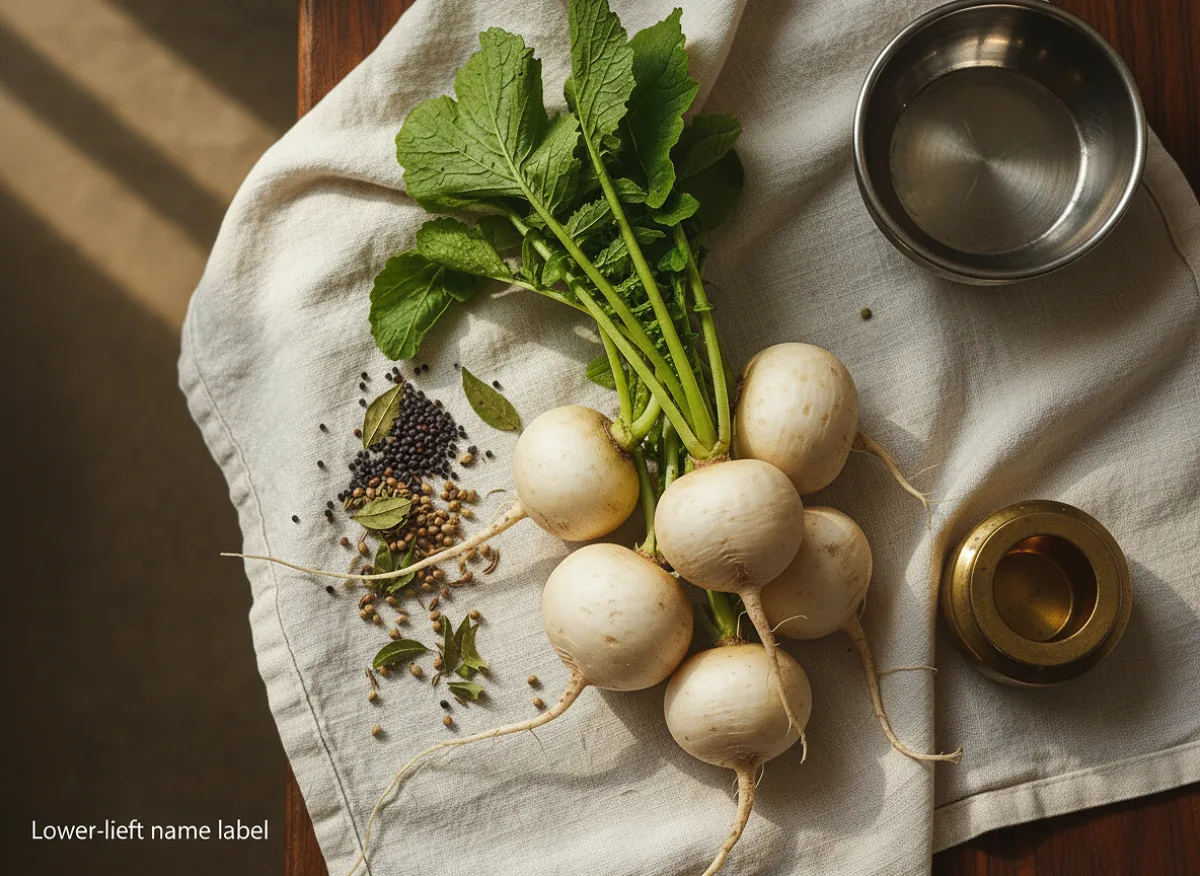
White radish or mula (मूला) is a crisp, mild root vegetable with smooth white skin and juicy, peppery flesh. Fresh and cooling, it's eaten raw in salads, sliced thin in raita, or cooked gently in curries and stir-fries across Indian kitchens. A light tempering of mustard seeds an...
Nutrition per 100 g
Edible portion values from the master catalog.
More macros
Classification
About Radish, round, white skin
What it is
White radish or mula (मूला) is a round or slightly oblong root vegetable with smooth, pale white skin and crisp, ivory flesh. Milder and less peppery than red radish, it has a clean, slightly sweet crunch and is prized for its cooling nature in Indian home cooking. Eaten fresh, pickled, or lightly cooked, it appears in regional cuisines from North to South. (IFCT 2017, Ref #F012)
Use in Indian Kitchen
White radish is sliced paper-thin for mooli ka salad with lemon and chaat masala, or grated into raita with curd and cumin. In the South, it features in sambar and kootu curries, while North Indian cooks stuff it into paratha dough or stir-fry thin rounds with mustard seeds and green chilli. A practical tip: soak sliced radish in salted water for 10 minutes before using raw to mellow any sharp bite and improve crispness. Pickled white radish keeps well through seasons and pairs beautifully with rice and dal.
Key Nutrients
White radish is low in calories and rich in vitamin C, dietary fibre, and potassium. It also contains folate, calcium, and small amounts of B vitamins. The peppery compounds (glucosinolates) give it a distinctive taste and may support digestion. Exact nutrient composition varies with soil and season; refer to IFCT 2017 for standardised Indian values.
Health Benefits (Evidence-based)
- High in vitamin C, supporting immune function and skin health.
- Good source of dietary fibre, linked to digestive regularity and satiety.
- Low glycaemic index, making it suitable for balanced blood sugar management.
- Contains compounds traditionally associated with liver and kidney support in Ayurvedic practice.
- Cooling nature (शीतल) makes it refreshing in summer and helpful for pitta-dominant constitutions.
- May aid digestion when eaten raw or lightly cooked, especially with warming spices like cumin.
Culinary Uses (Vegetarian)
- Raw in salads, sliced thin with lemon juice and chaat masala.
- Grated into curd-based raita with roasted cumin and green chilli.
- Stuffed into paratha dough with spiced potato or paneer.
- Cooked in sambar, kootu, and vegetable curries across South India.
- Stir-fried with mustard seeds, curry leaves, and dried chilli for a simple side dish.
- Pickled whole or sliced for long-term storage and condiment use.
- Steamed or boiled and mashed into dal for added nutrition and mild flavour.
Caution
- Those with sensitive digestion or IBS may find raw radish slightly gas-forming; cooking or soaking can help.
- High in goitrogens when eaten in very large raw quantities; not a concern in normal culinary amounts.
- Individuals on blood-thinning medication should consume in moderation and consult a healthcare provider, as radish may have mild anticoagulant properties.
References
- Indian Council of Medical Research - National Institute of Nutrition (ICMR-NIN). Indian Food Composition Tables 2017. Hyderabad: NIN; 2017. [IFCT 2017, Ref #F012 - Root and Tubers category]
- Grover JK, Yadav S, Vats V. Medicinal plants of India with anti-diabetic potential. Journal of Ethnopharmacology. 2002;81(1):81-100. [General reference on traditional use of radish in Indian wellness practices]
Sourcing & Storage
Storage
Store white radish in a cool, dark place or in the refrigerator crisper drawer, ideally in a perforated plastic bag or cloth to allow air circulation. Remove any soil gently before storing. In Indian summer heat, keep in the coldest part of the fridge to maintain crispness. Avoid storing near ethylene-producing fruits (apples, bananas) as they may cause faster wilting.
Shelf Life
Fresh white radish keeps for 2-3 weeks in the refrigerator when stored properly. Once cut or sliced, use within 2-3 days. Pickled radish, when sealed in sterilised jars and kept in a cool cupboard, lasts 2-3 months. Cooked radish curry should be refrigerated and consumed within 3-4 days.
Check Before You Buy
Choose firm, unblemished white radishes with smooth skin and no soft spots or sprouting. The radish should feel heavy for its size, indicating good water content and crispness. Avoid any with cracks, mould, or a musty smell. At the mandi or kirana, select medium-sized radishes (too large may be woody inside). If buying pre-packed, check the date and ensure the plastic is not sweating or showing condensation, which signals age or poor storage.
In Ayurveda
In Ayurveda, radish (मूली) is valued for its ability to balance Kapha and Vata doshas. Its pungent taste (कटु रस) stimulates digestive fire (agni) and promotes healthy bowel movement. Traditionally, radish is considered "dipana" (appetiser) and "pachana" (digestive aid), making it a common post-meal vegetable in Indian households to reduce bloating and gas.
The root is believed to support liver and gallbladder function through its sulphur-containing compounds. Classical texts recommend radish for those with sluggish digestion or accumulation of undigested food (ama). However, excessive consumption is cautioned in individuals with weak digestion or high Vata imbalance.