Radish Leaves
Raphanus sativus · Also known as Moolee ke patte, mooli ke patte, radish greens, moolai keerai (Tamil), mula soppu (Kannada)
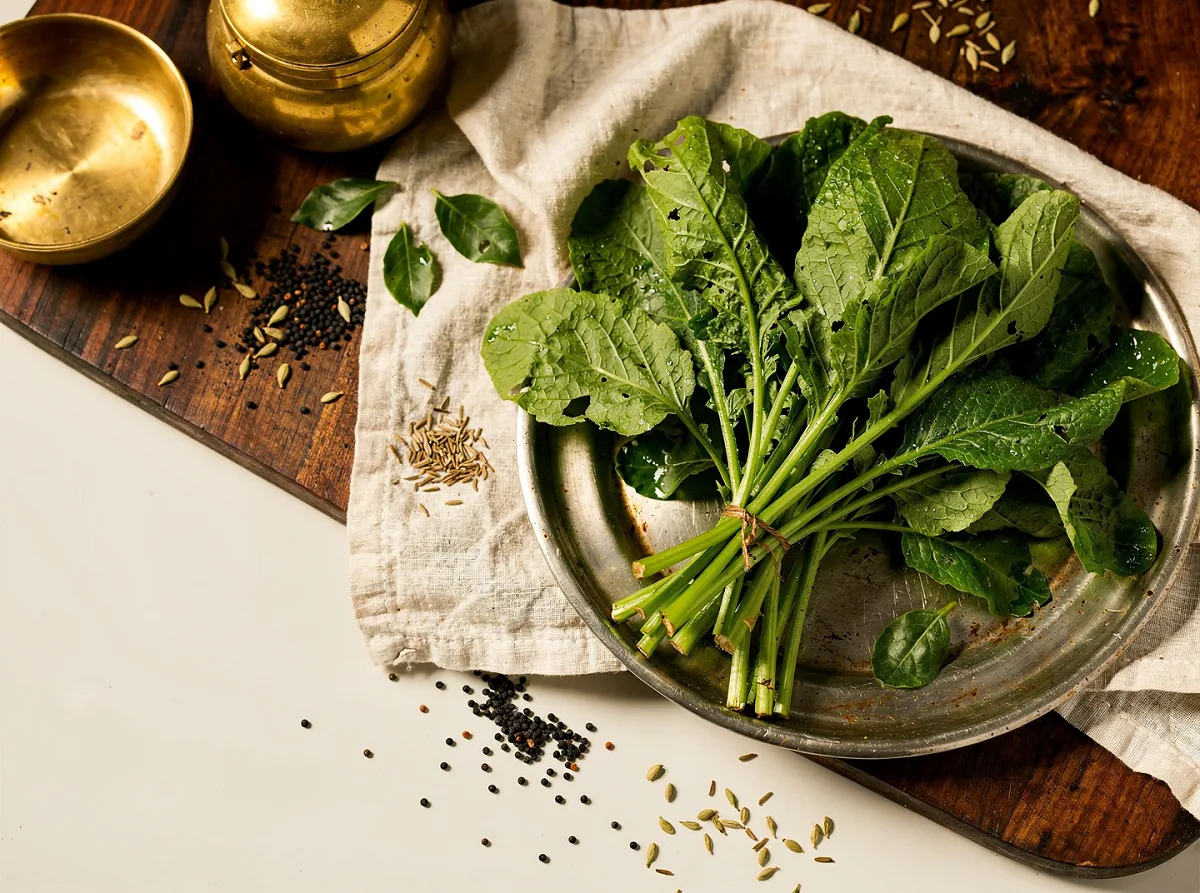
Radish leaves (मूली के पत्ते, moolee ke patte) are tender, slightly peppery green leafy vegetables harvested from the radish plant. Soft yet crisp with a mild mustard-like bite, they are a prized seasonal green in Indian kitchens, especially in North and South India. Use them fre...
Nutrition per 100 g
Mean values ± IFCT published SD (edible portion).
More macros
Classification
About Radish Leaves
What it is
Radish leaves (मूली के पत्ते, moolee ke patte) are the tender green tops of the radish plant, harvested fresh and sold bundled or loose in markets. They have a soft, slightly wrinkled texture with a mild peppery or mustard-like flavour - gentler than the root itself. The leaves are bright green, sometimes with fine hairs on the stem, and are best used when young and tender. They are a seasonal favourite in North Indian kitchens (especially spring and winter) and equally valued in South Indian cooking. (IFCT 2017, Ref #C031)
Use in Indian Kitchen
Radish leaves shine in simple, quick preparations that honour their delicate flavour. In South India, they are a classic ingredient in thoran (dry stir-fry with grated coconut and tempering), sambar, and kootu curries. North Indian cooks blanch and chop them into dal fry, mix into parathas, or prepare a simple tadka-tempered side dish with onion, garlic, and green chilli. A practical tip: blanch the leaves for 2-3 minutes in salted boiling water before cooking to mellow any bitterness and soften the texture. Pair them with tamarind, jaggery, or a squeeze of lemon to balance their slight peppery edge. They are best used within a day or two of purchase for maximum tenderness and flavour.
Key Nutrients
Radish leaves are rich in vitamin C, vitamin A (beta-carotene), calcium, iron, and dietary fibre. They also contain folate and small amounts of potassium and magnesium. Exact nutrient composition varies by freshness and growing conditions; refer to IFCT 2017 (Ref #C031) for standardised Indian food composition data.
Health Benefits (Evidence-based)
- High in vitamin C, which supports immune function and collagen formation.
- Good source of dietary fibre, linked to digestive health and satiety.
- Contain calcium and iron, important for bone health and oxygen transport in the blood.
- Rich in antioxidants and phytonutrients that may help reduce oxidative stress.
- Folate content supports cell division and is particularly important during pregnancy.
- Low in calories and high in water content, making them suitable for weight management.
Culinary Uses (Vegetarian)
- Thoran (South Indian dry stir-fry with grated coconut, mustard seeds, and curry leaves).
- Sambar and kootu curries (Tamil Nadu, Karnataka).
- Dal fry or simple tadka-tempered side dish with onion, garlic, and green chilli.
- Paratha filling (blanched and mixed with spices).
- Salads and fresh chutneys (when very tender and young).
- Soup or broth base in light, nourishing preparations.
Caution
- Radish leaves contain oxalates; those with kidney stones or a history of oxalate-related issues should consume in moderation.
- May cause mild digestive discomfort in sensitive individuals if eaten raw in large quantities; cooking reduces this risk.
- Always wash thoroughly under running water before use to remove soil and any pesticide residue.
References
- Indian Council of Medical Research - National Institute of Nutrition (ICMR-NIN). Indian Food Composition Tables (IFCT 2017). Reference #C031 (Green Leafy Vegetables - Radish Leaves).
- Gopalan, C., Rama Sastri, B. V., & Balasubramanian, S. C. (2016). Nutritive Value of Indian Foods. National Institute of Nutrition, ICMR, Hyderabad.
Health Benefits
- Supports Bone Health
- Supports Digestion
- Boosts Immunity
- Detox Support
- Improves Skin Health
Sourcing & Storage
Storage
Store radish leaves in a breathable cloth bag or perforated plastic bag in the refrigerator crisper drawer, away from ethylene-producing fruits (apples, bananas). Keep them dry; excess moisture encourages wilting and decay. In warm Indian climates, use an airtight container lined with paper towels to absorb condensation. Do not wash before storage; wash only just before use.
Shelf Life
Radish leaves are best used within 1-2 days of purchase for optimal tenderness and flavour. When stored properly in the refrigerator, they may last up to 3-4 days, though quality and texture decline after the second day. Blanched and frozen leaves can be stored for up to 2-3 months in an airtight freezer container, though texture will soften when thawed.
Check Before You Buy
Choose bundles with bright green, tender leaves free of yellowing, wilting, or dark spots. The stems should be crisp and snap cleanly when bent; soft or slimy stems indicate age or poor storage. Avoid leaves with a strong sulphurous smell, which suggests decay. If buying from a mandi or loose from a vendor, check that the leaves are not bruised or crushed at the base. Packed bundles should show no condensation inside the bag, which can lead to rapid spoilage in warm weather.
In Ayurveda
In Ayurveda, radish leaves are considered light (laghu), sharp (tikshna), and supportive of digestion. They are traditionally used to enhance digestive fire (agni) and are believed to help balance pitta dosha. The leaves are also thought to reduce kapha, particularly during winter months, and may support healthy elimination.