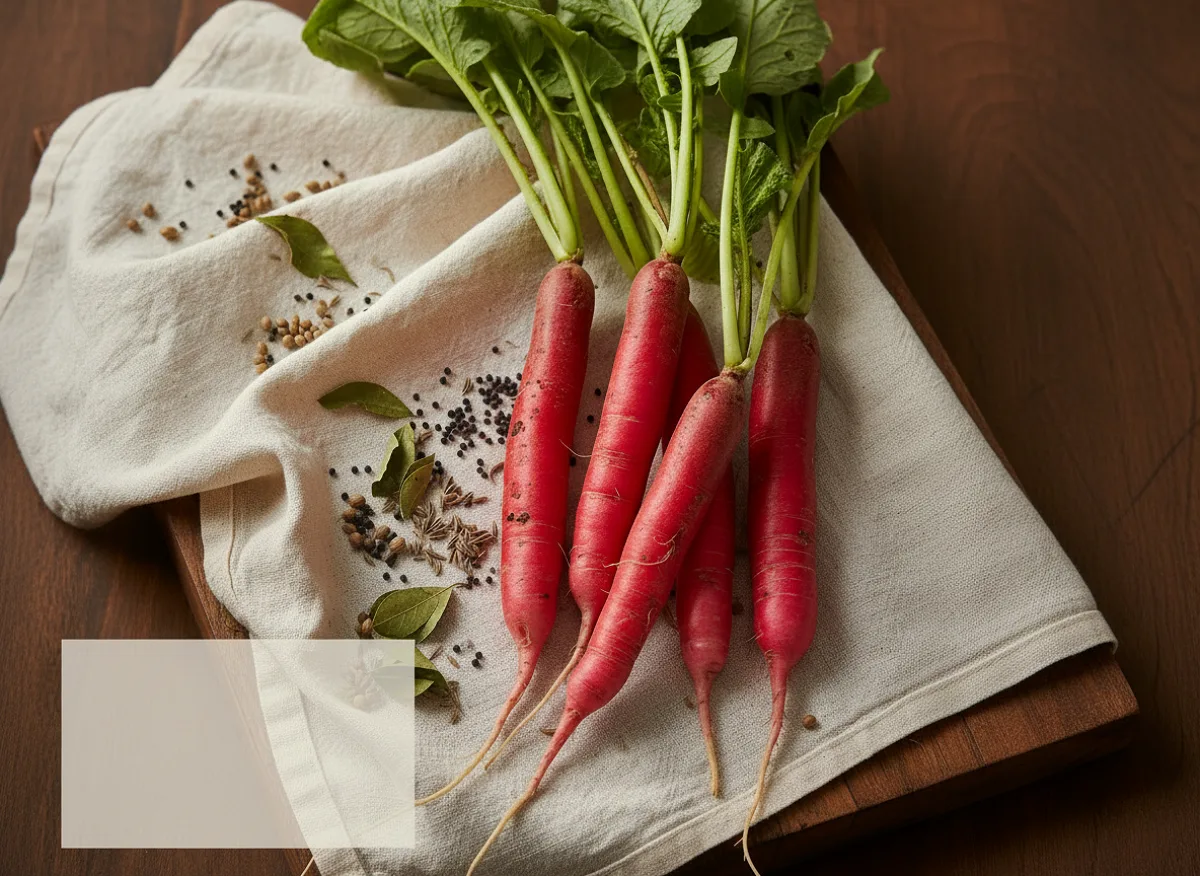
Radish, elongate, red skin
Raphanus sativus · Also known as Mula, Muda, Muli, Mullangi, Muli saw, Gonglu, Moolikaa
Radish (मूली, muli) is a crisp, peppery root vegetable with smooth red skin and white flesh inside. Fresh and crunchy, it brings a sharp, slightly spicy bite to salads, pickles, and cooked sabzis. Slice thin for quick salads, or grate into parathas and dals for a peppery warmth....
Nutrition per 100 g
Mean values ± IFCT published SD (edible portion).
More macros
Classification
About Radish, elongate, red skin
What it is
Radish (मूली, muli) is a crisp, elongate root vegetable with a distinctive smooth red or pink skin and white, firm flesh. The peppery, slightly sharp taste makes it instantly recognisable in Indian kitchens. Fresh radish is eaten raw, pickled, or cooked into curries and dal preparations across North and South India. (IFCT 2017, Ref #F009)
Use in Indian Kitchen
Radish appears in many regional forms: sliced thin and tossed into fresh salads with lemon and chaat masala; grated into paratha dough for a peppery flatbread; cooked into North Indian muli sabzi with onions, tomatoes, and tempering; or pickled whole or sliced for long storage. In South Indian kitchens, radish leaves (muli keerai) are cooked as a leafy green. A practical tip: if the radish tastes too sharp or peppery, soak sliced pieces in salted water for 15-20 minutes to mellow the bite, or pair with cooling yoghurt and tamarind in salads.
Key Nutrients
Radish is low in calories and rich in vitamin C, dietary fibre, and potassium. It also contains small amounts of folate, calcium, and manganese. The peppery compounds (glucosinolates) give radish its distinctive flavour and are linked to its traditional wellness use.
Health Benefits (Evidence-based)
- High in vitamin C, which may support immune function and skin health.
- Good source of dietary fibre, linked to digestive wellness and regular bowel function.
- Low in calories and high in water content, making it a hydrating, light vegetable for everyday meals.
- Contains compounds traditionally associated with liver and digestive support in Ayurvedic practice.
- Potassium content may help maintain healthy blood pressure when part of a balanced diet.
Culinary Uses (Vegetarian)
- Fresh sliced radish in salads with lemon juice, chaat masala, and fresh coriander.
- Grated into paratha dough for a peppery, crispy flatbread.
- Cooked as muli sabzi - pan-fried with onions, tomatoes, and tempering of mustard seeds and curry leaves.
- Pickled whole or sliced with turmeric, chilli, and mustard oil for long-term storage.
- Added to dal preparations (especially moong or masoor) for crunch and peppery flavour.
- Radish leaves (muli keerai) cooked as a leafy green sabzi in South Indian kitchens.
Caution
- Radish is generally safe for most people; however, those with thyroid conditions should consume in moderation, as large amounts of raw cruciferous vegetables may interfere with iodine absorption.
- The peppery compounds can cause mild digestive discomfort in sensitive individuals if eaten in large quantities raw; cooking or soaking can reduce this effect.
- Those taking blood-thinning medications should consult a healthcare provider, as radish contains small amounts of vitamin K.
References
- Indian Council of Medical Research - National Institute of Nutrition (ICMR-NIN). Indian Food Composition Tables (IFCT 2017). Reference #F009 - Root and Tubers category.
- Sultana, R., Khanam, U. A., & Yadav, D. K. (2014). Raphanus sativus L. (Radish) and health outcomes: Review of animal, human studies and mechanisms of action. Journal of Ethnopharmacology, 152(2), 256-271.
Sourcing & Storage
Storage
Store fresh radish in the refrigerator in a perforated plastic bag or paper towel-lined container in the vegetable drawer. Keep away from ethylene-producing fruits (apples, bananas) which can cause yellowing and softening. Remove any attached leaves before storing, as they draw moisture from the root. In warm Indian climates, radish keeps best in the coldest part of the fridge (2-4°C). For longer storage, radish can be pickled in oil and spices, which keeps for several weeks to months in an airtight jar at room temperature.
Shelf Life
Fresh radish keeps for 2-3 weeks in the refrigerator when stored properly. Once cut or sliced, use within 2-3 days. Pickled radish, when stored in an airtight jar in a cool, dry place, keeps for 2-3 months. Radish leaves, if stored separately in a damp cloth in the fridge, last 3-5 days.
Check Before You Buy
Choose radishes that are firm, smooth-skinned, and free of cracks, soft spots, or blemishes. The skin should be a vibrant red or pink with no yellowing or browning. Avoid radishes that feel spongy or hollow when gently squeezed - a sign of age or poor storage. If buying from a mandi or kirana, check that the radish is not wilted or has sprouted roots. Smaller to medium-sized radishes (2-3 inches long) tend to be crisper and less peppery than very large ones. If buying pre-packed radish, check the packaging date and ensure no condensation or mould is visible inside.
In Ayurveda
In classical Ayurveda, radish (मूली) is recognized as a vegetable with कटु (pungent) and तिक्त (bitter) rasas, and it is considered to have a heating (उष्ण) virya. Traditional Ayurvedic texts note that radish supports digestive fire (अग्नि) and may help clear respiratory channels. It is often recommended in small quantities as a digestive aid, particularly when cooked with ghee and spices to balance its sharp nature.