Radish
Raphanus sativus · Also known as lambee moolie, mooli, white radish, daikon radish, मूली (mooli)
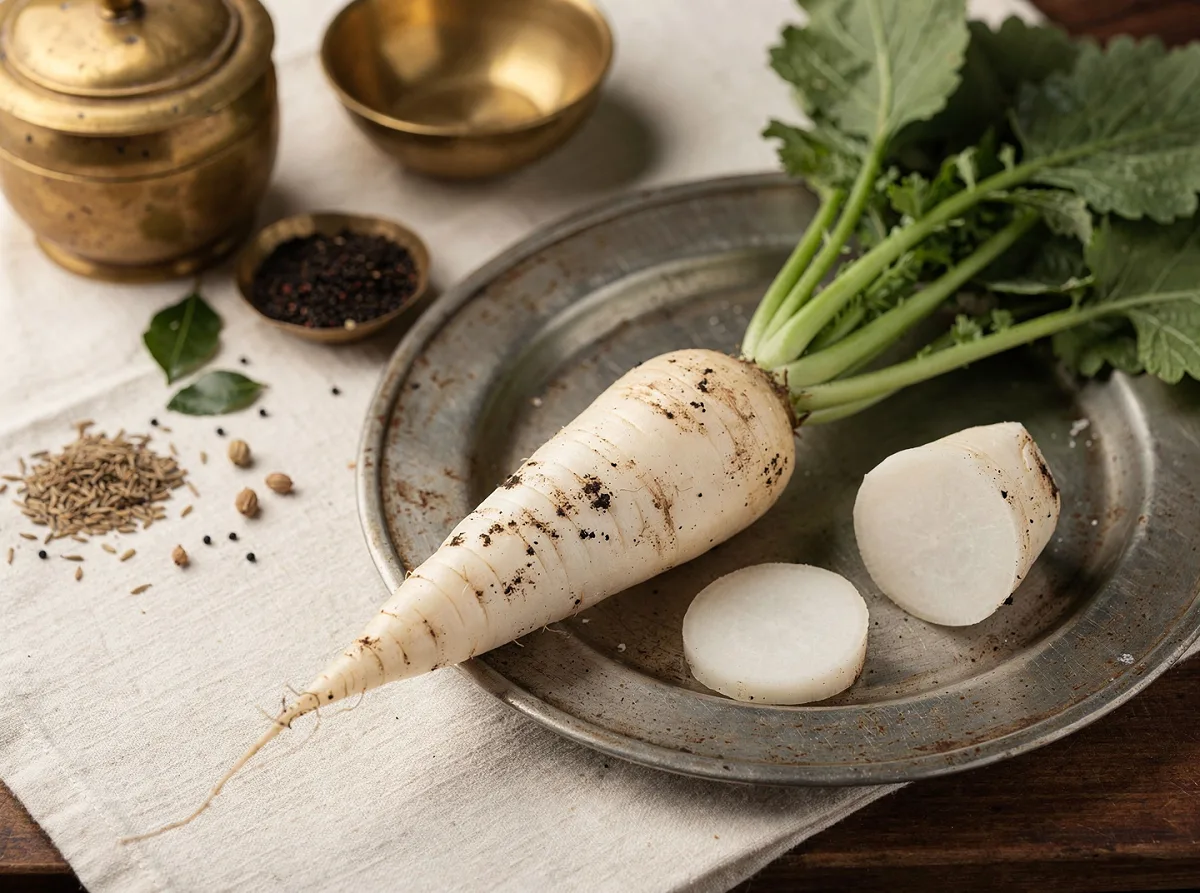
Radish or mooli (मूली) is a crisp, mild root vegetable with white flesh and thin skin, eaten fresh or cooked across Indian kitchens. Its tender leaves are equally prized in regional greens dishes. Slice thin for salads and raita, or cook into sabzi, paratha stuffing, and sambar -...
Nutrition per 100 g
Mean values ± IFCT published SD (edible portion).
More macros
Classification
About Radish
What it is
Radish, known as mooli (मूली) in Hindi and regional Indian markets, is a long white root vegetable with a mild, slightly peppery taste and crisp, juicy flesh. The skin is thin and pale, and both the root and tender young leaves are edible. Fresh radish is available year-round but peaks in winter, when it becomes sweeter and more tender. It is eaten raw, pickled, or cooked into curries and flatbreads across North, South, and East India. (IFCT 2017, Ref #F010)
Use in Indian Kitchen
Radish is a versatile winter vegetable in Indian home cooking. Slice it thin for mooli ka salad with lemon and chaat masala, or grate it into raita with yoghurt and cumin. Cook it into a simple mooli ki sabzi - diced and tempered with mustard seeds, cumin, and turmeric until tender and lightly golden. In South India, radish appears in sambar and kootu curries. North Indian cooks stuff shredded radish into mooli parathas, often mixed with green chilli and amchur for tang. The leaves make a nutritious saag or are added to dal. A practical tip: if radish tastes too sharp, soak sliced pieces in salted water for 15 minutes before cooking or eating raw.
Key Nutrients
Radish is low in calories and rich in vitamin C, dietary fibre, and potassium. It also contains small amounts of folate, calcium, and manganese. The leaves are particularly nutrient-dense, offering iron and additional vitamins. Exact nutrient composition varies by variety and growing conditions; refer to IFCT 2017 for detailed micronutrient profiles.
Health Benefits (Evidence-based)
- High in vitamin C, which may support immune function and skin health.
- Good source of dietary fibre, linked to digestive regularity and satiety.
- Contains compounds traditionally associated with liver and kidney support in Ayurvedic practice.
- Low glycaemic index, making it suitable for blood sugar management in balanced diets.
- Radish leaves are nutrient-dense and may help address mild iron deficiency when included regularly in meals.
Culinary Uses (Vegetarian)
- Raw in salads, sliced thin with lemon juice and chaat masala.
- Grated into yoghurt-based raita with cumin and green chilli.
- Cooked into dry sabzi with mustard tempering and turmeric.
- Stuffed into mooli parathas with green chilli, amchur, and salt.
- Added to sambar, kootu, and mixed vegetable curries in South Indian cooking.
- Pickled as achaar for long storage and tangy condiment use.
- Leaves cooked as saag or added to dal and vegetable dishes.
Caution
- Radish is generally safe for most people; however, those with thyroid conditions should consume it in moderation, as raw radish contains compounds that may interfere with iodine absorption in large quantities.
- Individuals prone to digestive upset may find raw radish slightly irritating; cooking mellows this effect.
- Those on blood-thinning medications should consult a healthcare provider, as radish contains small amounts of vitamin K.
References
- Indian Council of Medical Research - National Institute of Nutrition (ICMR-NIN). Indian Food Composition Tables 2017. Hyderabad: NIN; 2017. [Root and Tubers category, Ref #F010]
- Sultana, R., Khatoon, S., & Ahmed, S. (2016). Nutritional composition and health benefits of radish (Raphanus sativus L.): A review. Journal of Medicinal Plants Research, 10(46), 1-8.
Health Benefits
- Hydration
- Supports Digestion
- Boosts Immunity
- Detox Support
Sourcing & Storage
Storage
Store radish in the refrigerator's vegetable drawer, ideally in a perforated plastic bag or cloth to allow air circulation. Remove any attached leaves before storing, as they draw moisture from the root. Keep radish away from ethylene-producing fruits (apples, bananas) to prevent premature softening. In Indian kitchens during winter, radish can also be stored in a cool, dark, well-ventilated corner of the kitchen for up to 1-2 weeks if temperatures remain below 15°C.
Shelf Life
Fresh radish keeps for 3-4 weeks in the refrigerator when stored properly. Radish leaves wilt within 2-3 days and should be used or cooked promptly. Once cut or sliced, radish should be used within 1-2 days. Pickled radish (achaar) keeps for several months in an airtight jar at room temperature when prepared with adequate salt and oil.
Check Before You Buy
Choose radish that feels firm and heavy for its size, with unblemished, thin skin and no soft spots or cracks. The root should snap cleanly when bent. Avoid radish that feels spongy, has a wrinkled skin, or shows signs of mould or decay. If buying from a mandi or kirana store, select radish with fresh, green leaves still attached when possible, as this indicates recent harvest. Packaged radish should be stored in a cool section and checked for moisture inside the bag, which can accelerate spoilage.
In Ayurveda
In Ayurvedic tradition, radish (मूली) is valued as a digestive aid and is believed to balance Vata and Kapha doshas. Raw radish is considered particularly beneficial for stimulating digestive enzymes and improving appetite. The root is traditionally used in home remedies for respiratory health, and radish juice has been employed to support healthy breathing and clear congestion.
Radish possesses a cooling (शीत) potency, making it especially suitable for consumption during summer months. Its pungent taste (कटु रस) and light, dry qualities (लघु and रूक्ष गुण) support natural detoxification and promote healthy digestion according to classical texts.