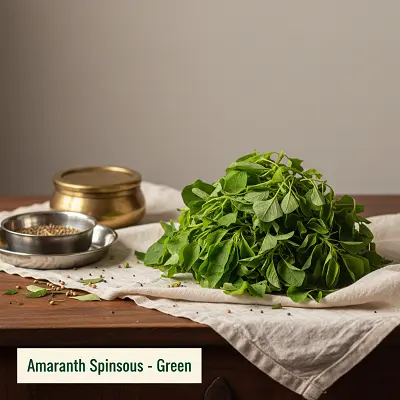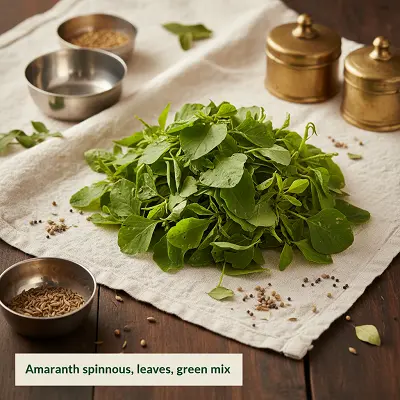
Pumpkin leaves, tender
Cucurbita maxima · Also known as Rongalao paat, Kumra shak, Kolam na pan, Kumhra sag, Kumbale soppu, Aal kaniji, Sla pathaw, Manthan elakai, Mairen mana, Bhopla chipan, Khakaru saga, Petha de pate, Gummadi akulu, Parangi ilai, Kaddu ka patta
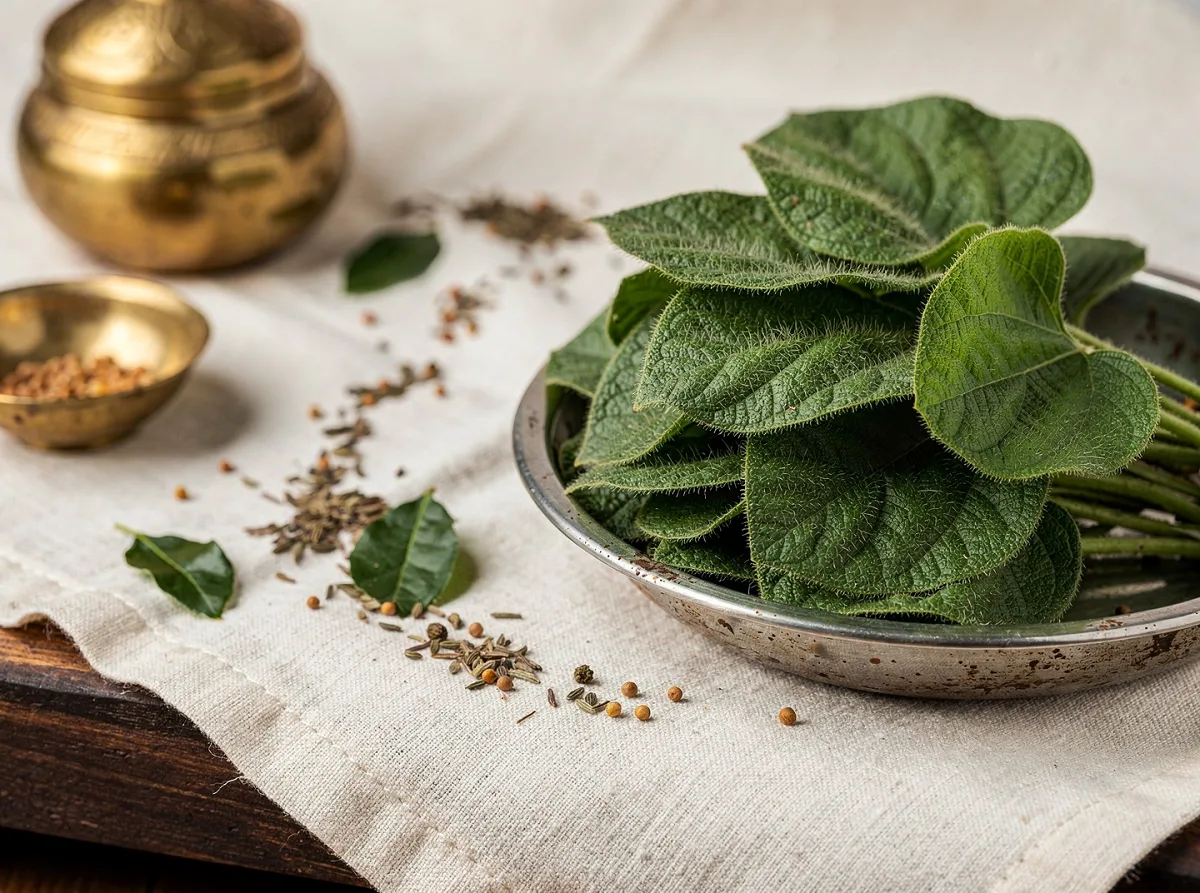
Tender pumpkin leaves (कद्दू के पत्ते, kaddu ka patta) are soft, heart-shaped greens with a mild, slightly earthy flavour and delicate texture. Harvested young before they toughen, these leaves are a seasonal favourite across Indian home kitchens, especially in North and South In...
Nutrition per 100 g
Mean values ± IFCT published SD (edible portion).
More macros
Classification
About Pumpkin leaves, tender
What it is
Tender pumpkin leaves are the young, soft foliage of the pumpkin vine (Cucurbita maxima), harvested before they mature and become fibrous. They are heart-shaped, pale to medium green, with a delicate texture and mild, slightly earthy taste. Unlike their tougher mature counterparts, these leaves cook down quickly and absorb flavours beautifully, making them a prized seasonal green in Indian home cooking. (IFCT 2017, Ref #C030)
Use in Indian Kitchen
Tender pumpkin leaves are a versatile green across Indian regions. In North India, they are commonly stir-fried with onion, garlic, and a tadka of mustard seeds and cumin, or folded into dal preparations. South Indian cooks prepare them as thoran (a dry, coconut-based stir-fry) or add them to sambar and kootu. In some regions, they are blanched and mixed into curd-based curries or simply pan-fried with a pinch of turmeric and salt. A practical tip: harvest and use the youngest leaves and tender vine tips for the best texture; older leaves benefit from a quick blanch before cooking to soften any remaining fibres.
Key Nutrients
Tender pumpkin leaves are a good source of vitamin A (beta-carotene), vitamin C, and dietary fibre. They also contain minerals including iron, calcium, and potassium, along with small amounts of B vitamins. Exact nutrient composition varies with harvest season and growing conditions; refer to IFCT 2017 for detailed micronutrient profiles.
Health Benefits (Evidence-based)
- Rich in antioxidants (vitamin C and beta-carotene) that may support immune function and skin health.
- High in dietary fibre, which may aid digestive regularity and support gut health.
- Iron and folate content may help maintain healthy blood and energy levels, particularly useful for vegetarian diets.
- Traditionally used in Ayurvedic and folk medicine as a cooling, nourishing green for general wellness.
- Low in calories and fat, making them a nutrient-dense addition to everyday meals.
Culinary Uses (Vegetarian)
- Stir-fried with mustard seeds, cumin, onion, and green chilli (North Indian style).
- Thoran - dry coconut-based stir-fry with grated coconut and tempering (South Indian).
- Added to dal, sambar, or kootu for extra greens and nutrition.
- Blanched and mixed into curd-based curries or raita.
- Pan-fried as a simple side dish with turmeric, salt, and a touch of ghee.
- Folded into paratha or stuffed vegetable preparations.
Caution
- Tender pumpkin leaves are generally safe for most people. Those with a history of kidney stones should consume in moderation, as they contain oxalates.
- Always source from clean, pesticide-free plants or trusted vendors to avoid contamination.
- If foraging wild pumpkin vines, ensure correct plant identification to avoid toxic lookalikes.
References
- Indian Council of Medical Research (ICMR) and National Institute of Nutrition (NIN). Indian Food Composition Tables (IFCT 2017). Hyderabad: NIN, ICMR.
- Gopalan, C., Rama Sastri, B. V., & Balasubramanian, S. C. (2007). Nutritive Value of Indian Foods. National Institute of Nutrition, ICMR, Hyderabad.
Sourcing & Storage
Storage
Store tender pumpkin leaves in a breathable cloth bag or perforated plastic bag in the refrigerator crisper drawer at 4-8°C. Do not wash before storage; moisture encourages wilting and decay. Keep away from ethylene-producing fruits (apples, bananas) which accelerate yellowing. In warm, humid Indian climates, use the leaves within 1-2 days of purchase for best texture and flavour.
Shelf Life
Tender pumpkin leaves stay fresh for 2-3 days when stored in the refrigerator crisper in a breathable bag. Once cooked, they keep for 1-2 days in an airtight container in the fridge. Freezing is not recommended, as the delicate leaves lose texture and become mushy upon thawing.
Check Before You Buy
Look for bright, tender leaves with no yellowing, browning, or wilting. The leaves should feel soft and pliable, not stiff or papery. Avoid bundles with slimy patches, dark spots, or a musty smell, which indicate decay or age. If buying from a mandi or kirana store, choose leaves harvested the same day or previous day; older leaves become tough and bitter. Check that vine tips are still tender and pale green, not woody or darkened.
In Ayurveda
In Ayurvedic tradition, pumpkin leaves are considered cooling (शीतल, sheetal) and light to digest. They are believed to pacify Pitta dosha and are often recommended during summer months to support the body's natural cooling mechanisms. Classical texts suggest their use in supporting healthy digestion and promoting regular bowel movement.