Pummelo
Citrus maxima · Also known as Pomelo, Chakotra, Chakkota, Rabab tenga, Papnuse, Batabilembu, Soh bah, Bombilimas, Nobab, Pampara panasa
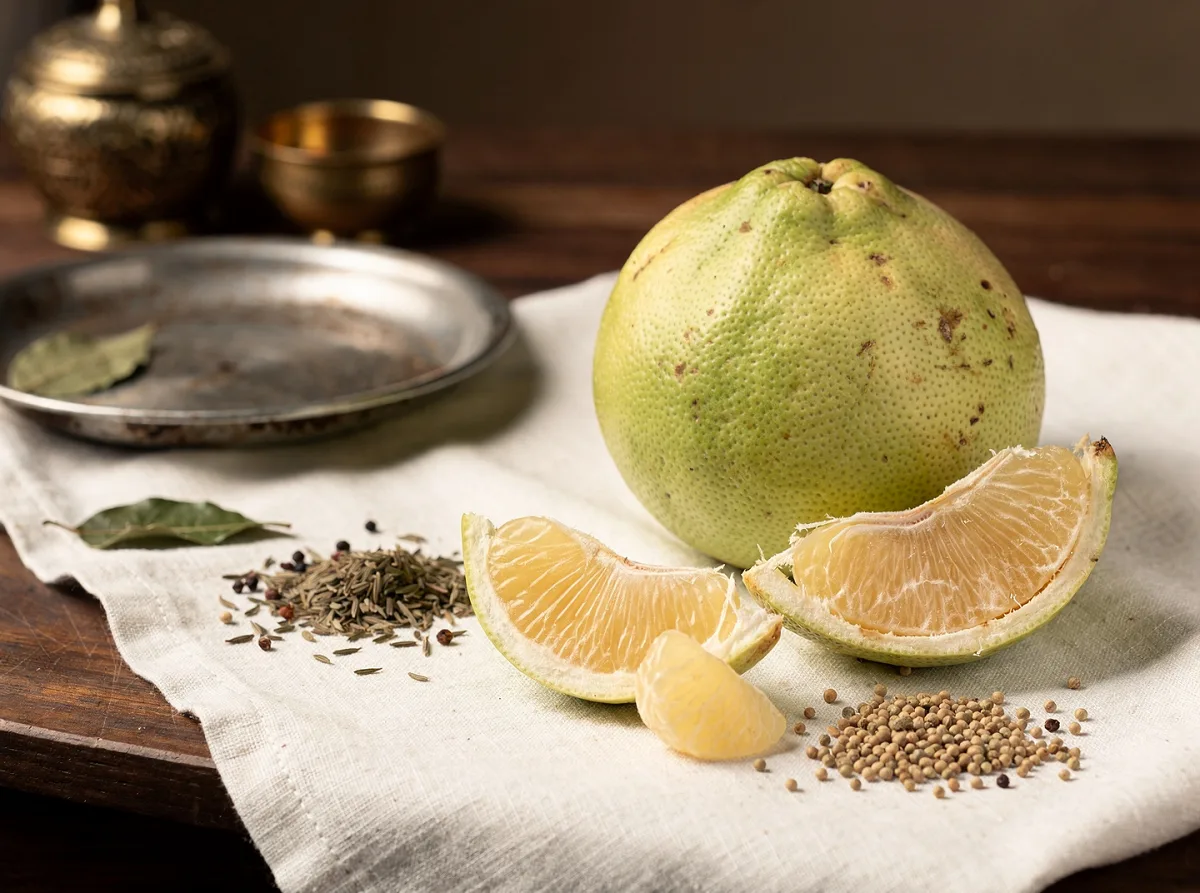
Pummelo (chakotra or pomelo) is a large, thick-skinned citrus fruit with pale yellow or greenish skin and sweet, juicy pale pink or white flesh inside. Native to Southeast Asia but now grown across India, it resembles a giant grapefruit but with a milder, less bitter taste and a...
Nutrition per 100 g
Mean values ± IFCT published SD (edible portion).
More macros
Classification
About Pummelo
What it is
Pummelo (chakotra, pomelo, or rabab tenga in regional Indian markets) is the largest citrus fruit, with a thick, bumpy rind that ranges from pale yellow to greenish, and sweet, juicy flesh inside - typically pale pink, white, or occasionally red. The flesh is segmented like an orange but much larger, with a dry, fluffy texture and a gentle sweetness that lacks the sharp bitterness of grapefruit. It is eaten fresh, whole or segmented, and is increasingly available in Indian markets, particularly in South India and urban centres. (IFCT 2017, Ref #E056)
Use in Indian Kitchen
Pummelo is most commonly eaten fresh as a breakfast or dessert fruit, peeled and segmented into a bowl or fruit salad. In South Indian homes, it appears in fruit chutneys and preserves, sometimes paired with jaggery or chilli for a sweet-spicy condiment. The thick rind can be candied or made into marmalade. In some regions, pummelo is added to salads with a light dressing of lime juice, salt, and chaat masala. A practical tip: choose fruits that feel heavy for their size and have a slight give when pressed gently - this indicates juiciness. Store in a cool place to extend shelf life.
Key Nutrients
Pummelo is rich in vitamin C, dietary fibre, and potassium. It also contains folate, vitamin A, and small amounts of B vitamins. The exact nutrient profile per 100 g is documented in IFCT 2017 (Ref #E056).
Health Benefits (Evidence-based)
- High in vitamin C, which supports immune function and collagen formation.
- Good source of dietary fibre, linked to digestive health and satiety.
- Contains potassium, important for heart health and blood pressure regulation.
- Low in calories and fat, making it suitable for weight-conscious diets.
- Antioxidants present in the flesh may help reduce oxidative stress.
- Traditionally used in Asian cuisines as a refreshing, hydrating fruit.
Culinary Uses (Vegetarian)
- Fresh segmented fruit, eaten as breakfast or dessert.
- Fruit salads with lime juice, chaat masala, and fresh mint.
- Sweet chutneys and preserves, often paired with jaggery or honey.
- Candied rind for confectionery or marmalade.
- Juice or fresh drink, sometimes blended with other citrus fruits.
- Garnish for savoury salads or grain bowls.
Caution
- Those taking certain medications (e.g. statins, blood pressure drugs) should consult a doctor, as citrus fruits may interact with some medicines.
- High acidity may irritate sensitive teeth or gums; rinse mouth after eating.
- Individuals with citrus allergies should avoid.
References
- Indian Council of Medical Research - National Institute of Nutrition (ICMR-NIN). Indian Food Composition Tables (IFCT) 2017. Reference #E056 (Pummelo / Citrus maxima).
- Fasseas, M. K., Cohen, J. L., Wang, M., et al. (2016). Pomegranate and citrus fruit consumption and health outcomes: a systematic review. Nutrients, 5(11), 4422-4457.
Sourcing & Storage
Storage
Store pummelo at room temperature (20-25°C) in a cool, dry, well-ventilated place away from direct sunlight for up to 2-3 weeks. For longer storage, place in the refrigerator (4-8°C) in a perforated plastic bag or on a shelf, where it will keep for 4-6 weeks. Once peeled and segmented, store in an airtight container in the fridge and consume within 3-4 days. Avoid storing near ethylene-producing fruits (bananas, mangoes) as this may speed ripening and spoilage.
Shelf Life
Whole, unpeeled pummelo keeps for 2-3 weeks at room temperature and 4-6 weeks in the refrigerator when stored properly. Once peeled and segmented, consume within 3-4 days when refrigerated. Pummelo does not freeze well due to its high water content and delicate flesh texture.
Check Before You Buy
Choose pummelo that feels heavy for its size, indicating juiciness and good water content. The skin should be smooth, unblemished, and free of soft spots, mould, or dark patches. A slight give when gently pressed is a sign of ripeness; avoid very hard or overly soft fruits. The fruit should have a mild, sweet citrus aroma at the stem end. In Indian markets, check that the fruit is not shrivelled or dried out, and avoid any with cracks or signs of pest damage. Packaged pummelos should have clear labelling and no visible damage to the rind.
In Ayurveda
In Ayurvedic tradition, pummelo is classified as a cooling (sheeta), sweet (madhura) fruit with rejuvenating properties (rasayana). Its high water content and natural sweetness make it beneficial for pacifying excess pitta (heat) and supporting digestion during warm seasons. The fruit is traditionally considered helpful in reducing kapha and promoting healthy circulation. Its vitamin C and antioxidant profile align with classical concepts of immune support and cellular vitality.