Potato - Red Skin
Solanum tuberosum · Also known as Laal Aloo, Red Potato, Waxy Potato, Alu
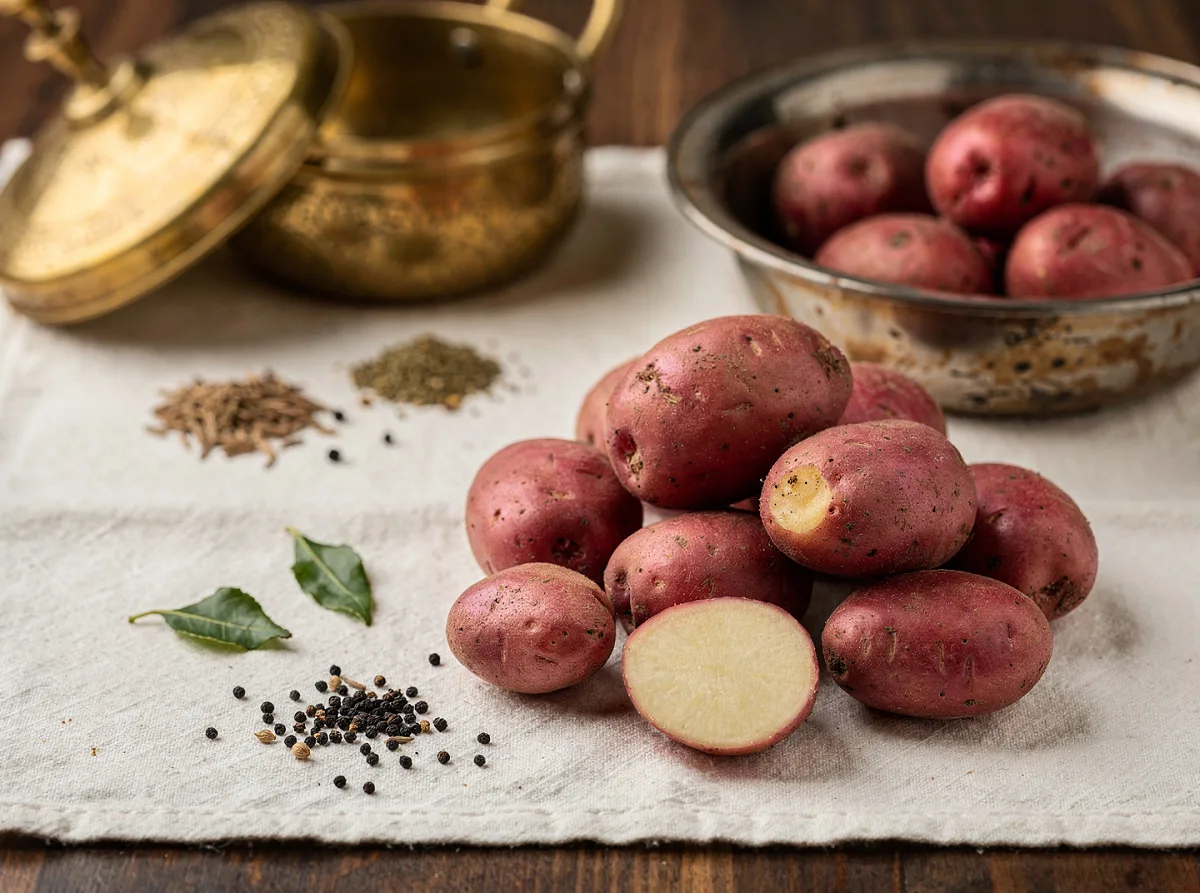
Red-skinned potatoes (लाल आलू, laal aloo) are waxy, thin-skinned tubers with creamy pale flesh that holds its shape beautifully when cooked. Their naturally buttery texture and subtle sweetness make them ideal for curries, boiled salads, and pan-fried preparations where you want...
Nutrition per 100 g
Edible portion values from the master catalog.
More macros
Classification
About Potato - Red Skin
What it is
Red-skinned potatoes are medium, oval tubers with thin, smooth crimson or burgundy skin and pale, creamy-white flesh. Unlike starchy white or russet varieties, they contain less starch and more moisture, giving them a naturally waxy texture that resists breaking apart during cooking. They're sold fresh year-round in Indian markets, mandi, and packaged in supermarkets, and are equally at home in North Indian curries, South Indian sambhar, or simple everyday sabzi. (IFCT 2017, Ref #F008)
Use in Indian Kitchen
Red potatoes shine in dishes where you want the potato to hold its shape: boiled and cubed for aloo gobi, pan-fried rounds for crispy-edged aloo fry, or simmered whole in coconut-based curries and sambhar. In the North, they're favoured for aloo parathas and potato-pea sabzi; in the South, they're diced into sambhar and kootu. A practical tip: boil them with the skin on to retain nutrients and prevent waterlogging, then peel after cooling if needed. Their natural sweetness pairs beautifully with tamarind, coconut, and mustard tempering.
Key Nutrients
Red potatoes are a good source of vitamin C, potassium, and dietary fibre (especially in the skin). They also contain B vitamins, manganese, and antioxidants including flavonoids and carotenoids that give the skin its colour. Carbohydrate content is moderate compared to other potato varieties, making them a balanced choice for everyday meals.
Health Benefits (Evidence-based)
- May support heart health through potassium content, which helps regulate blood pressure.
- Vitamin C aids immune function and collagen formation for skin and joint health.
- Resistant starch (especially when cooled after cooking) may support digestive health and stable blood sugar.
- Antioxidants in the red skin, including anthocyanins, are linked to reduced inflammation.
- Fibre content, particularly in the skin, supports satiety and digestive regularity.
Culinary Uses (Vegetarian)
- Boiled and cubed for aloo gobi, aloo matar, and potato salads.
- Pan-fried or shallow-fried rounds for crispy aloo fry and chaat toppings.
- Simmered whole or halved in coconut curries, sambhar, and kootu.
- Diced into aloo parathas, stuffed in samosas, or layered in biryani.
- Boiled and mashed for aloo tikki, cutlets, and potato-based dips.
- Roasted with spices for a simple side dish or pickle base.
Caution
- Green patches or sprouting indicate solanine accumulation; cut away or discard affected areas.
- Those managing blood sugar should monitor portion size and pair with protein or fat to slow digestion.
- Fried potato dishes are calorie-dense; boiling or steaming is lighter.
References
- Indian Council of Medical Research - National Institute of Nutrition (ICMR-NIN). Indian Food Composition Tables (IFCT 2017). Hyderabad: NIN; 2017. Ref #F008 (Root and Tubers - Potato).
- McGill CR, Kurilich AC, Davignon J. The role of potatoes and potato components in cardiometabolic health: a review. Annals of Medicine. 2013;45(7):467-473.
Health Benefits
- Improves Digestion
- Provides Energy
- Supports Heart Health
Sourcing & Storage
Storage
Store red potatoes in a cool, dark, well-ventilated place (ideally 7-10°C, or a cool corner of your kitchen away from direct sunlight). Use a paper bag, jute sack, or open basket rather than sealed plastic to allow air circulation and prevent moisture buildup and sprouting. Keep away from onions and other ethylene-producing fruits. In hot Indian climates, store in the coolest part of your home or in a refrigerator crisper drawer if space allows.
Shelf Life
Well-stored red potatoes keep for 2-3 weeks at room temperature in cool conditions, or up to 4-5 weeks in a refrigerator crisper. Once cooked, refrigerate in an airtight container for 3-4 days. Do not freeze raw potatoes; cooked potato dishes can be frozen for up to 2-3 months.
Check Before You Buy
Choose firm, unblemished potatoes with smooth, thin red skin and no soft spots, wrinkles, or sprouting eyes. Avoid any with green patches (a sign of solanine, a mildly toxic compound). At the mandi or kirana, pick potatoes that feel heavy for their size and have no musty smell. If buying packaged potatoes, check the date and ensure the bag has no condensation or visible decay.
In Ayurveda
In classical Ayurveda, potatoes (आलू, aloo) are considered a relatively modern addition to the Indian diet, as they were introduced from the Americas in the 16th century. However, they are now understood through an Ayurvedic lens as having a sweet (madhura) rasa and heavy (guru) quality. Red potatoes, with their anthocyanin-rich skin, are believed to have a slightly more balancing effect than white varieties.
Traditionally, potatoes are prepared with warming spices such as turmeric, cumin, and asafoetida (hing) to aid digestion and reduce their heavy nature. In Ayurvedic home cooking, they are often paired with ghee and digestive spices to make them lighter and more suitable for all constitutions, particularly Kapha types who may find them too grounding in excess.