Potato - Brown Skin
Solanum tuberosum · Also known as Aaloo
Brown-skinned potato (aaloo) is a starchy root vegetable central to Indian home cooking, used in curries, fries, and everyday sabzi. Rich in carbohydrates and potassium, it's a kitchen staple across regions (IFCT 2017, Ref #F006).
Nutrition per 100 g
Mean values ± IFCT published SD (edible portion).
More macros
Classification
About Potato - Brown Skin
What it is
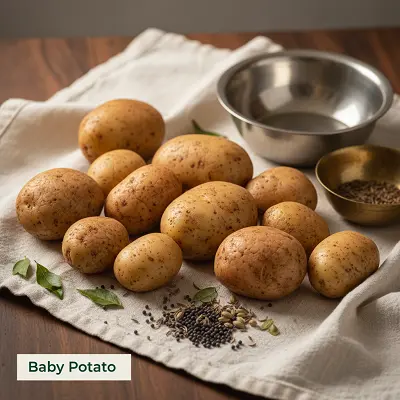
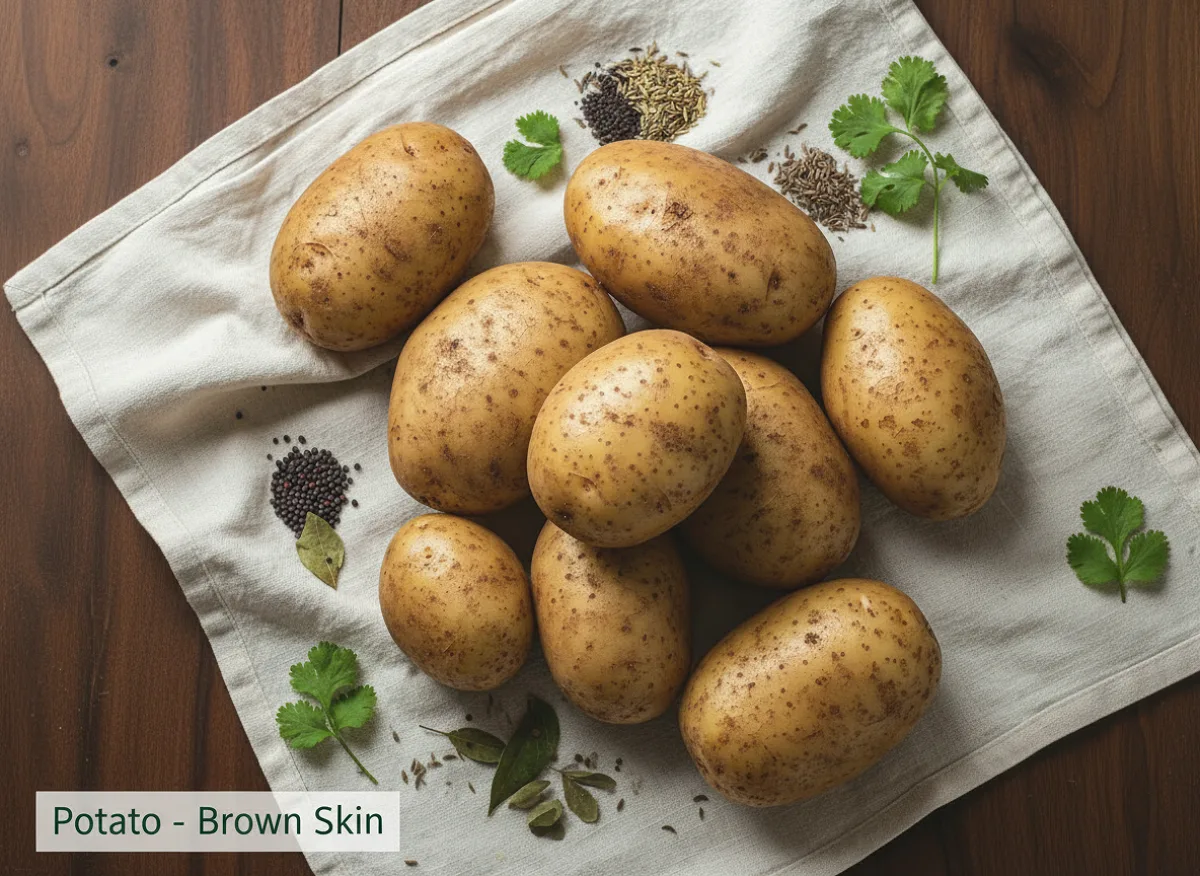
The brown-skinned potato is a starchy tuber with thin, earthy brown skin and pale flesh inside. Botanically Solanum tuberosum, it arrived in India centuries ago and has become as essential to the Indian kitchen as rice or dal. The brown variety stores well and is the everyday choice in most Indian homes and markets (IFCT 2017, Ref #F006).
Use in Indian Kitchen
Potatoes are woven into every regional cuisine. In the North, they star in aloo gobi, aloo parathas, and curries with onion-tomato masala. The South uses them in sambar, avial, and potato fries with coconut. In the East, they're comfort food in curries and as a side with dal-rice. The West fries them, roasts them with spices, or mashes them into batata vada. Potatoes are everyday food, festival food, and monsoon food - boiled with salt and turmeric when you're unwell, fried golden when you're celebrating. They're the vegetable that never disappoints.
Key Nutrients
Potatoes are primarily carbohydrates (starch), with moderate protein and fibre, especially in the skin. They contain potassium, vitamin C, vitamin B6, and manganese. When boiled without peeling, nutrient retention is higher. Exact composition varies by cooking method and variety (IFCT 2017, Ref #F006).
Health Benefits (Evidence-based)
- May support steady energy release due to starch content, especially when boiled or baked rather than fried.
- Linked to heart health through potassium, which helps regulate blood pressure.
- Resistant starch (formed when cooled after cooking) may support digestive health and satiety.
- Contains antioxidants and polyphenols, particularly in coloured varieties and the skin.
- Traditionally used in Indian home remedies for digestive comfort when boiled plain with salt and cumin.
Culinary Uses (Vegetarian)
- Curries: aloo gobi, aloo matar, aloo tamatar, sambar, avial, potato curry with coconut milk.
- Breads and snacks: aloo paratha, aloo puri, batata vada, aloo tikki, potato filling for samosa.
- Sides: boiled and mashed with ghee and cumin, roasted with spices, fried as chips or fries.
- Dal and rice: boiled potato served alongside dal-rice with ghee and pickle.
- Salads and raita: boiled potato in yoghurt-based raita with mustard seeds and curry leaves.
Caution
Potatoes contain solanine (a naturally occurring alkaloid) in green or sprouted parts - always remove green patches and eyes before cooking. Those managing blood sugar should eat potatoes in moderation and prefer boiled over fried. Fried potatoes are calorie-dense; balance with vegetables and dal. People with certain digestive sensitivities may find fried potatoes harder to digest.
References
- Indian Council of Medical Research - National Institute of Nutrition. Indian Food Composition Tables 2017. ICMR-NIN, Hyderabad.
- National Institute of Nutrition, ICMR. Dietary Guidelines for Indians - A Manual. NIN Publications.
Health Benefits
- Provides Energy
- Supports Heart Health
Sourcing & Storage
Storage
Store brown-skinned potatoes in a cool, dark, well-ventilated place - ideally a cloth bag or open basket in a cupboard or pantry away from direct sunlight. Keep them separate from onions and garlic. In warm, humid Indian climates, store in the coolest part of your kitchen (not the fridge, which can turn starch to sugar). Ensure good air circulation to prevent sprouting and mould.
Shelf Life
Well-stored potatoes last 2 - 3 weeks in a cool pantry, up to 4 - 6 weeks in a cool, dark place. Once cut or cooked, store in an airtight container in the fridge for 3 - 4 days. Boiled potatoes can be frozen for up to 3 months if stored in an airtight freezer bag.
Check Before You Buy
Choose potatoes that are firm to the touch with no soft spots, bruises, or wrinkled skin. The skin should be smooth and unblemished - avoid any with green patches or sprouting eyes, as these indicate solanine buildup. Look for medium-sized potatoes of even weight; very large ones may be hollow or starchy inside. At the mandi or kirana, pick potatoes that feel heavy for their size. Avoid any with a musty smell or visible mould. If buying packed potatoes, check the date and ensure the bag has no condensation inside.
In Ayurveda
In Ayurveda, big brown-skinned potatoes are considered grounding and nourishing. They balance Vata dosha and provide energy, making them excellent for digestion and overall health. Rich in nutrients, they support the body and enhance vitality, promoting strength and stability.