Ponnaganni
Alternanthera sessilis · Also known as Matikaduri, Khanchari, Saranthi na pan, Saranthi sag, Honagone soppu, Ponnaganni cheera, Phakchet, Madarangh, Ponnaganni keerai, Ponnaganti koora, Kunte ki bhaji
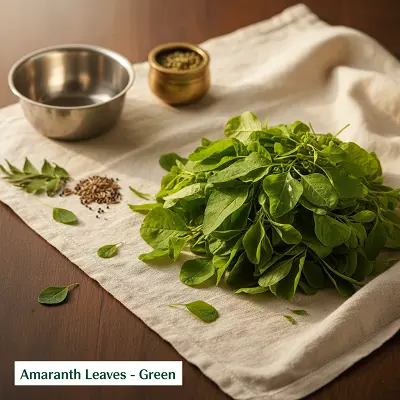
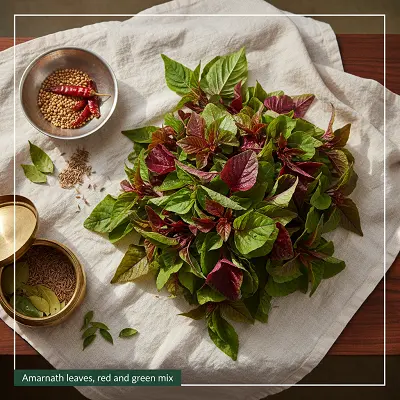
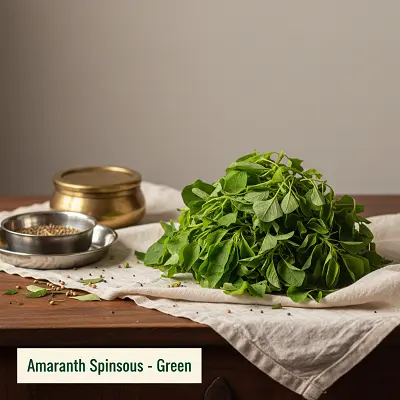
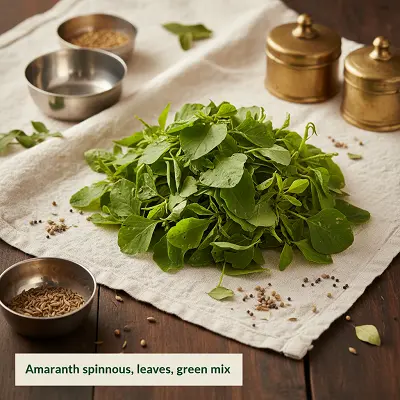
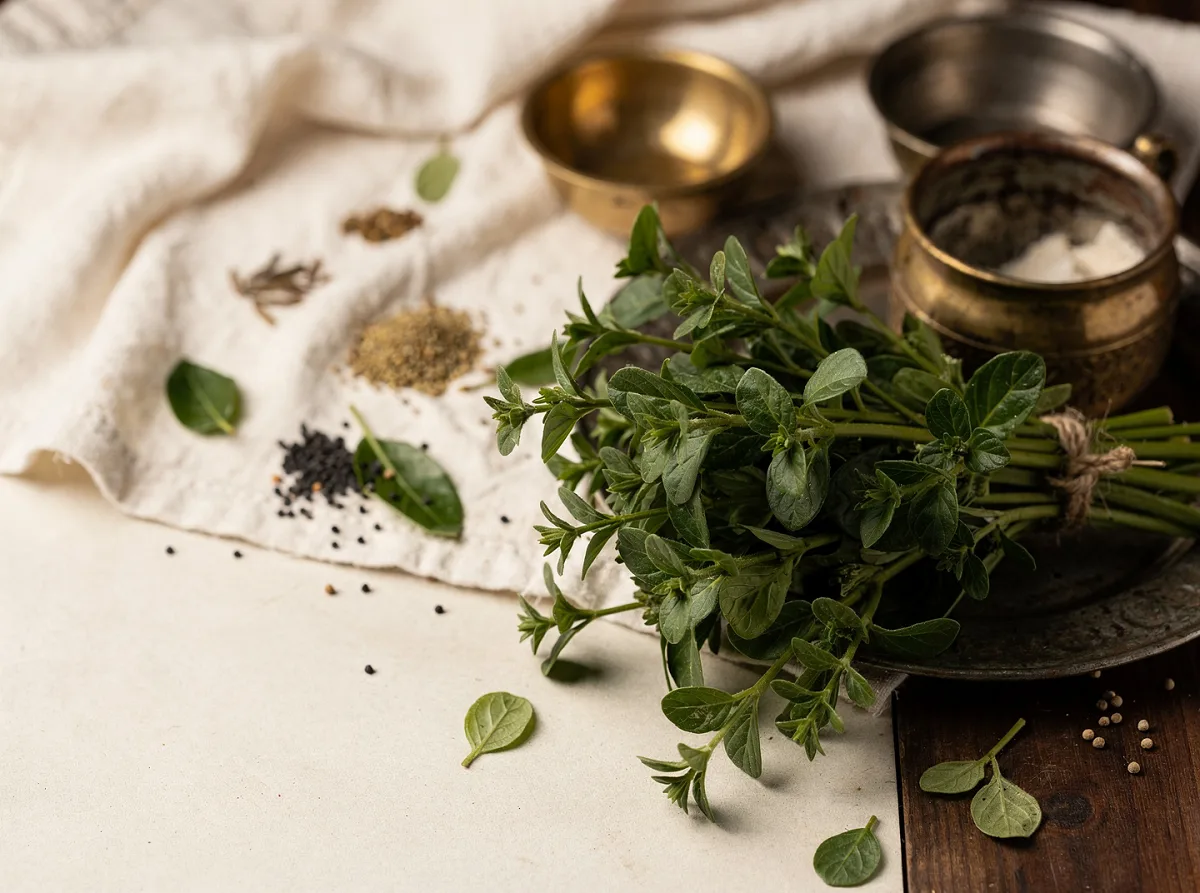
Ponnaganni (पोन्नागन्नी, also called Matikaduri or Khanchari) is a tender, succulent green leafy vegetable with small oval leaves and a mild, slightly earthy flavour. Fresh and delicate, it cooks down quickly and is popular across South and East Indian home kitchens in simple sti...
Nutrition per 100 g
Edible portion values from the master catalog.
More macros
Classification
About Ponnaganni
What it is
Ponnaganni is a tender, moisture-rich green leafy vegetable with small, rounded leaves and delicate stems. Known by many regional names - Matikaduri in Telugu, Khanchari in Hindi, Saranthi sag in some parts of North India, and Honagone soppu in Kannada - it is a humble staple in South and East Indian home cooking. The leaves are mild and slightly earthy, with a soft texture that wilts quickly when heated, making it ideal for quick curries and stir-fries. (IFCT 2017, Ref #C029)
Use in Indian Kitchen
Ponnaganni shines in simple, everyday vegetable dishes. In South India, it is cooked into sambar and kootu curries with lentils and coconut, or simply stir-fried with onions, green chilli, and a tempering of mustard seeds and curry leaves. In East India, it appears in light sabzi preparations and is sometimes added to dal. The leaves cook down rapidly, so it is best added near the end of cooking to retain a tender bite. A pinch of turmeric and salt during cooking helps preserve its colour and mild flavour. It pairs beautifully with tamarind, coconut, and the warmth of asafoetida.
Key Nutrients
Ponnaganni is rich in iron, calcium, and vitamins A and C. It also contains dietary fibre and small amounts of protein. For precise nutrient composition, refer to IFCT 2017, Ref #C029.
Health Benefits (Evidence-based)
- May support healthy blood formation and oxygen transport due to its iron content.
- Linked to bone health through its calcium and mineral profile.
- Vitamin A content may help maintain healthy vision and skin.
- Dietary fibre may aid gentle digestion and regular bowel health.
- Traditionally used in Indian home remedies as a cooling, nourishing green leafy vegetable.
Culinary Uses (Vegetarian)
- Sambar and kootu curries with lentils and coconut.
- Simple stir-fried sabzi with onions, green chilli, and mustard tempering.
- Mixed into dal preparations in the final minutes of cooking.
- Fresh in light salads or as a side green in everyday meals.
- Blanched and added to rice or roti dough for colour and nutrition.
Caution
Ponnaganni is generally safe for most people. Those with kidney concerns or on a restricted potassium diet should consume in moderation and consult a healthcare provider. Always rinse leaves thoroughly before use to remove soil and any residue.
References
- Indian Council of Medical Research - National Institute of Nutrition (ICMR-NIN). Indian Food Composition Tables (IFCT 2017). Reference #C029 - Green Leafy Vegetables.
- National Institute of Nutrition, Hyderabad. Nutritive Value of Indian Foods. ICMR publications on traditional Indian leafy vegetables and their culinary use.
Sourcing & Storage
Storage
Store fresh ponnaganni in a breathable cloth bag or perforated plastic bag in the refrigerator's vegetable drawer, away from direct moisture and ethylene-producing fruits. In warm Indian climates, use within 1-2 days of purchase for best quality. If you have access to a cool, well-ventilated pantry, loosely bundled leaves can be kept there for a few hours. Do not store in airtight containers, as condensation will cause wilting and decay.
Shelf Life
Fresh ponnaganni keeps for 2-3 days in the refrigerator when stored in a breathable bag. Once cooked, store in an airtight container in the fridge for up to 2 days. Freezing is not recommended, as the delicate leaves lose texture and become mushy upon thawing.
Check Before You Buy
Look for bright green, tender leaves with no yellowing, browning, or slime. The stems should be crisp and snap cleanly when bent; avoid bundles with wilted or mushy leaves. Smell should be fresh and earthy, not sour or fermented. At the mandi or kirana shop, buy from vendors with good turnover - ponnaganni is best eaten within hours of harvest. Avoid pre-packed bundles that show condensation or discolouration inside the bag.
In Ayurveda
In Ayurvedic tradition, ponnaganni is regarded as a light, easily digestible leafy green that supports healthy digestion and intestinal function. It is believed to have a cooling (sheet) quality and is thought to help balance excess pitta (heat) in the body. The tender leaves are traditionally used in home remedies to promote gentle detoxification and maintain overall wellness.