Pomegranate
Punica granatum · Also known as Anaar, pomegranate, pomegranate arils, Punica granatum
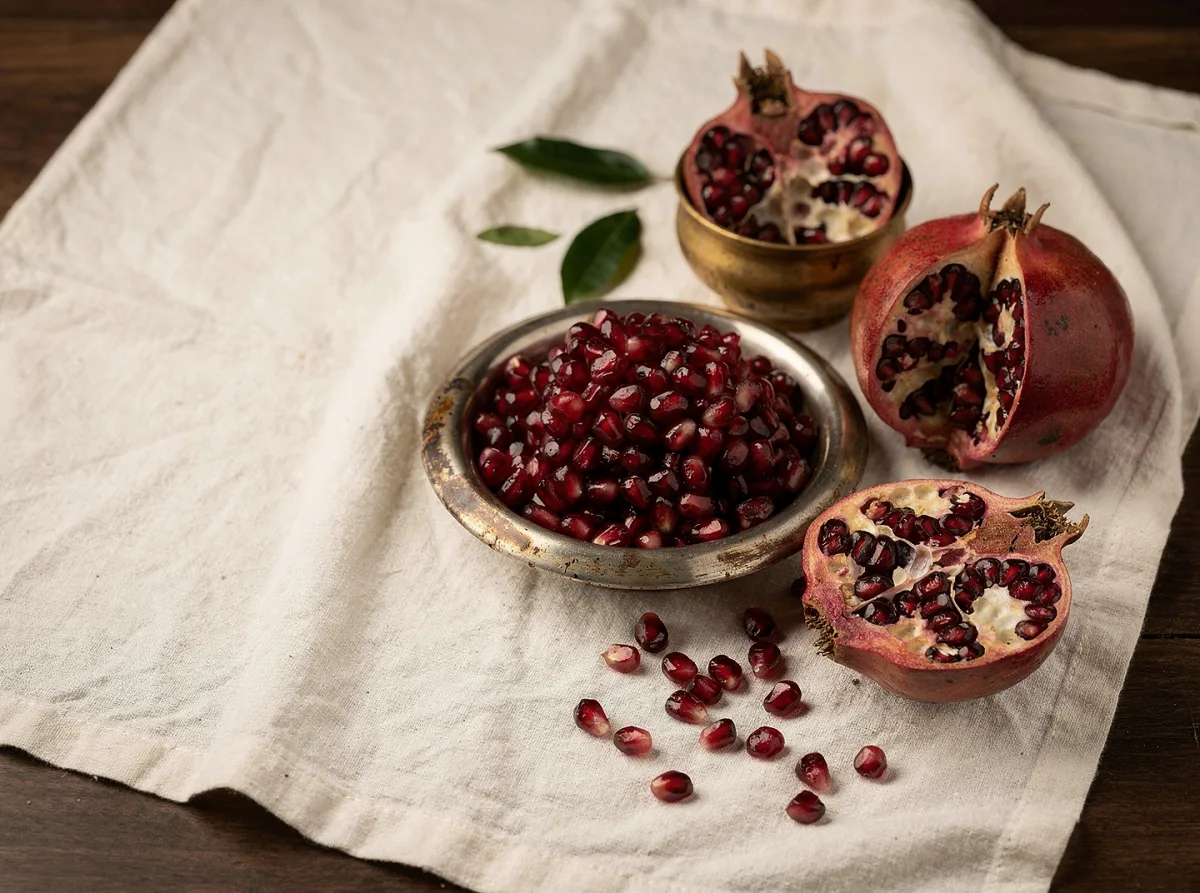
Pomegranate (अनार, anaar) is a round, thick-skinned fruit with a leathery burgundy or deep red exterior and a crown-like calyx at the top. Inside, hundreds of jewel-like arils - seed-pulp sacs - range from tart to sweet depending on ripeness and variety. Fresh arils are eaten raw...
Nutrition per 100 g
Mean values ± IFCT published SD (edible portion).
More macros
Classification
About Pomegranate
What it is
Pomegranate (अनार, anaar) is a round, thick-skinned fruit with a leathery burgundy or deep red exterior and a distinctive crown-like calyx at the top. Inside, hundreds of jewel-like arils - seed-pulp sacs - range from tart to sweet depending on ripeness and variety. The fruit is eaten fresh, pressed into juice, or the dried seeds (anardana) are used as a spice. Pomegranate is grown widely across India, particularly in Maharashtra, Karnataka, and Rajasthan, and holds cultural significance in festivals and celebrations. (IFCT 2017, Ref #E055)
Use in Indian Kitchen
Fresh pomegranate arils are scattered over raita, salads, and rice dishes for a burst of tartness and colour. Pomegranate juice (anar ka ras) is a popular cooler in summer and is sometimes reduced into a thick syrup (anaar ki chutney) to serve with samosas or pakoras. Dried pomegranate seeds (anardana) - slightly sour and fruity - are ground into spice blends, sprinkled over chaats, or used in North Indian curries and lentil dishes to add a subtle tang. In South India, pomegranate arils feature in fruit salads and are occasionally used in sweet chutneys. A practical tip: to extract arils cleanly, score the skin lightly and soak the fruit in water for a few minutes, then gently separate the arils - they will sink while the bitter white pith floats.
Key Nutrients
Pomegranate arils are rich in vitamin C, antioxidants (including punicalagins and ellagic acid), potassium, and fibre. The seeds contain tannins and polyphenols. Exact nutrient composition varies by variety and ripeness; refer to IFCT 2017 for detailed micronutrient profiles.
Health Benefits (Evidence-based)
- High in antioxidants, which may help protect cells from oxidative stress and support overall wellness.
- Vitamin C content supports immune function and collagen formation.
- Potassium may help maintain healthy blood pressure and heart function.
- Fibre in the arils and seeds supports digestive health and satiety.
- Traditionally used in Ayurvedic and folk medicine to aid digestion and cool the body in summer.
- Pomegranate juice has been linked in some studies to cardiovascular and anti-inflammatory benefits, though evidence is still emerging.
Culinary Uses (Vegetarian)
- Fresh arils scattered over yoghurt raita, cucumber salad, or grain bowls.
- Pomegranate juice as a cooler or reduced into syrup for chutneys and dressings.
- Dried anardana seeds ground into spice blends or sprinkled over chaats, bhel puri, and sev tameta.
- Pomegranate molasses (concentrate) drizzled over dals, khichdi, or roasted vegetables.
- Arils folded into rice pilafs, biryanis, and festive rice dishes for colour and tartness.
Caution
- Pomegranate juice is high in natural sugars; those managing blood sugar should consume in moderation or dilute with water.
- The pith and skin are bitter and astringent; only the arils and juice are typically eaten.
- Pomegranate may interact with certain blood pressure or blood-thinning medications; consult a healthcare provider if on such medications.
- Allergic reactions are rare but possible; discontinue if any unusual symptoms occur.
References
- Indian Council of Medical Research - National Institute of Nutrition (ICMR-NIN). Indian Food Composition Tables (IFCT 2017). Hyderabad: NIN; 2017. [Reference code E055 - Pomegranate]
- Lansky, E. P., & Newman, R. A. (2007). Punica granatum (pomegranate) and its potential for prevention and treatment of inflammation and cancer. Journal of Ethnopharmacology, 109(2), 177-206.
Health Benefits
- Anti Inflammatory
- Boosts Immunity
- Heart Health Support
- Improves Blood Circulation
Sourcing & Storage
Storage
Store whole pomegranates in a cool, dry place at room temperature (15-20°C) away from direct sunlight for up to 2-3 weeks. For longer storage, refrigerate in the crisper drawer at 4-5°C, where they will keep for 4-6 weeks. Once cut or arils are separated, store them in an airtight container in the refrigerator for up to 5 days. Pomegranate juice should be refrigerated immediately and consumed within 2-3 days, or frozen in ice cube trays for up to 3 months. Dried anardana seeds should be kept in an airtight, moisture-proof container away from heat and light.
Shelf Life
Whole pomegranates stored at room temperature last 2-3 weeks; refrigerated, they keep 4-6 weeks. Fresh arils in the fridge last 5 days. Freshly pressed juice keeps 2-3 days refrigerated or up to 3 months frozen. Dried anardana seeds, when stored in an airtight container in a cool, dry place, remain flavourful for 6-12 months.
Check Before You Buy
Choose pomegranates that feel heavy for their size, with thin, unblemished skin and a deep red or burgundy colour - a sign of ripeness and sweetness. The skin should yield slightly to gentle pressure but not be soft or mushy. Avoid fruits with cracks, dark spots, or mould. A ripe pomegranate will have a sweet, fruity aroma near the crown. When buying from a mandi or kirana, ask the vendor to cut one open so you can inspect the arils - they should be plump, juicy, and deeply coloured, not dried out or pale. Packaged pomegranate juice should be checked for the manufacturing date and stored in a cool section; avoid bottles with sediment or cloudiness unless it is fresh-pressed juice.
In Ayurveda
In Ayurveda, pomegranate (Dadima phala) is traditionally valued for its ability to balance Pitta and Kapha doshas. The fruit is considered a rasayana (rejuvenative) and is recommended to strengthen digestion (agni), purify blood, and restore vitality after illness or weakness. The juice is classically prescribed to support healthy blood formation and improve overall energy.
Pomegranate rind is noted for its astringent properties (kashaya rasa) and has been used in traditional formulations to address digestive imbalances, particularly loose stools and dysentery. The seeds are believed to have a warming, slightly dry quality that aids digestion without aggravating Pitta when used in moderation.