Pointed Gourd
Trichosanthes dioica · Also known as Parwal, परवल, Pointed Gourd, Patal, Patol, Patola, Parval
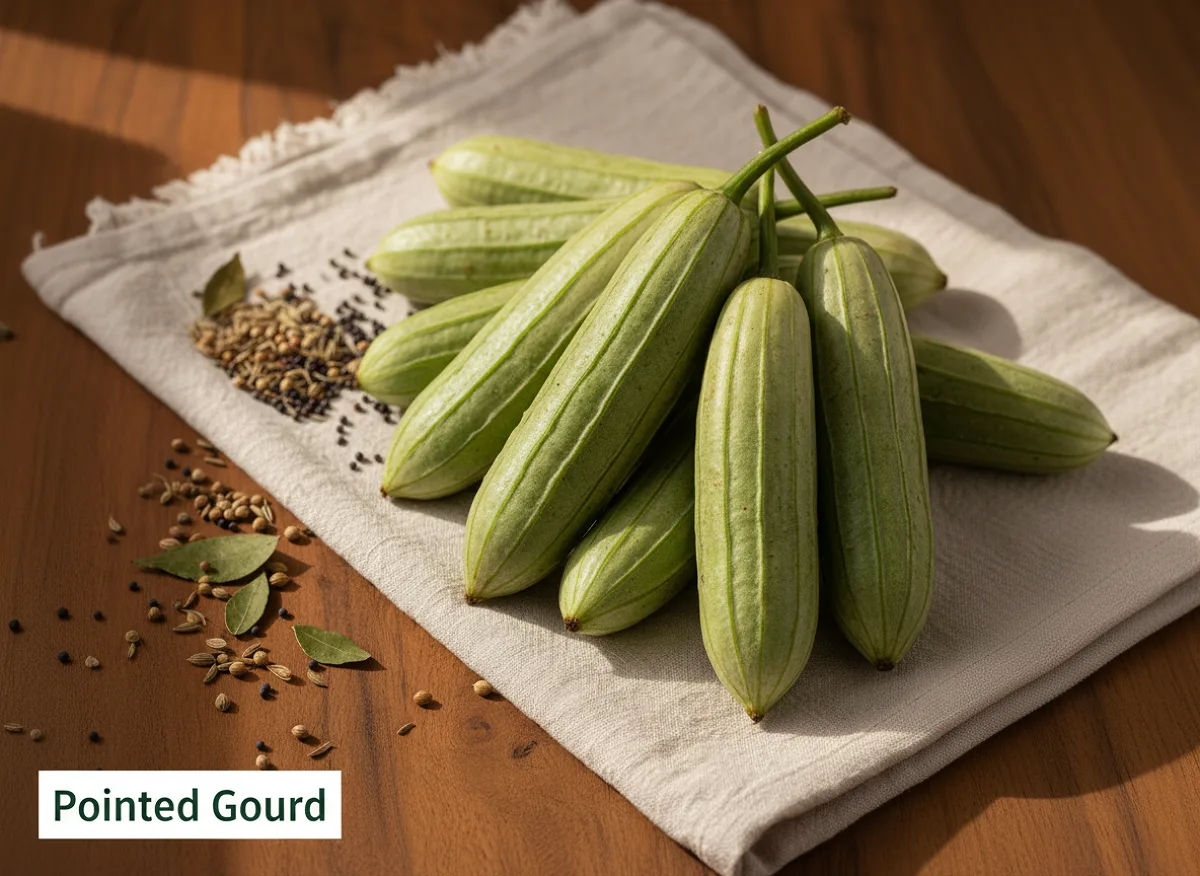
Pointed gourd (परवल, parwal) is a slender, ridged vegetable with a pale green skin and crisp, mild flesh. Fresh and tender, it is a summer favourite across Indian kitchens, prized for its delicate taste and quick cooking. Commonly stuffed with spiced besan and onion, pan-fried un...
Nutrition per 100 g
Mean values ± IFCT published SD (edible portion).
More macros
Classification
About Pointed Gourd
What it is
Pointed gourd (परवल, parwal) is a slender, ridged vegetable with a pale green skin and crisp, mild flesh. Fresh and tender, it is a summer favourite across Indian kitchens, prized for its delicate taste and quick cooking. Commonly stuffed with spiced besan and onion, pan-fried until golden, or simmered in light curries, parwal brings a gentle crunch and subtle sweetness to everyday meals. (IFCT 2017, Ref #D060)
Use in Indian Kitchen
Pointed gourd shines in simple, quick preparations. The most beloved use is stuffed parwal (भरवाँ परवल) - halved lengthwise, hollowed gently, and packed with a spiced besan-onion filling, then shallow-fried until the skin softens and the filling turns golden. In South India, it appears in sambar and light coconut-based curries. North Indian home cooks often pan-fry thin rounds with turmeric and a pinch of asafoetida, or add them to mixed vegetable sabzi. A practical tip: choose tender, young parwal and cook quickly over medium-high heat to preserve the crisp texture; older, thicker pods may need longer cooking and benefit from a light salt rub before frying to draw out excess moisture.
Key Nutrients
Pointed gourd is low in calories and a source of dietary fibre, vitamin C, and minerals including potassium and manganese. It also contains small amounts of B vitamins and iron. Exact nutrient composition is documented in IFCT 2017.
Health Benefits (Evidence-based)
- Low in calories and fat, making it suitable for weight-conscious diets.
- Good source of dietary fibre, which may support digestive health and regular bowel function.
- Contains vitamin C, linked to immune support and collagen formation.
- Provides potassium, which plays a role in heart health and blood pressure regulation.
- May help maintain stable blood sugar levels due to its low glycaemic index and fibre content.
Culinary Uses (Vegetarian)
- Stuffed parwal (भरवाँ परवल) - halved and filled with spiced besan, onion, and green chilli.
- Pan-fried rounds with turmeric, cumin, and asafoetida.
- Added to sambar, rasam, and light coconut curries in South Indian cooking.
- Mixed vegetable sabzi with potatoes and peas.
- Pickled or preserved as an accompaniment to meals.
- Sliced thin and added to vegetable pulao or khichdi.
Caution
- Pointed gourd is generally safe for most people. Those with known allergies to gourds or squashes should exercise caution.
- Individuals on blood-thinning medications should consume consistently rather than in sudden large amounts, as vitamin K content may interact.
- Overcooking can make the vegetable mushy and less palatable; cook over medium-high heat for best texture.
References
- Indian Council of Medical Research - National Institute of Nutrition (ICMR-NIN). Indian Food Composition Tables (IFCT 2017). Reference #D060 - Other Vegetables category.
- Gopalan, C., Rama Sastri, B. V., & Balasubramanian, S. C. (2016). Nutritive Value of Indian Foods. National Institute of Nutrition, ICMR, Hyderabad.
Health Benefits
- Hydration
- Supports Digestion
- Boosts Immunity
- Weight Management Support
- Heart Health Support
Sourcing & Storage
Storage
Store pointed gourd in the vegetable compartment of the refrigerator, ideally in a perforated plastic bag or open container to allow air circulation. Keep away from ethylene-producing fruits (apples, bananas, tomatoes) which can accelerate ripening and spoilage. In warm, humid Indian climates, use within 2-3 days of purchase for best quality. Do not wash before storage; wash only just before cooking to prevent moisture buildup and decay.
Shelf Life
Fresh pointed gourd keeps for 3-5 days in the refrigerator when stored properly. Once cut or cooked, use within 1-2 days. In a cool pantry (below 15°C), whole pods may last 1-2 days. Freezing is not recommended as the delicate texture becomes mushy upon thawing.
Check Before You Buy
Choose young, tender pointed gourds with a pale to medium green skin, free from blemishes, soft spots, or dark patches. The pod should feel firm and slightly crisp when gently pressed; avoid overly hard or thick pods, which indicate age and may have tough, fibrous flesh. Look for a fresh, mild aroma - any sour or fermented smell suggests spoilage. At the mandi or kirana, select pods of uniform size for even cooking. Avoid those with visible cracks, wrinkled skin, or signs of insect damage.
In Ayurveda
In Ayurvedic tradition, pointed gourd (parwal) is considered a light, easily digestible vegetable with astringent (kashaya) and cooling (sheeta) properties. It is believed to support healthy digestion and is often recommended during summer months to balance excess heat in the body. Classical texts regard it as beneficial for maintaining digestive fire (agni) without creating heaviness.