Plantain stem
Musa x paradisiaca · Also known as Posola, Thor, Banana stem, Kelanu thed, Kele-ka-tana, Bele Dindu, Nud kait, Unnipindi, Lafu, Kelicha khunt, Kadali manja, Kele da tana, Vazhai thandu, Arati doota
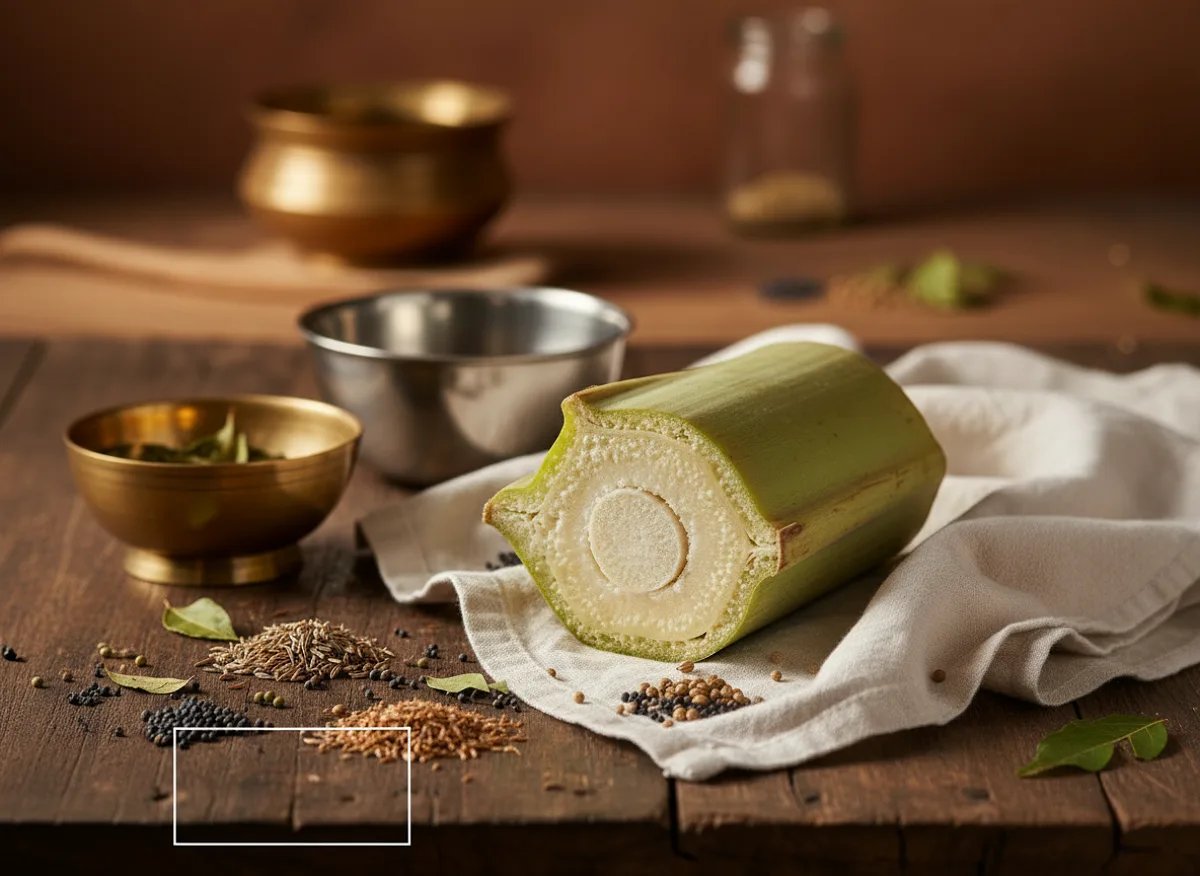
Plantain stem (पोसोला, posola) is the pale, fibrous inner core of the banana plant trunk, prized across South and West Indian kitchens for its mild, slightly sweet flavour and tender texture when cooked. Sliced into rings or chopped into pieces, it absorbs spices beautifully and...
Nutrition per 100 g
Mean values ± IFCT published SD (edible portion).
More macros
Classification
About Plantain stem
What it is
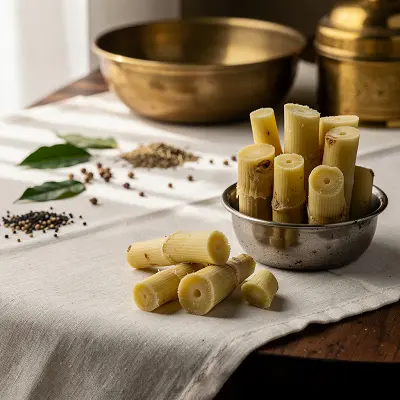
Plantain stem, known as posola in Kannada, thor in Marathi, and vazhai thandu in Tamil, is the tender inner core of the banana plant trunk. It has a pale cream or off-white colour, a fibrous but delicate texture, and a subtle, slightly sweet, earthy taste. Fresh plantain stem is typically sold chopped into rings or chunks at vegetable markets, especially during monsoon and post-monsoon seasons. It is a seasonal vegetable across South India (Karnataka, Tamil Nadu, Andhra Pradesh) and parts of Maharashtra and Gujarat. (IFCT 2017, Ref #D064)
Use in Indian Kitchen
Plantain stem is a beloved ingredient in South Indian vegetable curries and stir-fries. It features prominently in sambar, where it absorbs the tamarind and spice base beautifully, and in kootu (a coconut-based curry), where its mild flavour complements lentils and vegetables. In Karnataka, it is often prepared as a dry fry (posola sukka) with grated coconut, mustard seeds, and curry leaves. Tamil kitchens use it in thoran (a dry, coconut-based side dish) and add it to rasam for body and texture. A practical tip: soak chopped plantain stem in water for 15-20 minutes before cooking to reduce any bitterness and prevent discolouration. Pair it with tamarind, coconut, and warming spices like turmeric and asafoetida for best results.
Key Nutrients
Plantain stem is low in calories and provides dietary fibre, which supports digestive health. It contains small amounts of potassium, manganese, and vitamin C. The exact nutrient profile per 100 g is documented in IFCT 2017 (Ref #D064); home cooks value it primarily for its light, easily digestible nature and its role in balanced vegetable-based meals.
Health Benefits (Evidence-based)
- May support digestive health due to its dietary fibre content and light, easily digestible nature.
- Traditionally used in Ayurvedic cooking for its cooling (sheet) properties, making it suitable for warm seasons and pitta-balancing diets.
- Low in calories and fat, making it a good choice for weight-conscious and heart-healthy meal planning.
- Contains small amounts of potassium, which is linked to healthy blood pressure regulation.
- Its mild flavour and tender texture make it accessible for children and those with sensitive digestion.
Culinary Uses (Vegetarian)
- Sambar - a South Indian lentil and vegetable curry with tamarind and spices.
- Kootu - a coconut-based curry with lentils and seasonal vegetables.
- Posola sukka - a dry, roasted preparation with grated coconut, mustard seeds, and curry leaves.
- Thoran - a dry, coconut-based side dish with tempering.
- Rasam - added for body and mild sweetness in this tangy lentil soup.
- Stir-fries and sabzi - pan-fried with onions, turmeric, and green chillies.
- Pickle - occasionally preserved in oil and spices for long-term storage.
Caution
- Plantain stem may cause mild bloating or gas in people with sensitive digestion if eaten in large quantities; start with small portions.
- Those with a history of kidney stones should consume in moderation, as it contains oxalates.
- Always soak and rinse well before cooking to remove any dirt or fibrous debris trapped in the layers.
- If stored improperly, it can develop a sour or fermented smell; discard if odour is off or colour is dark brown.
References
- Indian Council of Medical Research - National Institute of Nutrition (ICMR-NIN). Indian Food Composition Tables (IFCT 2017). Reference #D064 - Other Vegetables category.
- Sharma, P. V. (1978). Classical Uses of Medicinal Plants in Ayurveda. Chaukhambha Orientalia, Varanasi. (General Ayurvedic dietary principles for cooling vegetables.)
Sourcing & Storage
Storage
Store fresh plantain stem in a cool, well-ventilated place or in the refrigerator's vegetable drawer, wrapped loosely in a damp cloth or paper towel to retain moisture without trapping excess water. In Indian climates, especially during monsoon, keep it in the coldest part of the fridge to slow decay. Do not store in airtight plastic bags, as this promotes mould and fermentation. If you have chopped it, place the pieces in a bowl of water and refrigerate; change the water daily to keep it fresh.
Shelf Life
Fresh plantain stem keeps for 3-5 days in the refrigerator when stored properly. Once cooked, it will last 2-3 days in an airtight container in the fridge. If you wish to preserve it longer, you can blanch and freeze chopped pieces in freezer bags for up to 2-3 months, though texture will soften slightly upon thawing. In warm, humid climates without refrigeration, use within 1-2 days of purchase.
Check Before You Buy
Look for plantain stems that are pale cream or off-white in colour, firm to the touch, and free of dark spots, slime, or a sour smell. The flesh should feel slightly moist but not waterlogged. Avoid pieces that are yellowing, browning, or have a mushy texture, as these indicate age or decay. At the mandi or vegetable market, ask the vendor to cut a fresh stem for you so you can inspect the interior; it should be pale and fibrous, not dark or discoloured. Packaged or pre-cut plantain stem should be used within 1-2 days; check that the packaging is not wet or torn.
In Ayurveda
In Ayurvedic cooking, plantain stem is valued for its cooling (sheet) and light (laghu) properties, making it suitable for balancing pitta dosha, especially during warm seasons. Its mild flavour and easy digestibility align with sattvic (pure, harmonious) dietary principles. Classical Ayurvedic texts do not name plantain stem as a primary medicinal herb, but traditional home remedies in South India have long used it in cooling curries and soups for those with excess heat or inflammation. It is often recommended in Ayurvedic nutrition for gentle digestive support and as a seasonal vegetable that does not burden the digestive fire (agni).