Plantain flower
Musa x paradisiaca · Also known as Koldil, Mocha, Banana flower, Kel phool, Kele-ka phool, Bale motho, Pashor kait, Vazhapoo, Lafu Tharo, Kadali bhanda, Kele-da-phool, Arati puvvu, Kela ka phool
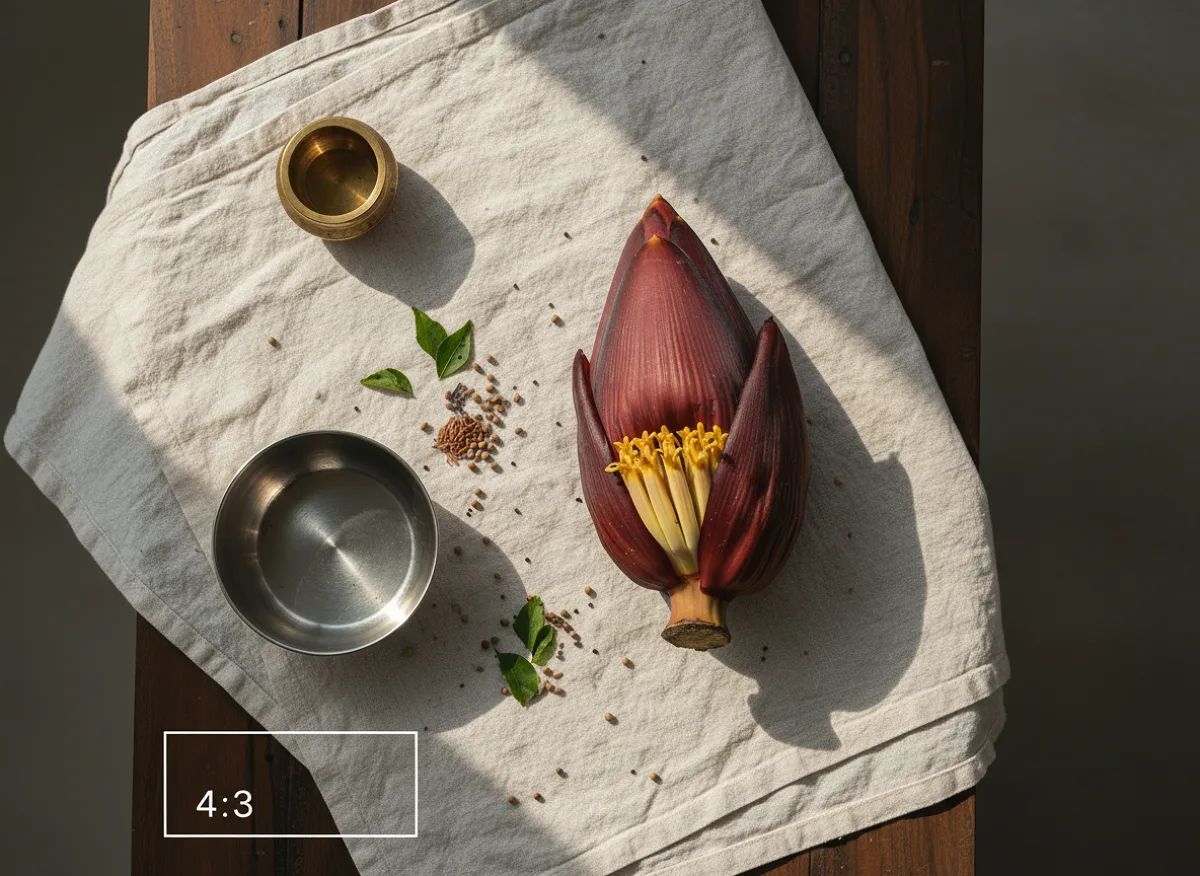
Plantain flower (kel phool, vazhapoo) is the deep purple or maroon bract-wrapped inflorescence that emerges from the banana plant stem. Inside the papery bracts lie pale, tender florets with a mild, slightly astringent taste and soft, spongy texture. Fresh and seasonal, it is a b...
Nutrition per 100 g
Mean values ± IFCT published SD (edible portion).
More macros
Classification
About Plantain flower
What it is
Plantain flower (kel phool in Hindi, vazhapoo in Tamil, mocha in Bengali) is the unopened inflorescence of the banana plant, enclosed in thick, waxy purple or maroon bracts. When you peel back the outer bracts, you find rows of pale, cream-coloured florets clustered together, each with a tender, slightly spongy texture and a mild, faintly astringent taste. It is harvested when the flower is still tightly closed, before the individual flowers bloom. Fresh plantain flower is seasonal and highly perishable, making it a prized seasonal vegetable in South Indian, Bengali, and Odia kitchens. (IFCT 2017, Ref #D062)
Use in Indian Kitchen
Plantain flower is a versatile vegetable that shines in curries, stir-fries, and dal-based dishes. In South India, it is cooked into sambar, rasam, and kootu with lentils and coconut; in Bengal and Odisha, it is often tempered with mustard seeds and turmeric, then simmered gently to preserve its delicate texture. North Indian home cooks prepare it as a dry sabzi with onions and tomatoes, sometimes adding besan to coat the florets. A practical tip: soak the chopped flower in salted water for 10-15 minutes before cooking to reduce any bitterness and prevent discolouration. The tender inner florets are most prized; the tougher outer bracts are discarded or used for stock.
Key Nutrients
Plantain flower is a good source of dietary fibre, vitamin C, and B vitamins (particularly B6). It also contains minerals such as potassium, magnesium, and manganese. The exact nutrient profile per 100 g is documented in IFCT 2017 (Ref #D062); values vary slightly depending on maturity and growing conditions.
Health Benefits (Evidence-based)
- High in dietary fibre, which may support digestive health and regular bowel function.
- Contains vitamin C and antioxidants, linked to immune support and cellular protection.
- Potassium content may help maintain healthy blood pressure and heart function.
- Low in calories and fat, making it a light, nutrient-dense addition to everyday meals.
- Traditionally used in Ayurvedic and folk medicine to support digestive comfort and reduce inflammation.
Culinary Uses (Vegetarian)
- Sambar and rasam (South Indian lentil curries and broths).
- Kootu and thoran (coconut-based vegetable curries).
- Bengali and Odia tempering with mustard seeds, turmeric, and chilli.
- Dry sabzi with onions, tomatoes, and spices (North Indian style).
- Stuffed preparations with besan and spiced onion paste.
- Pickles and preserves (when young and tender).
Caution
- Plantain flower contains tannins, which may cause a slight astringent or drying sensation in the mouth; soaking and cooking help reduce this effect.
- Those with a history of kidney stones should consume in moderation, as it contains oxalates.
- Always discard the tough outer bracts and any discoloured or slimy inner florets before cooking.
References
- Indian Council of Medical Research (ICMR) and National Institute of Nutrition (NIN). Indian Food Composition Tables (IFCT 2017). Reference #D062 (Other Vegetables - Plantain flower).
- Gopalan, C., Rama Sastri, B. V., & Balasubramanian, S. C. (2007). Nutritive Value of Indian Foods. National Institute of Nutrition, ICMR, Hyderabad.
Sourcing & Storage
Storage
Store fresh plantain flower in the refrigerator in a perforated plastic bag or open container to allow air circulation and prevent moisture buildup. Keep it in the vegetable crisper drawer at 4-8°C. Do not wrap tightly in plastic film, as this will trap moisture and cause the bracts to rot quickly. In warm, humid Indian climates, use within 1-2 days of purchase for best quality. If you must store longer, blanch the florets briefly, cool, and freeze in an airtight container for up to 3 months.
Shelf Life
Fresh plantain flower keeps for 1-2 days in the refrigerator under ideal conditions (cool, well-ventilated storage). Once cut or peeled, use the inner florets within a few hours to prevent browning and loss of texture. Blanched and frozen plantain flower will keep for up to 3 months in the freezer; thaw in the refrigerator before cooking.
Check Before You Buy
Choose plantain flowers that are firm, heavy for their size, and free of soft spots, dark patches, or a slimy feel. The outer bracts should be a deep purple or maroon colour, tightly closed, and waxy to the touch. Avoid flowers that are already opening or showing pale, dried-out bracts. When you gently squeeze, there should be no liquid oozing out. At the mandi or kirana shop, ask for flowers harvested the same day or the previous day; older flowers will have begun to ferment inside and will smell sour or musty.
In Ayurveda
In classical Ayurvedic texts, plantain flower is recognized as a cooling (sheeta) ingredient with digestive support properties. It is traditionally used in women's health formulations and is believed to help balance menstrual cycles and support reproductive wellness. The flower is considered to have a mild bitter taste (tikta rasa) and is thought to aid digestion when prepared with warming spices such as turmeric and ginger.