Pippali
Piper longum · Also known as Long pepper, Indian long pepper, Pepper, पिप्पली (pippali), पिप्पल (pippal)
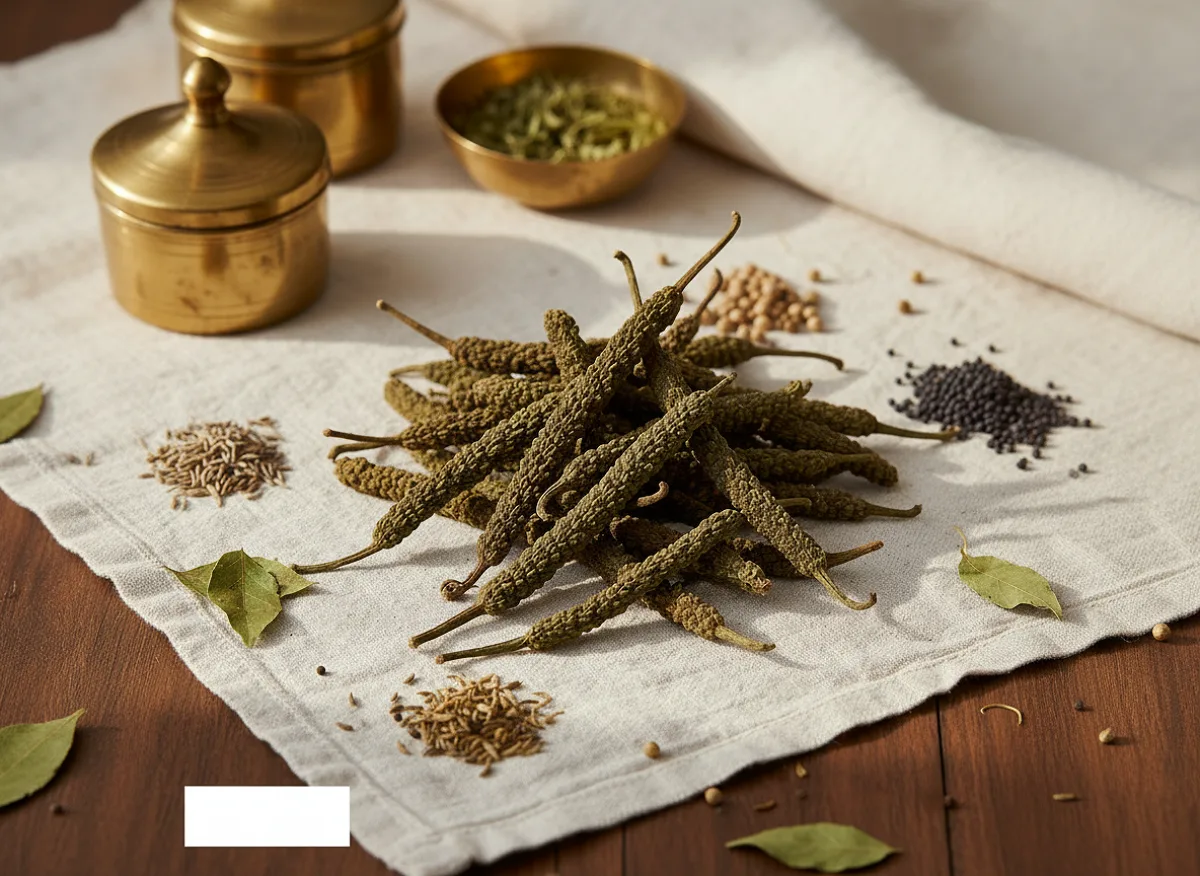
Pippali, or long pepper (पिप्पली), is a slender, ridged dried fruit from the pepper vine, distinctly longer and more complex in flavour than black pepper. Native to South India, it has a warm, slightly sweet bite with subtle fruity notes. Used whole in tempering, ground into spic...
Nutrition per 100 g
Mean values ± IFCT published SD (edible portion).
More macros
Classification
About Pippali
What it is
Pippali, or long pepper (पिप्पली), is the dried, unripe fruit of Piper longum, a climbing vine native to the Western Ghats and South India. Unlike round black pepper, pippali is a slender, segmented pod roughly 1-2 cm long, with a wrinkled, dark brown surface and a hollow interior. It has a warmer, more nuanced peppery flavour with subtle sweetness and fruity undertones. Traditionally used whole or ground in South Indian cooking, Ayurvedic tonics, and spice blends, pippali remains a prized ingredient in Kerala, Karnataka, and Tamil Nadu kitchens. (IFCT 2017, Ref #G030)
Use in Indian Kitchen
Pippali appears in South Indian sambhar powder and rasam masala, where it is dry-roasted and ground with other spices to build depth. In Kerala, whole pippali is tempered in hot ghee or coconut oil to release its warmth before adding to dal or vegetable curries. North Indian home cooks crush it into garam masala or use it in warming milk-based drinks (haldi-pippali doodh) during winter. A practical tip: dry-roast pippali lightly before grinding to intensify its flavour and reduce any musty notes; do not over-roast, as it can turn bitter. Pippali is also a key ingredient in traditional Ayurvedic digestive powders and honey-based pastes (lehyam).
Ayurvedic Connection
Pippali holds a central place in classical Ayurveda, valued for its warming (ushna) and stimulating properties. It is traditionally used to kindle digestive fire (agni), support respiratory health, and ease seasonal coughs. In Ayurvedic texts, pippali is often combined with ginger and black pepper in the trio known as "trikatu" (three peppers), believed to enhance digestion and nutrient absorption. It is also a key ingredient in many classical formulations such as Trikatu Churna and Pippali Rasayana, used to support metabolism and immunity.
Key Nutrients
Pippali contains piperine (the alkaloid responsible for its peppery bite), volatile oils, and trace minerals including manganese and iron. Exact nutrient composition per serving is available in IFCT 2017 (Ref #G030); home cooks typically use pippali in small quantities as a spice, so nutrient contribution per dish is modest but cumulative in a balanced diet.
Health Benefits (Evidence-based)
- May support digestive function and nutrient absorption when used as part of a balanced diet.
- Traditionally linked to respiratory comfort and may help ease seasonal congestion when taken warm.
- Contains piperine, which has been studied for its potential to enhance the bioavailability of other nutrients and herbs.
- May have mild anti-inflammatory properties, though evidence in humans is limited.
- Commonly used in Ayurvedic tonics to support metabolic wellness and energy levels.
Culinary Uses (Vegetarian)
- Whole pippali tempered in ghee or oil for dal, sambar, and vegetable curries.
- Ground into South Indian spice blends (sambhar powder, rasam masala, garam masala).
- Steeped in warm milk with turmeric, ginger, and honey for a traditional winter tonic.
- Added to pickles, chutneys, and spice powders for depth and warmth.
- Crushed into Ayurvedic digestive powders and herbal pastes (lehyam, churna).
Caution
- Pippali is potent; use in small quantities (typically 1/4 to 1/2 tsp ground per dish).
- Those with sensitive digestion or acid reflux should use sparingly or consult an Ayurvedic practitioner.
- Pregnant or nursing women should check with a healthcare provider before using pippali in medicinal quantities.
- May interact with certain medications; if taking blood thinners or diabetes medication, seek professional advice before regular use.
References
- Indian Council of Medical Research (ICMR) & National Institute of Nutrition (NIN). Indian Food Composition Tables 2017 (IFCT 2017). Reference #G030 - Condiments and Spices-Dry category.
- Srivastava, K. C., & Bordia, A. (1997). Curcumin, a major component of food spice turmeric (Curcuma longa) inhibits aggregation and alters eicosanoid metabolism in human blood platelets. Prostaglandins, Leukotrienes and Essential Fatty Acids, 52(4), 223-227. (General reference for spice bioactivity; pippali similarly studied for piperine alkaloid effects.)
Health Benefits
- Improves Digestion
- Anti Inflammatory
- Boosts Metabolism
Sourcing & Storage
Storage
Store pippali in an airtight glass jar or container away from direct sunlight, heat, and moisture. Keep in a cool, dry cupboard or spice rack; in humid climates (monsoon India), store in the refrigerator or a sealed container with a desiccant packet to prevent clumping and mould. Whole pippali keeps better than ground; grind only as needed to preserve volatile oils and flavour.
Shelf Life
Whole pippali, when stored in an airtight container in a cool, dry place, retains its flavour and potency for 1-2 years. Ground pippali loses aroma and pungency more quickly; use within 3-6 months of grinding for best results. Once opened, reseal the container tightly after each use to minimise exposure to air and moisture.
Check Before You Buy
Look for whole pippali that is dark brown, wrinkled, and segmented, with no visible mould, musty smell, or insect damage. Avoid pods that are pale, brittle, or have a rancid odour, which may indicate age or poor storage. When buying from a mandi or kirana shop, ask for freshly stocked pippali and check the packaging date if available. Ground pippali should have a warm, peppery aroma; if it smells flat or musty, it has likely lost potency. Reputable spice merchants and sealed packets from certified suppliers are safer than loose bulk pippali in humid regions.
In Ayurveda
Pippali (long pepper) holds a central place in classical Ayurvedic medicine and is one of the three key ingredients in Trikatu, a foundational warming and digestive formula. It is classified as having a pungent (katu) rasa and a heating (ushna) virya, making it particularly valued for balancing Vata and Kapha doshas.
Traditionally, pippali is used to kindle digestive fire (agni), improve nutrient absorption, and support respiratory health. Ayurvedic texts recommend it for weak digestion, sluggish metabolism, and congestion. It is also believed to enhance the bioavailability of other herbs and nutrients when combined in formulations.
In classical practice, pippali is often paired with ginger and black pepper to create warming, stimulating preparations for seasonal wellness and immune support.