Pineapple
Ananas comosus · Also known as Anaanaas, ananas, pineapple fruit
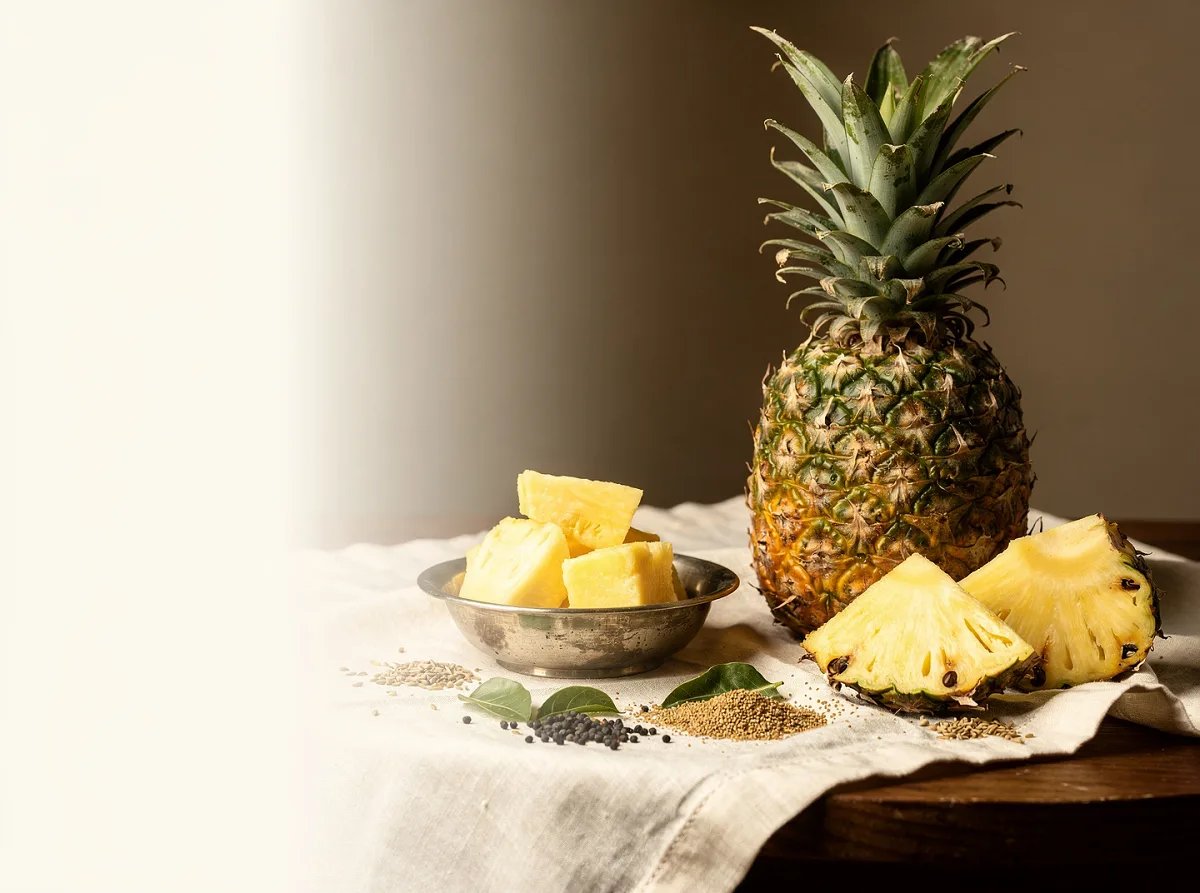
Pineapple (अनानास, anaanaas) is a tropical fruit with a tough, golden-brown spiky skin and sweet, juicy yellow flesh inside. Native to the Americas but now grown widely in India, it brings a bright, tangy-sweet flavour to both savoury and sweet dishes. Fresh pineapple is sliced i...
Nutrition per 100 g
Mean values ± IFCT published SD (edible portion).
More macros
Classification
About Pineapple
What it is
Pineapple (अनानास, anaanaas) is a large tropical fruit with a distinctive crown of stiff green leaves and a thick, hexagonal-patterned golden-brown skin studded with small spikes. Beneath the tough exterior lies pale yellow, fibrous, juicy flesh with a sweet and mildly tangy taste. Fresh pineapple is available year-round in Indian markets, though peak season is March to June. The fruit is eaten fresh, canned, dried, or juiced, and is increasingly used in Indian home cooking for both traditional and modern dishes. (IFCT 2017, Ref #E053)
Use in Indian Kitchen
Pineapple is sliced into rings or chunks for fresh fruit salads and served chilled as a cooling summer dessert. In South Indian kitchens, it is cooked into sweet and tangy chutneys (often paired with coconut and green chilli) and added to sambar or rasam for a subtle fruity note. North Indian cooks use grilled pineapple rings as a side dish or incorporate chunks into vegetable fried rice and noodles. Fresh pineapple juice is blended into smoothies and lassi, while dried pineapple is eaten as a snack or added to trail mixes. A practical tip: the fruit's natural bromelain enzyme can soften paneer or tofu if marinated briefly, making it useful in vegetarian cooking. Choose ripe, fragrant fruit and remove the tough skin with a sharp knife, scooping out the hard central core before use.
Key Nutrients
Pineapple is rich in vitamin C (ascorbic acid), which supports immunity and collagen formation. It contains dietary fibre, manganese, and B vitamins (thiamine, B6). The fruit also provides bromelain, a proteolytic enzyme with anti-inflammatory properties. Exact nutrient composition per 100 g is available in IFCT 2017, Ref #E053.
Health Benefits (Evidence-based)
- High in vitamin C, which may support immune function and help the body absorb iron from plant-based foods.
- Contains bromelain, an enzyme traditionally linked to reduced inflammation and improved digestion.
- Dietary fibre content may support healthy digestion and regular bowel function.
- Manganese content supports bone health and metabolic function.
- Natural sugars and enzymes make it a refreshing, hydrating fruit for hot climates.
- May help tenderise plant-based proteins when used in marinades, due to bromelain activity.
Culinary Uses (Vegetarian)
- Fresh sliced or chunked in fruit salads, served chilled as a summer dessert.
- Grilled pineapple rings as a side dish or in vegetable fried rice.
- Cooked into sweet and tangy chutneys with coconut, green chilli, and jaggery.
- Added to sambar, rasam, or vegetable curries for a subtle fruity sweetness.
- Blended into smoothies, lassi, and fresh juices.
- Dried pineapple as a snack or mixed into trail mixes and granola.
- Used as a marinade base for paneer or tofu due to its natural tenderising enzymes.
Caution
- Bromelain may cause mouth irritation or a tingling sensation in sensitive individuals; this is normal and temporary.
- Fresh pineapple juice is acidic and may erode tooth enamel if consumed frequently; rinse mouth with water after drinking.
- Individuals with pollen allergies (birch, grass) may experience oral allergy syndrome; cooking the fruit usually reduces this risk.
- Those taking blood-thinning medications should consume pineapple in moderation, as bromelain may have mild anticoagulant properties.
- Unripe pineapple contains higher levels of bromelain and may cause digestive discomfort; always choose ripe, fragrant fruit.
References
- Indian Council of Medical Research - National Institute of Nutrition (ICMR-NIN). Indian Food Composition Tables (IFCT 2017). Hyderabad: NIN; 2017. Ref #E053 (Pineapple, fresh).
- Peixoto H, Roxo M, Peixoto H, et al. Bromelain: biochemistry, pharmacology and medical applications. Cellular and Molecular Life Sciences. 2021; 78(12): 6415-6432.
Health Benefits
- Anti Inflammatory
- Hydration
- Supports Digestion
- Boosts Immunity
Sourcing & Storage
Storage
Store whole, unripe pineapples at room temperature (20-25°C) away from direct sunlight for 1-2 days to ripen. Once ripe, refrigerate the whole fruit in the crisper drawer at 4-7°C to slow ripening and extend shelf life. Cut pineapple should be stored in an airtight container in the refrigerator. In hot, humid Indian climates, keep the fruit in the coolest part of the kitchen or a well-ventilated space to prevent mould growth. Do not store near ethylene-producing fruits (bananas, mangoes) as this will accelerate ripening and spoilage.
Shelf Life
A whole, ripe pineapple keeps for 3-5 days at room temperature and 5-7 days in the refrigerator. Once cut and stored in an airtight container in the fridge, pineapple pieces last 3-5 days. Canned pineapple, when unopened, keeps for 1-2 years in a cool, dry cupboard; after opening, transfer to an airtight container and refrigerate for up to 5 days. Frozen pineapple chunks (fresh or canned) can be stored for up to 12 months in the freezer.
Check Before You Buy
Choose a pineapple that feels heavy for its size, indicating juiciness. The skin should be golden-yellow or golden-brown with no soft spots, dark patches, or mould. Gently press the base - it should yield slightly to pressure but not feel mushy. Smell the base: a ripe pineapple has a sweet, fragrant aroma. Avoid fruit with a fermented or vinegary smell, which indicates overripeness or spoilage. Check that the crown of leaves is green and fresh, not brown or wilted. In Indian markets (mandi or kirana shops), ask the vendor to cut a small slice so you can inspect the flesh colour and taste before buying a whole fruit. Avoid pre-cut pineapple that looks dull, dry, or has a sour smell.
In Ayurveda
In classical Ayurvedic texts, pineapple is not extensively documented as a traditional ingredient, as it is a New World fruit introduced to India relatively recently. However, its sweet and slightly sour taste (madhura and amla rasa) and warming nature (ushna virya) suggest it may support digestion and agni (digestive fire) when consumed in moderation. The bromelain enzyme aligns with Ayurvedic principles of natural digestive aids.