Pigeonpea Split
Cajanus cajan · Also known as Toor dal, Tuvar dal, Arhar dal, तूर दाल, Tur dal, Pigeon pea lentil
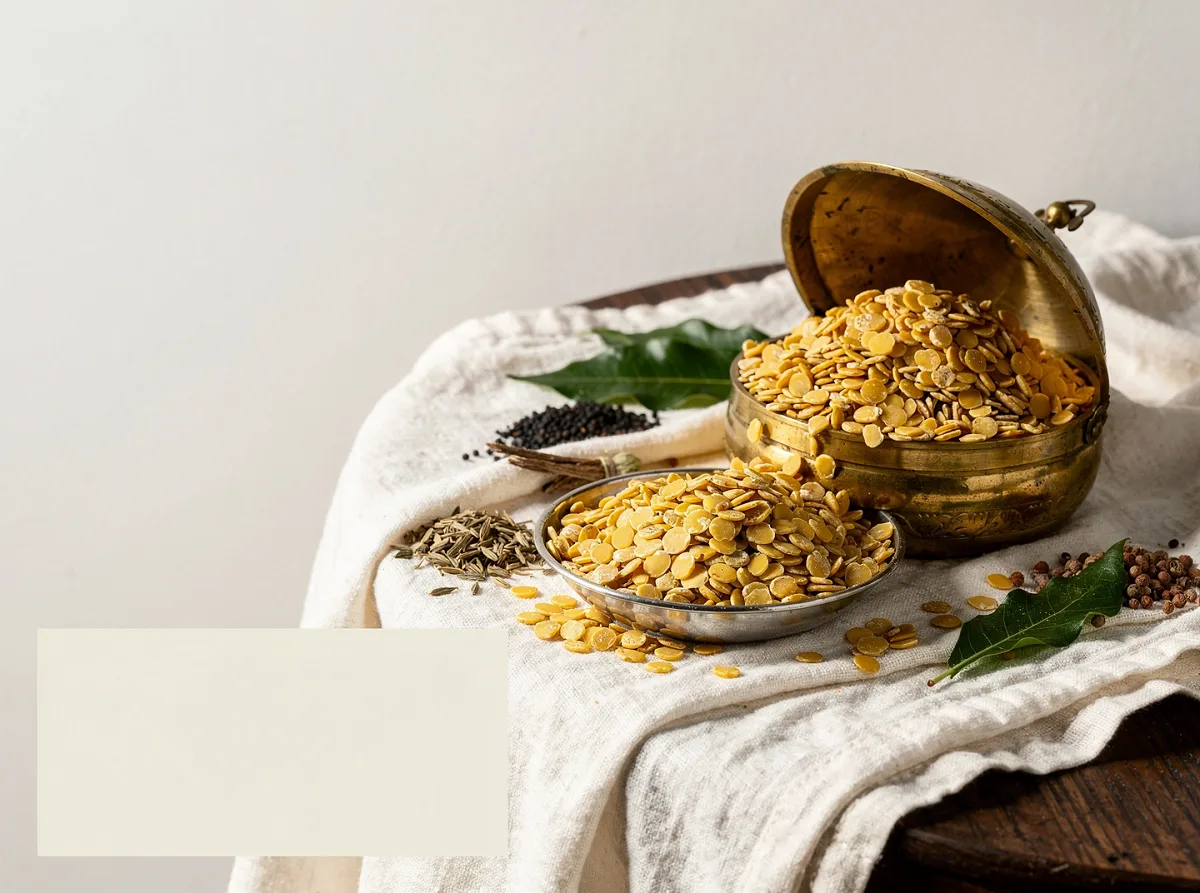
Pigeonpea split (तूर दाल, toor dal) is a golden-yellow lentil with a mild, slightly earthy flavour - the backbone of South Indian sambar and rasam, and a comfort staple across Indian home kitchens. Split and polished, it cooks quickly into a creamy dal, and pairs beautifully with...
Nutrition per 100 g
Mean values ± IFCT published SD (edible portion).
More macros
Classification
About Pigeonpea Split
What it is
Pigeonpea split (तूर दाल, toor dal) is the hulled and split seed of the pigeon pea plant (Cajanus cajan). Golden-yellow in colour with a smooth, polished surface, it cooks faster than whole pulses and breaks down into a soft, creamy texture. Widely grown across India - particularly in Maharashtra, Karnataka, and Andhra Pradesh - it is the most-used dal in South Indian kitchens and a trusted everyday protein in North and West Indian homes too. (IFCT 2017, Ref #B021)
Use in Indian Kitchen
Toor dal is the soul of sambar, the tangy South Indian vegetable stew, and equally essential in rasam, the peppery tamarind broth. In the North, it appears in simple tadka dal (tempered with cumin, mustard, and asafoetida) and in khichdi with rice and ghee. The West uses it in dal dhokli and mixed vegetable curries. A practical tip: rinse well before cooking to remove any dust, and if your dal turns mushy, it has likely absorbed too much water - add a pinch of salt and a squeeze of lemon at the end to brighten it. Soaking for 30 minutes can speed cooking, though many home cooks skip this step for everyday dal.
Key Nutrients
Pigeonpea split is rich in plant-based protein (around 22% by weight), dietary fibre, and complex carbohydrates. It provides B vitamins (especially folate and thiamine), iron, phosphorus, and magnesium. The exact nutrient profile is documented in IFCT 2017, Ref #B021.
Health Benefits (Evidence-based)
- High protein content supports muscle maintenance and repair, making it valuable for vegetarian and vegan diets.
- Rich in dietary fibre, which may support digestive health and help maintain steady blood sugar levels.
- Contains folate and iron, nutrients traditionally valued in Indian nutrition for energy and overall wellness.
- Polyphenols and other plant compounds in pulses are linked to antioxidant activity in the body.
- Regular pulse consumption has been associated with heart health benefits in population studies.
Culinary Uses (Vegetarian)
- Sambar - the classic South Indian vegetable and dal stew with tamarind and spices.
- Rasam - a peppery, tangy broth served as a soup or poured over rice.
- Tadka dal - simple tempered dal with cumin, mustard seeds, dried chilli, and asafoetida.
- Khichdi - comfort rice and dal one-pot with ghee and mild spices.
- Dal dhokli - Gujarati steamed dumplings made with wheat flour and served in a dal curry.
- Mixed vegetable curries and lentil soups across regional Indian cuisines.
Caution
- Like all pulses, toor dal contains compounds that may cause bloating or gas in some people; soaking, rinsing, and cooking thoroughly can reduce this effect.
- Those with kidney disease or on a purine-restricted diet should consult a healthcare provider, as pulses contain purines.
- Ensure proper storage to prevent insect infestation and mould, especially in humid climates.
References
- Indian Council of Medical Research - National Institute of Nutrition (ICMR-NIN). Indian Food Composition Tables (IFCT) 2017. Reference #B021 (Grain Legumes - Pigeonpea Split).
- Vaya, S. & Mahmood, S. S. (2015). Nutritional and health benefits of pulses. Journal of Nutritional Health & Food Science, 3(1), 1-8.
Health Benefits
- Supports Digestion
- Supports Heart Health
- Helps Blood Sugar Control
- Provides Iron
- Provides Satiety
Sourcing & Storage
Storage
Store toor dal in an airtight container - a glass jar, metal tin, or sealed plastic box - away from direct sunlight and heat. Keep in a cool, dry place (ideally below 25°C). In humid climates, store in the refrigerator or add a few dried neem leaves or a bay leaf to the container to deter insects. Ensure the container is completely dry before filling to prevent moisture and mould.
Shelf Life
When stored properly in an airtight container in a cool, dry place, toor dal will keep for 6-8 months. Once opened, use within 2-3 months for best flavour and texture. If stored in the refrigerator in humid regions, shelf life may extend slightly. Discard if you notice any off-smell, discolouration, or signs of insect damage.
Check Before You Buy
Look for bright, uniform golden-yellow colour with no dark spots, cracks, or broken pieces. The dal should feel dry and free-flowing when you run your fingers through it. Avoid any musty or stale smell, which signals poor storage. Check the packaging date and buy from reputable kirana shops or branded packs with clear labelling. In the mandi, ask the vendor to show you a handful - good quality dal should have minimal dust and no visible stones or debris.
In Ayurveda
In classical Ayurvedic texts, pigeonpea (toor) is recognized as a light, easily digestible legume with a sweet taste (madhura rasa). It is considered warming (ushna virya) and is traditionally used to balance Vata and Kapha doshas. The dal is often recommended in Ayurvedic cooking for its nourishing yet non-heavy properties, making it suitable for daily consumption and convalescent diets.